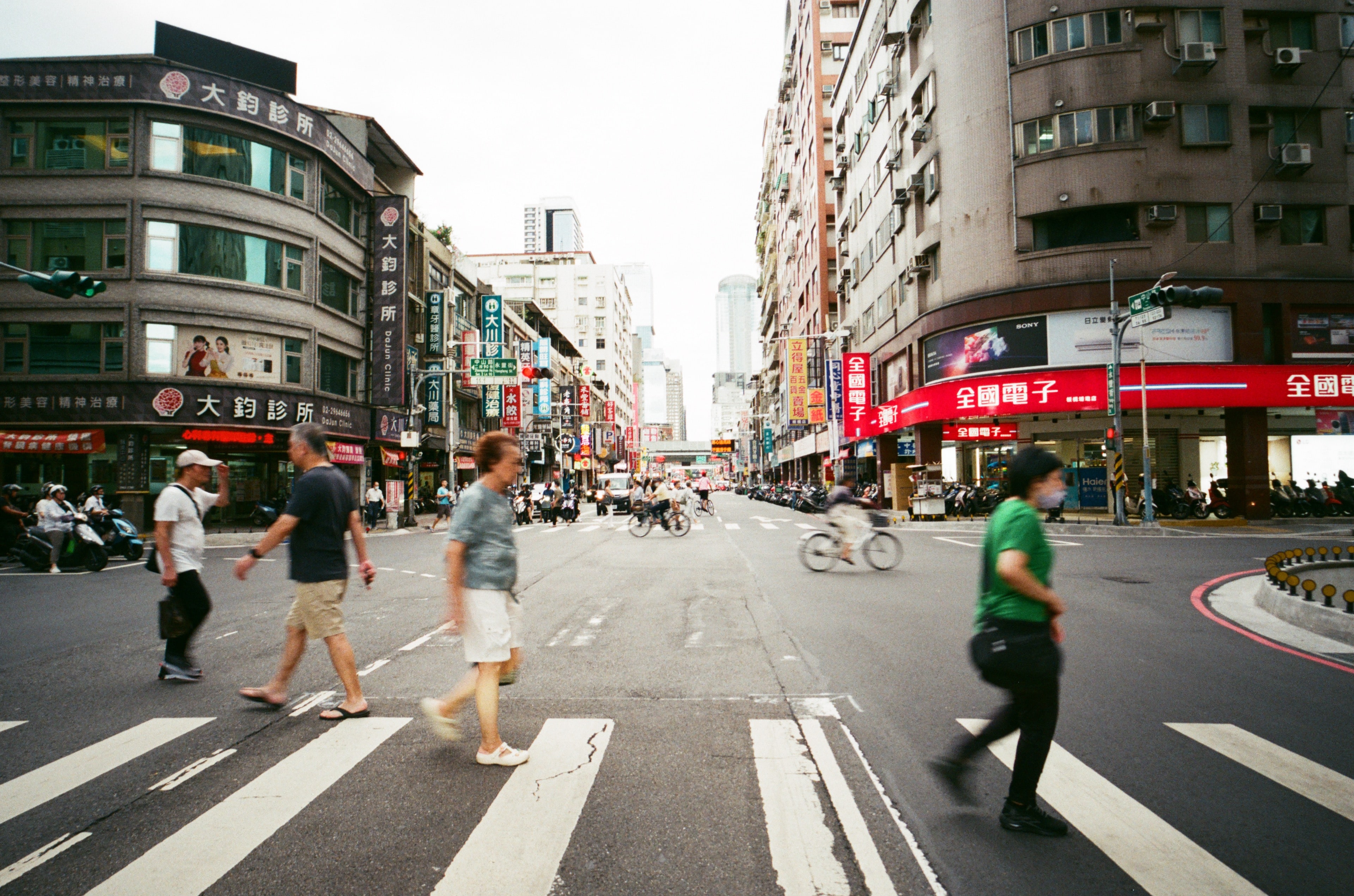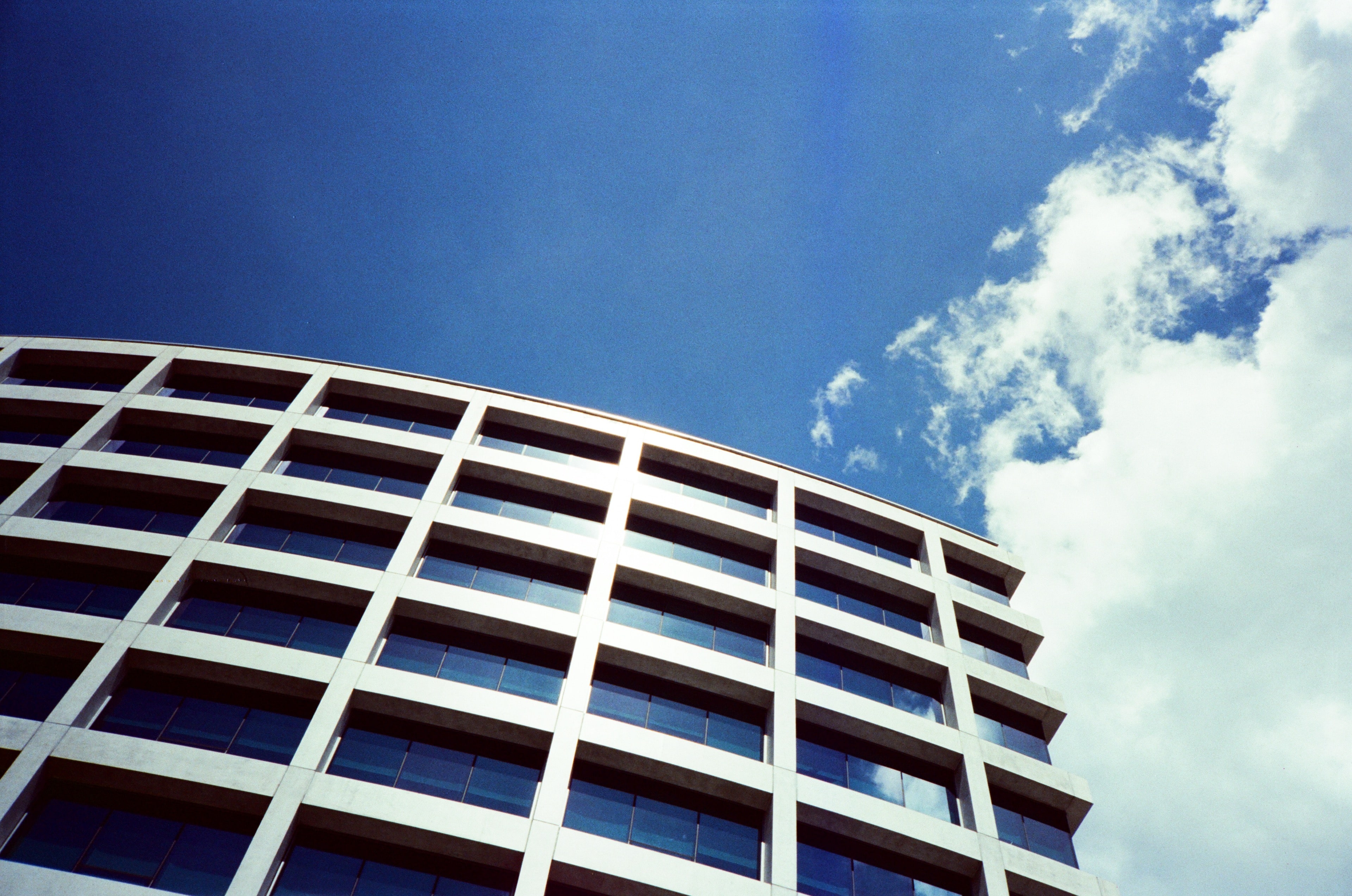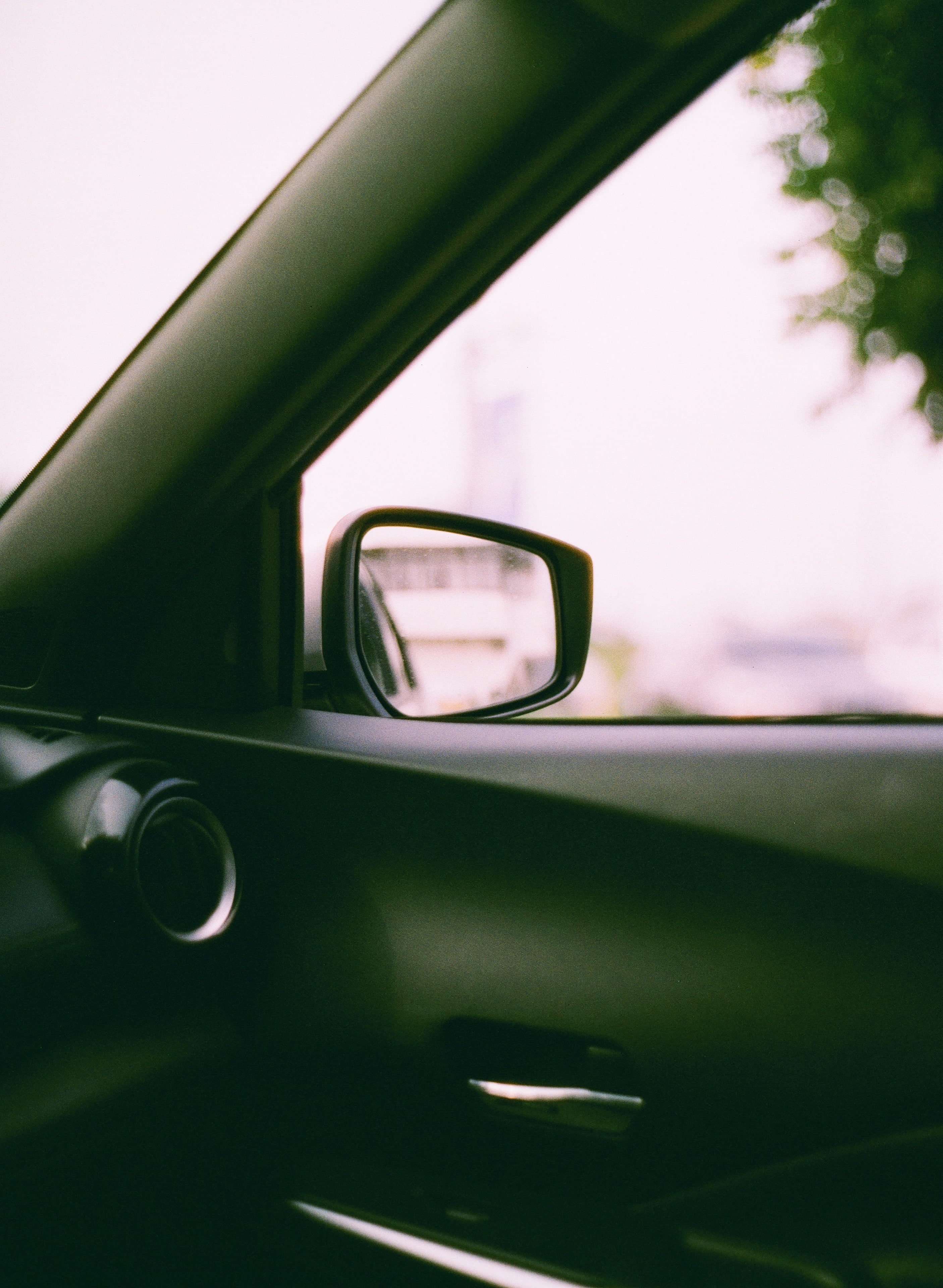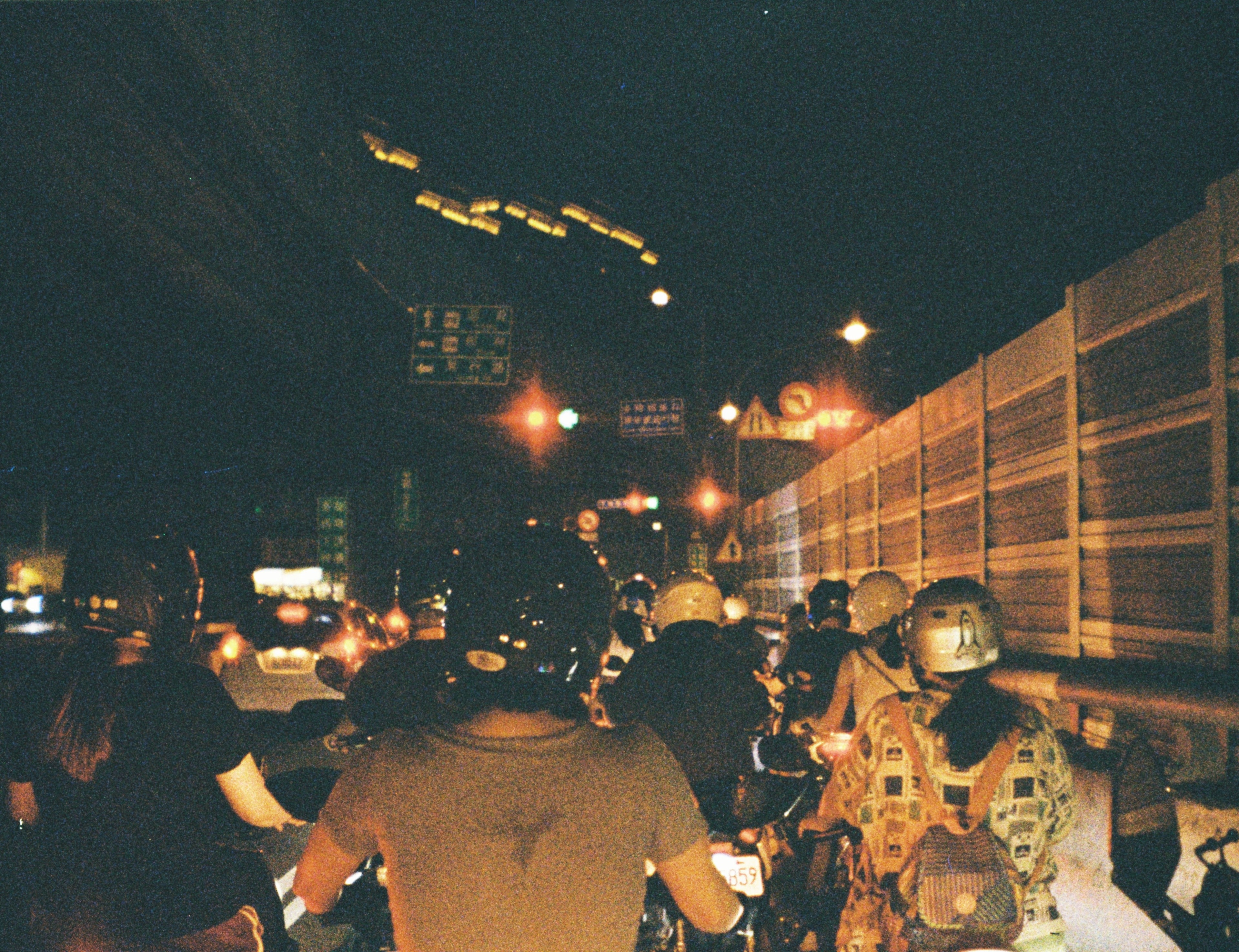
Roll 248
Film: Kodak AeroColor III 2444 (repackaged by Taobao seller 銀粒子排序, metered at ISO 50)
Developed & scanned: Violet Color 2025/3/23
Camera: Rolleiflex 4x4 (Baby Rolleiflex) 60mm f3.5
-
Today I went to the WordPress Rainbow Meetup in Taipei. During the Q&A, someone raised their hand and asked the speaker what field they'd studied (today's topic was website color schemes, so it related to visual design). After the event, I hurried home, and on the way back I found myself thinking about what I actually learned at university that relates to my current work. Honestly, I couldn't come up with much. But if I really had to name one thing, what I learned at university was my own "ability to learn."
I still don't agree with the whole business of having to report your educational background. Those of us in our twenties were nowhere near as capable as we'd be twenty years later, and how much can someone's academic achievements at that age really reflect what they've accomplished now? So I think asking which school someone attended, which department they studied in, is largely about slapping a label on them — letting yourself believe you can quickly understand who they are.
Of course, sometimes it's just genuine curiosity. But I believe those cases are the minority.
The camera for this roll is a very rare 4x4 camera that uses 127 film. 127 film is so obscure that many frontline shop staff have never even heard of it. So far I've found two shops willing to handle 127 film: Violet Color in Taipei, and Jin-ying Photo in Changhua. In terms of price, Violet Color charges the same as for 120 film. I haven't sent any to Jin-ying myself, but you're welcome to inquire if you're interested.
Strictly speaking, 127 film isn't classified as medium format, but currently (2025) the film being used for it is (as far as I know) all cut down and repackaged from 120 film, and in practice it's no different to handle than regular 120. So I still consider 127 to be medium format. And a single roll only gives you 12 images at 4×4 cm, so it does come with that feeling of having to weigh each shot carefully.
Unfortunately, the scanned files from 4x4 come out very small, because they're cropped down from 6x6. The 6x6 files I usually get are 4832 × 4760 pixels, roughly 23 megapixels, whereas the 4x4 files are only 3219 × 3219 pixels, roughly 10 megapixels — the long edge doesn't even reach 4K resolution's 3840px. But there's nothing to be done; there's no other option, unless you scan it yourself.
The condition of this Baby Rolleiflex in my hands is excellent — I don't know how I got so lucky to find it. Its exquisite design makes it hard to put down, and once you load film into it, you can't help wanting to keep shooting. Maybe that's the charm of a small camera: light enough to make you forget that a roll only holds 12 frames.
As an aside, a progress report on GrainHunter.com: as of April 8, 2025, GrainHunter has 109 photos. I've finished categorizing the lenses for the Pentax 67, Pentax 645, Pentax Auto 110, and Olympus Pen F systems, and next I'm entering the most massive one — the Olympus OM universe. To speed up the overall site architecture and catch problems early, my goal is to pick just one photo per Olympus OM lens for now. Once the OM section is done, I'll build out the camera dimension next, and finally the film dimension.
GrainHunter is an extremely complex website. It doesn't link things through tags the way communities like Flickr or Lomography do; instead it uses a system of mutually filterable "attributes." I'm not quite sure how to describe it — it isn't the "tree structure" of hierarchical categorization, nor the "dot structure" of a tagging system, and it's not quite as complex as a "neural structure."
I think GrainHunter is more like a "cocoon structure," because on the surface it looks like a chaotic woven ball, but in reality, pull on any single thread and you can trace through shared attributes to find more photos of the same type — the same film, the same lens, the same focal length, the same aperture, and so on. Browsing feels like unraveling something thread by thread.
I'll keep at it!
-
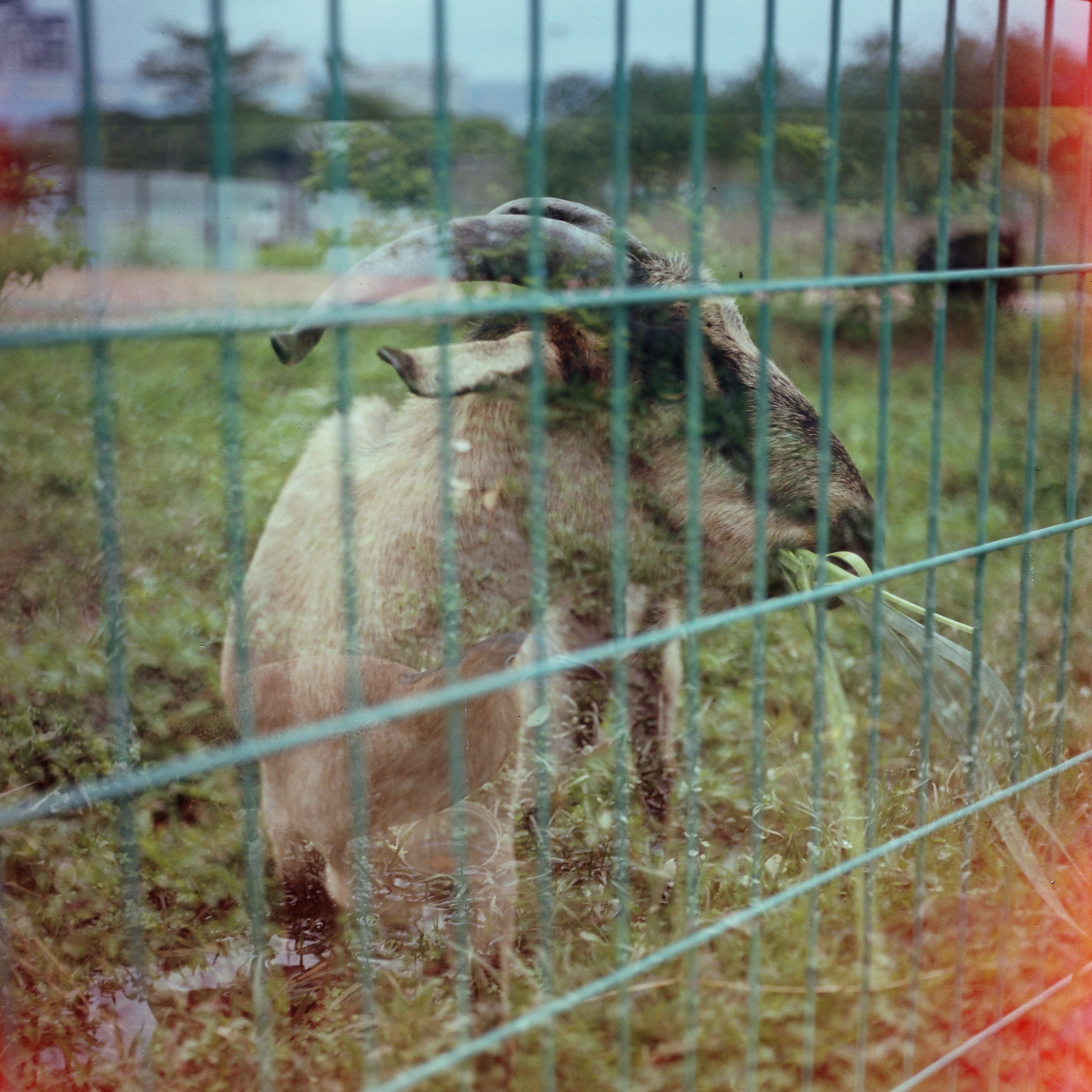
#1
The first frame came out double-exposed, and I don't know why. The sheep visible in the image is the second exposure; the first was actually a Malayan night heron, whose figure appears over the sheep's body.
Rolleiflex 4x4 60mm f3.5 (1/60, f3.5)
#2
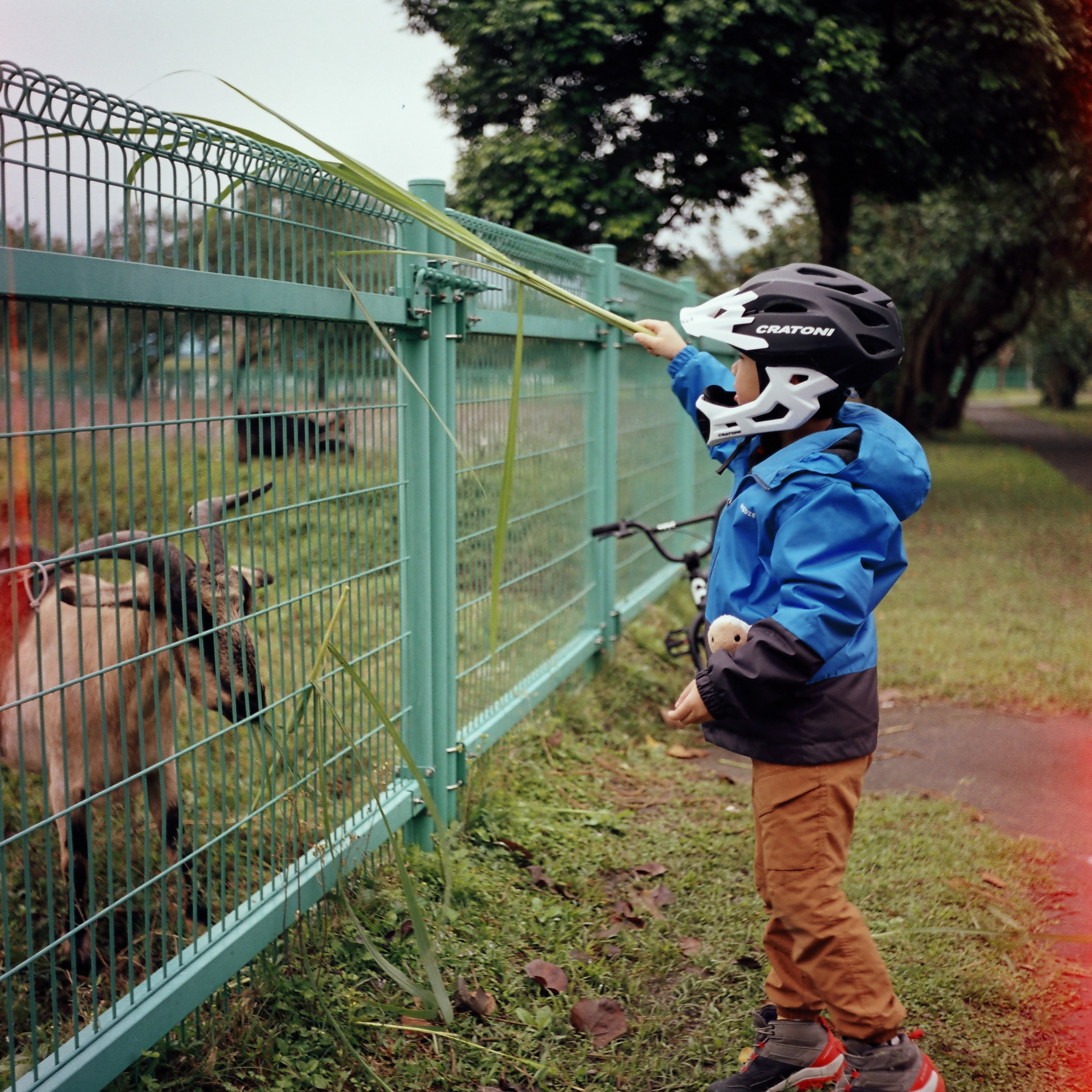
From the second frame on, no more double exposures. These are the sheep near my home. This day I went for a morning run, and my son wanted to come along, so he rode his bike while I ran. But when we passed the sheep, my son got stuck here — it had been a while since we'd last come to feed them.
Rolleiflex 4x4 60mm f3.5 (1/60, f3.5)
#3
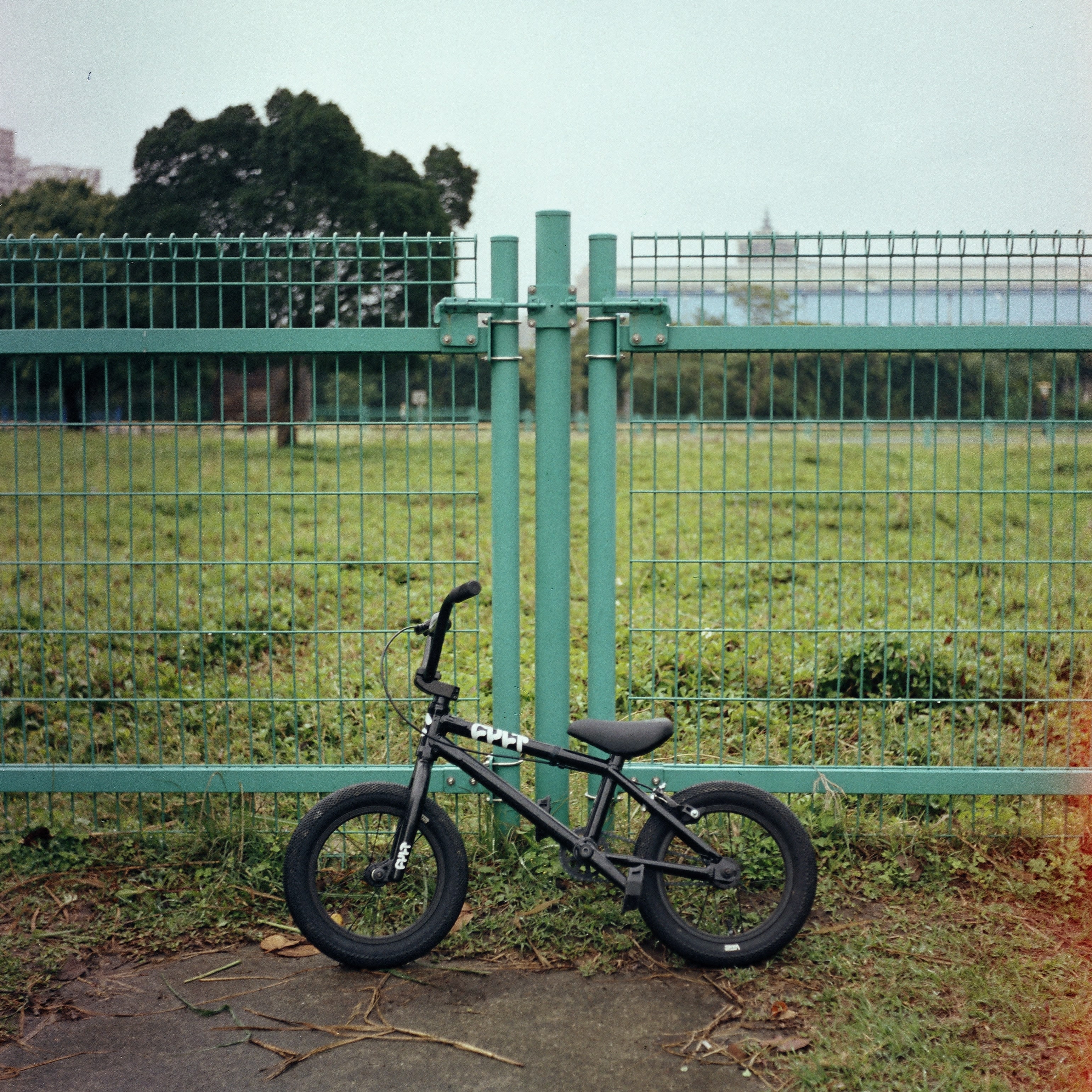
My son was engrossed in feeding the sheep, and I didn't know what to do standing beside him, so I started shooting at random. This is my son's BMX.
Rolleiflex 4x4 60mm f3.5 (1/60, f3.5)
#4
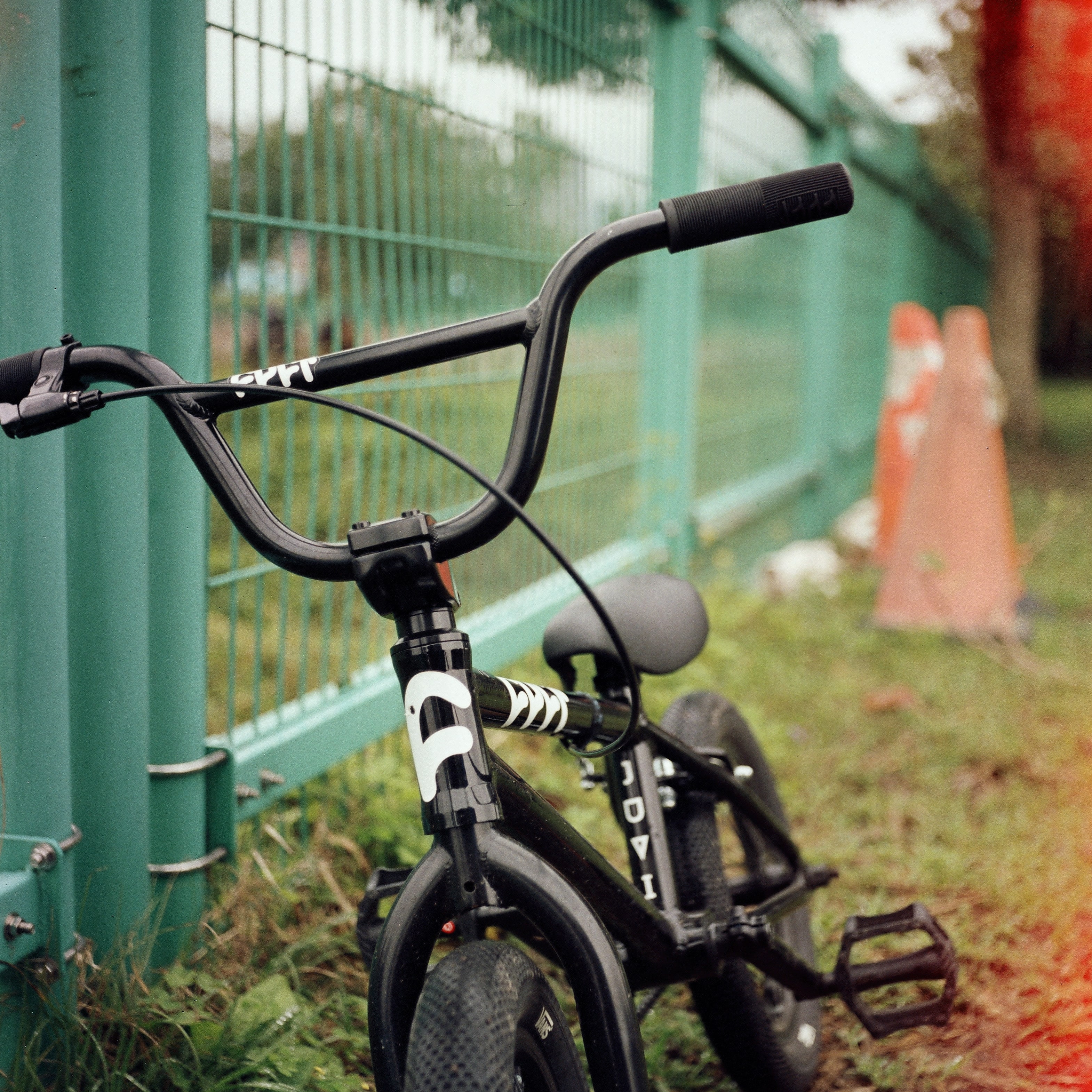
Testing the Baby Rolleiflex's close focus — this should be the minimum focus distance.
Rolleiflex 4x4 60mm f3.5 (1/60, f3.5)
#5
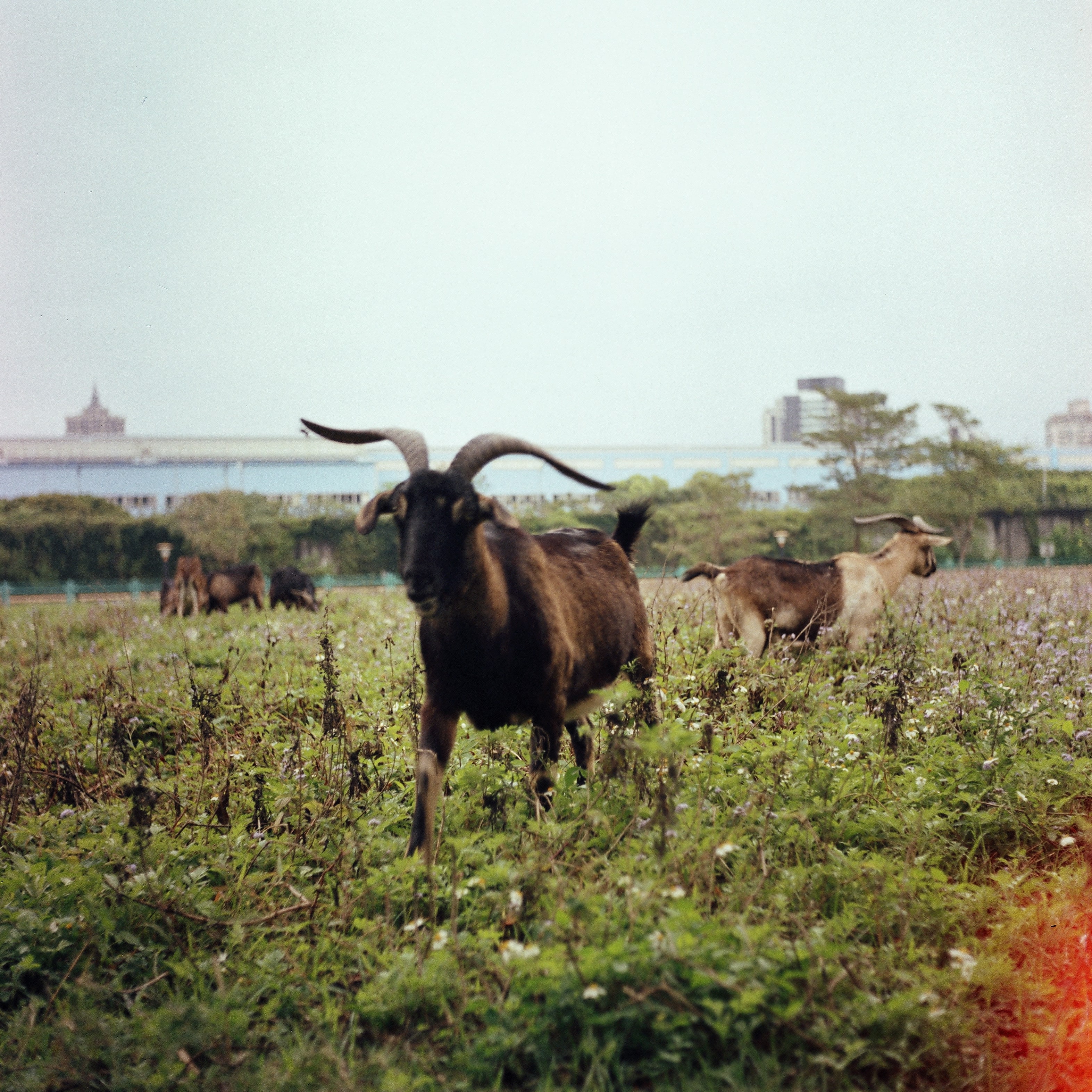
Trying to photograph the sheep, but they move fast and I couldn't get a sharp shot — and with 127 film being so precious, I didn't dare waste frames.
Rolleiflex 4x4 60mm f3.5 (1/60, f3.5)
#6
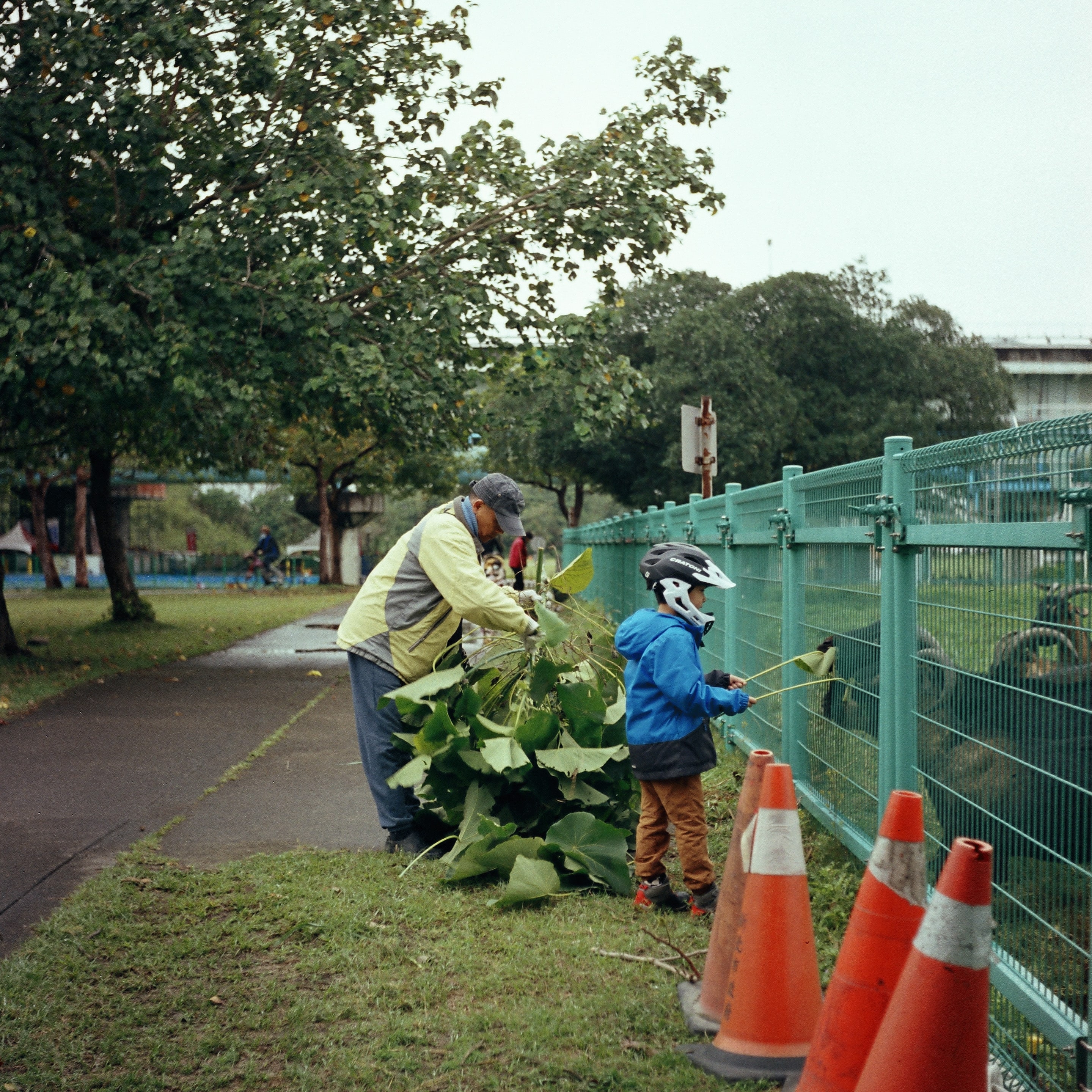
There's a notice beside the sheep pen prohibiting visitors from feeding them anything other than the grass provided by the facility, but plenty of visitors ignore it, so the sheep are left to fend for themselves.
Rolleiflex 4x4 60mm f3.5 (1/60, f3.5)
#7
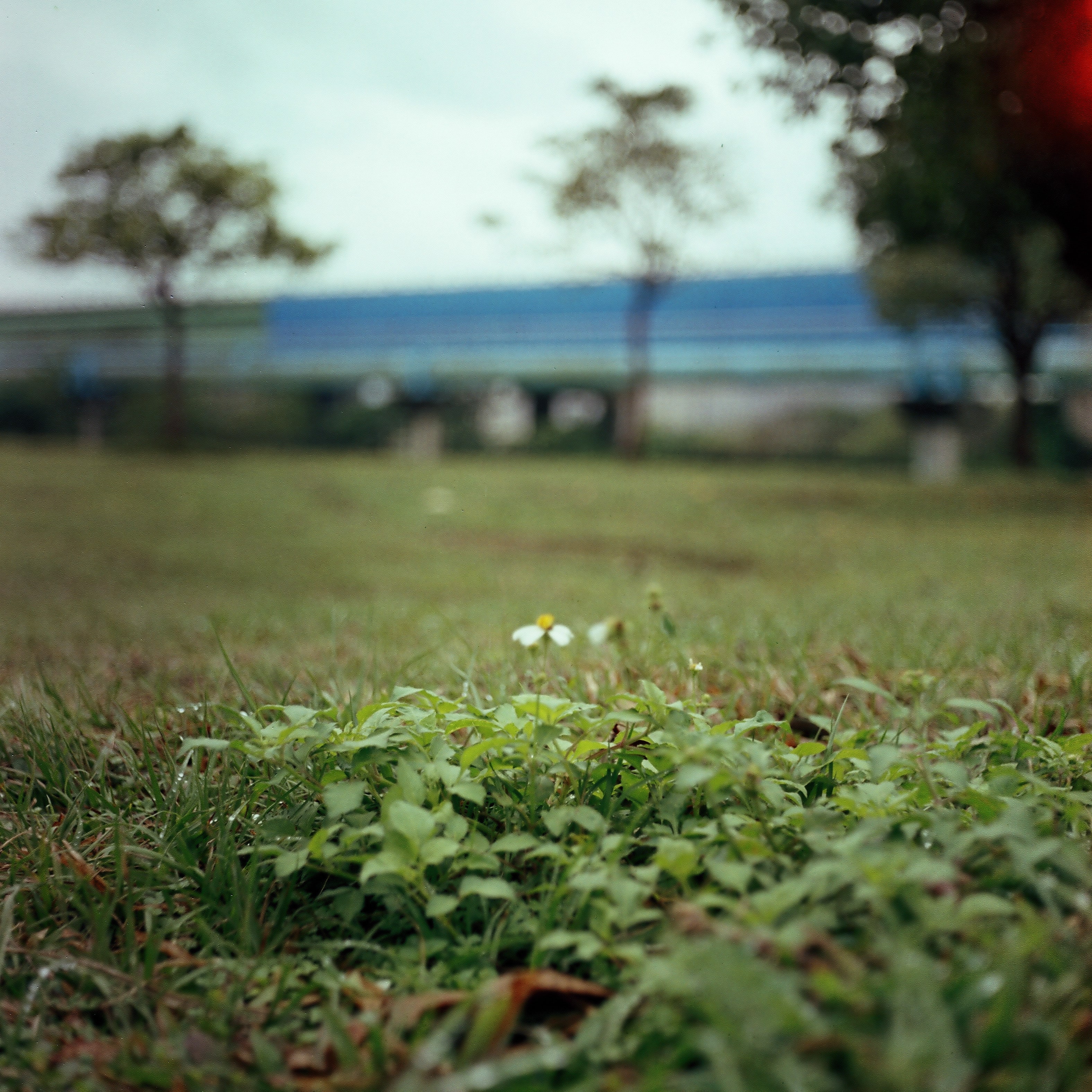
At minimum focus distance, the depth of field at f3.5 is still absurdly shallow.
Rolleiflex 4x4 60mm f3.5 (1/60, f3.5)
#8
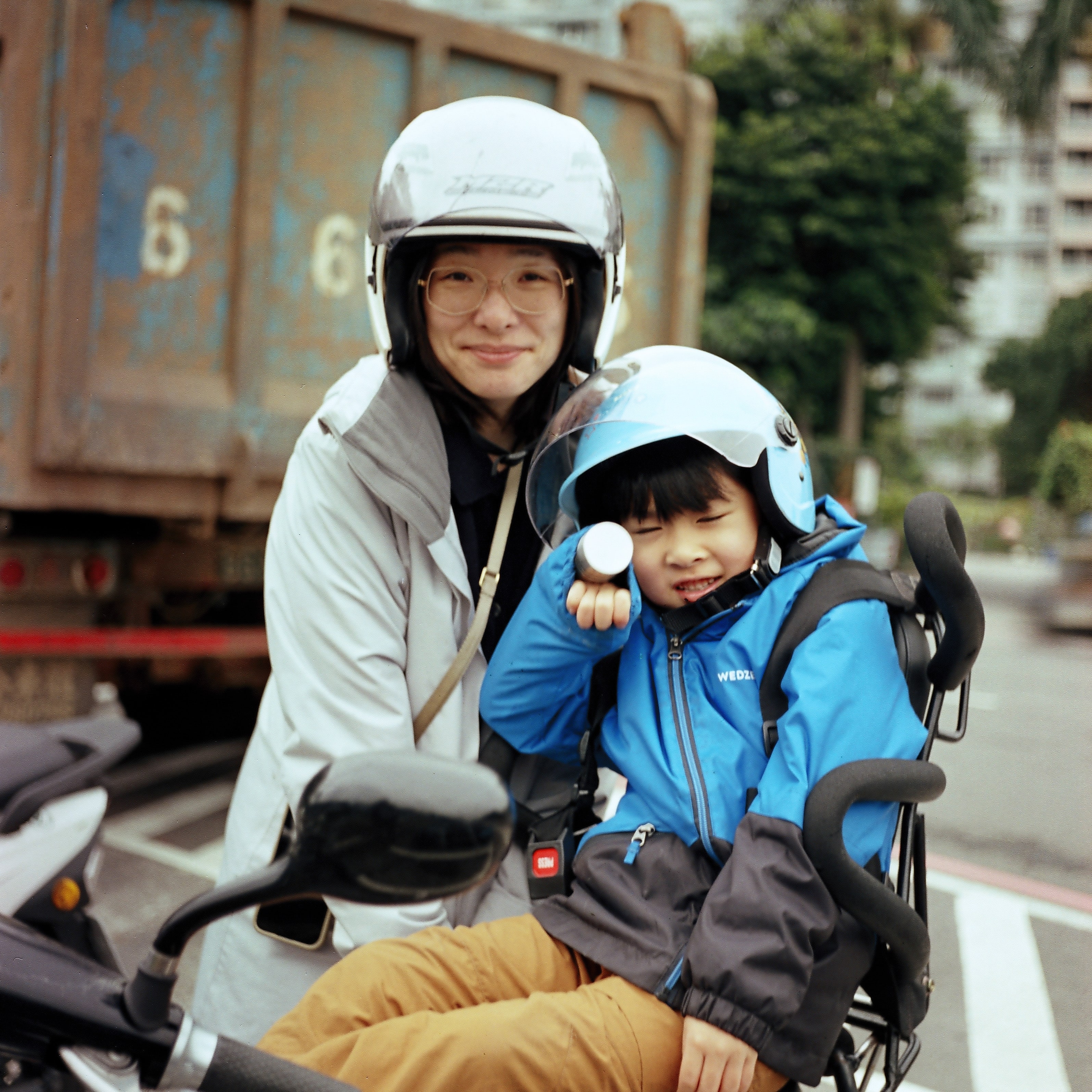
My dear wife and son.
Rolleiflex 4x4 60mm f3.5 (1/30, f3.5)
#9
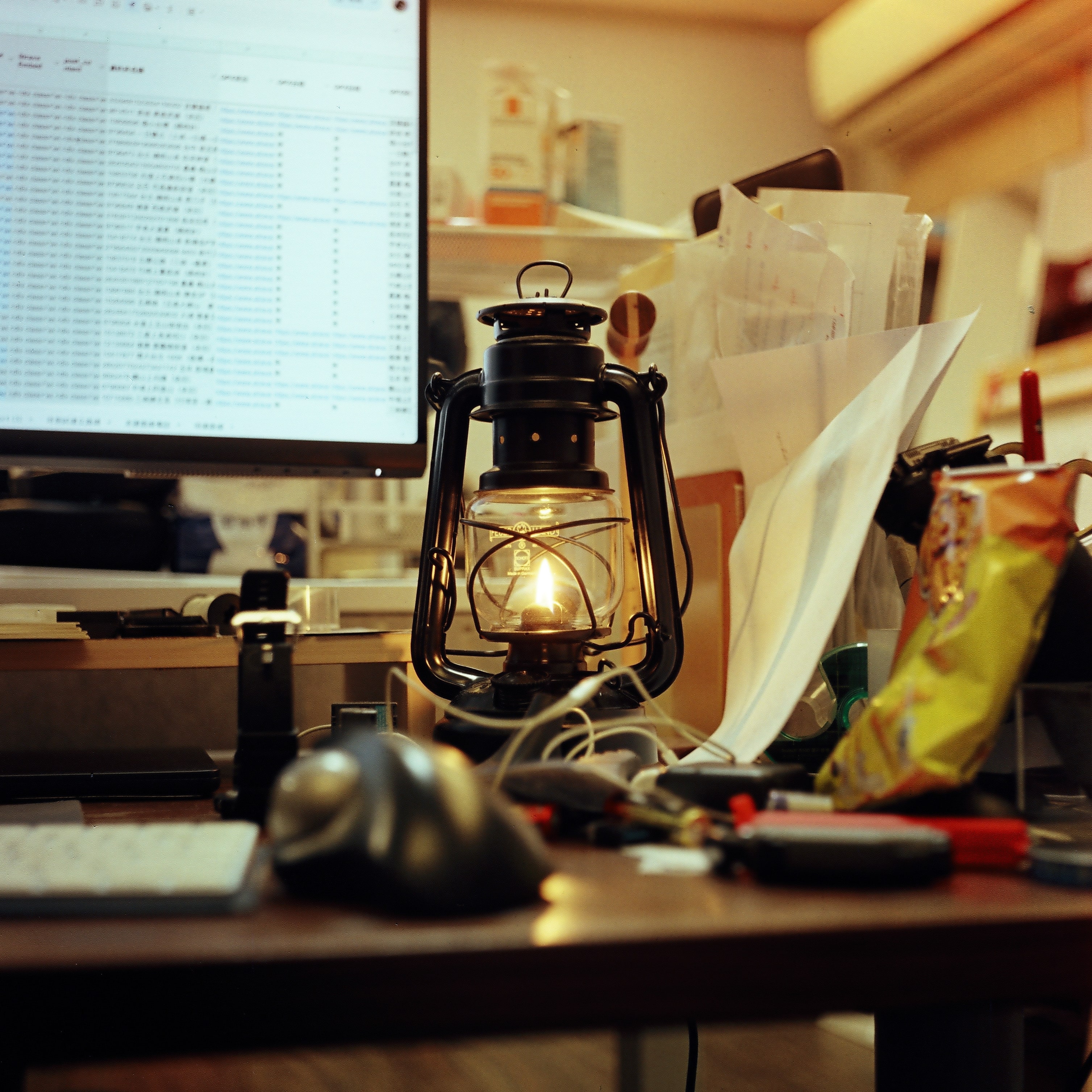
The aperture depth-of-field test begins. This is wide open at f3.5.
Rolleiflex 4x4 60mm f3.5 (1s, f3.5)
#10
In terms of sharpness, I can't detect any difference between f4 and f3.5, so it seems I can just shoot at f3.5 from now on, no question about it.
Rolleiflex 4x4 60mm f3.5 (1s, f4)

#11
I have to say, the Baby Rolleiflex is already sharp right from f3.5 — f5.6 is only for controlling depth of field.
Rolleiflex 4x4 60mm f3.5 (1s, f5.6)
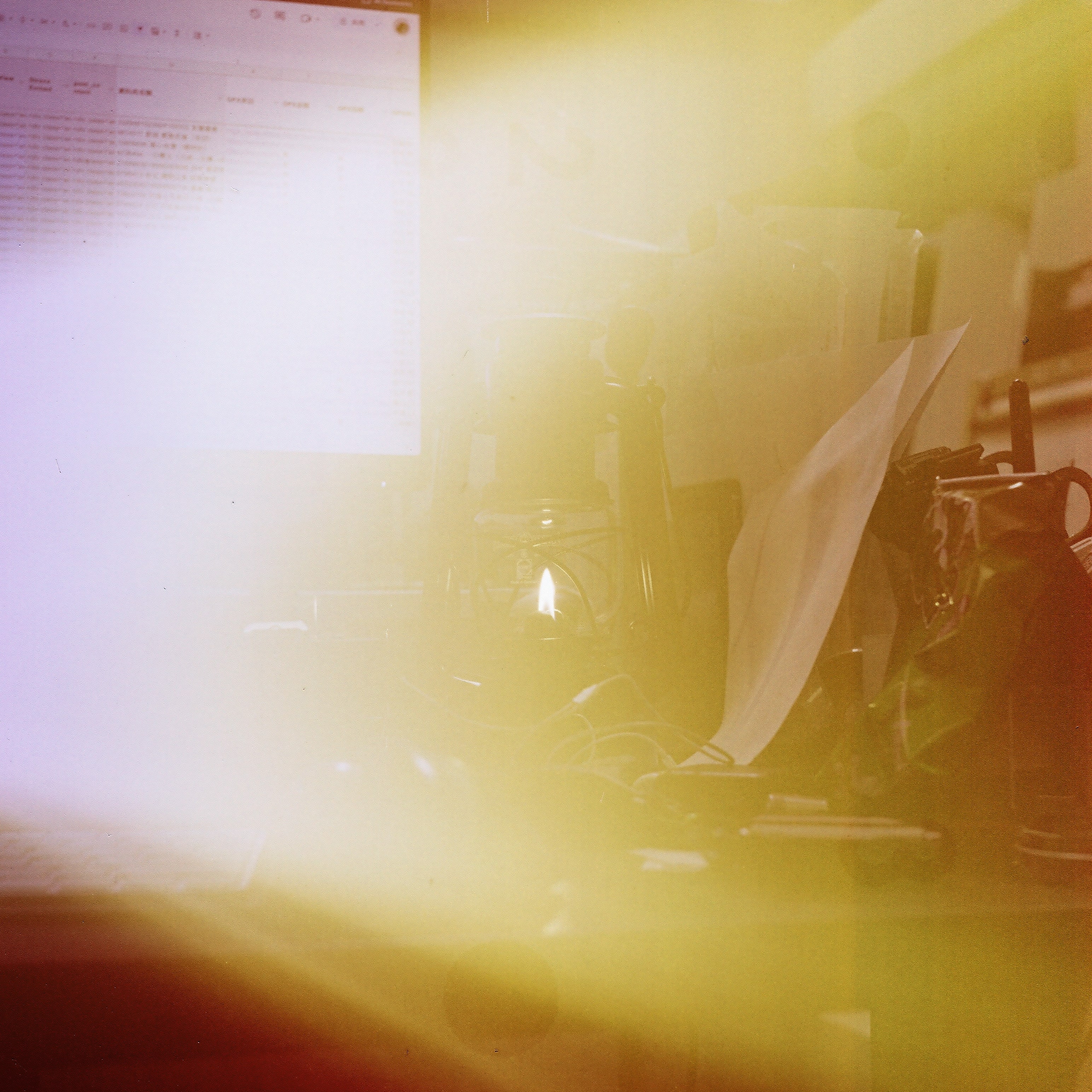
#12
This one probably has a light leak from the repackaged film.
Rolleiflex 4x4 60mm f3.5 (1s, f8)
That's this roll — Rolleiflex 4x4 60mm f3.5 with Kodak AeroColor III 2444. Thanks for reading.