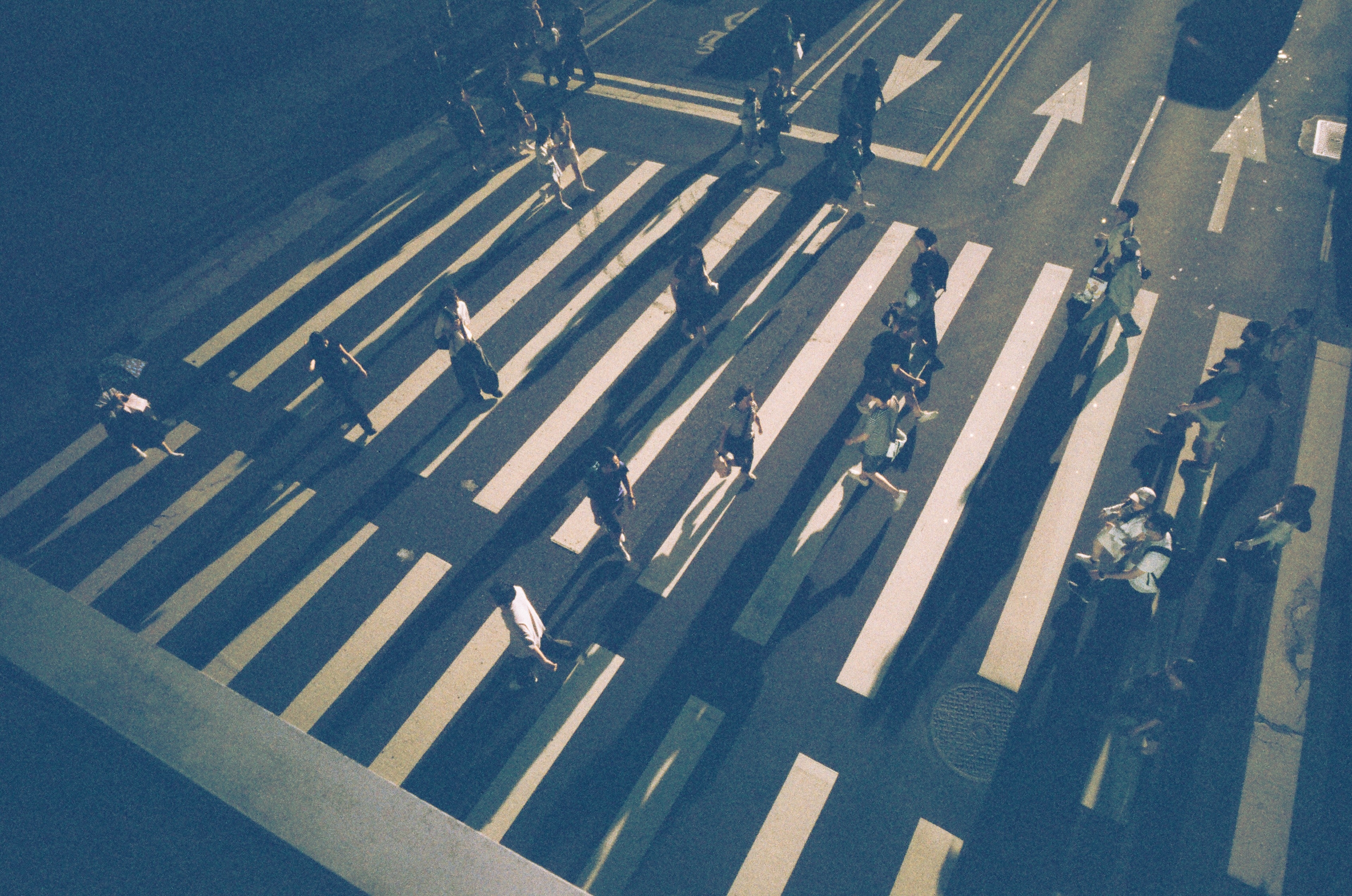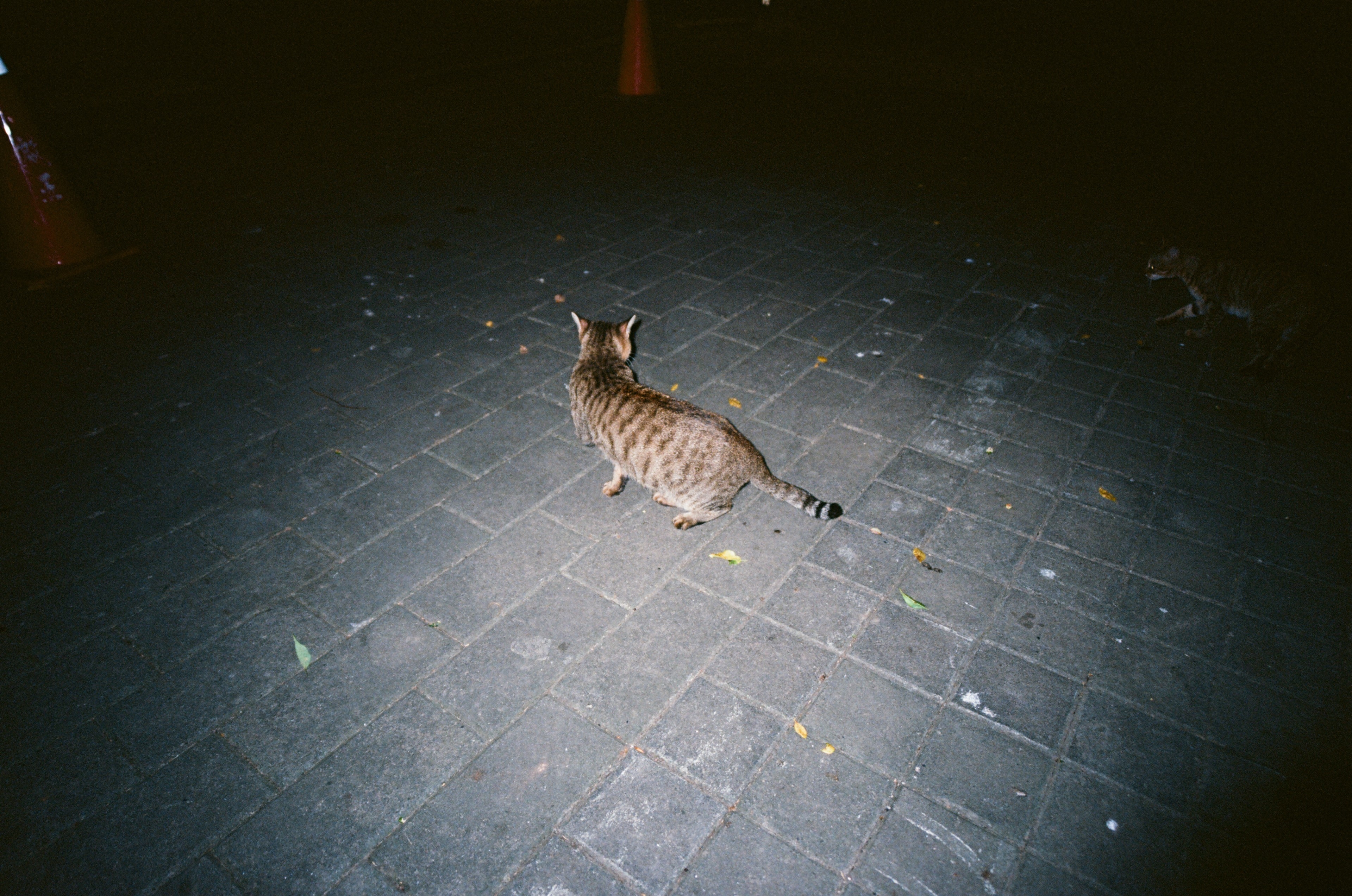
Roll 268
Film: Fujifilm 400 (US version, airport X-ray scanned inside a lead bag)
Developed & scanned: DEP Lab 2025/8/5
Camera: Konica Big mini HG BM-300 35mm f3.5
-
Every time before traveling abroad, I fall into the same dilemma, deciding which cameras and which films to bring.
My first experience bringing film overseas was in 2023, when I went to Nagoya, Japan. At the time, I wanted to save money, so I brought a large number of repackaged film rolls. Most of them were Kodak Vision3 500T/5219 cinema film. I thought using high ISO film for everything would be convenient, since it could handle almost any situation.
But when I started organizing the photos afterward, it became a bit confusing. Too many images looked similar. When sorting them by timeline and matching them with roll numbers, I often had to double-check everything.
So when I traveled to Tokyo in the spring of 2024, I changed my approach. I brought only one roll of each type of film, making sure none of them overlapped. This turned out to be a great decision. When reviewing the photos later, everything felt more interesting, and each image had a stronger sense of uniqueness.
In the summer of 2024, when we traveled to Kumamoto, I continued using the same approach of bringing non-repeating film. The process was still enjoyable. However, that time I chose convenience over caution. I did not use a lead bag and did not request a manual inspection. I let all my film pass through airport X-ray scanners.
The results were not great. Not in the sense of visible X-ray damage, but the overall contrast dropped, and the grain became more pronounced. On top of that, I brought several cameras I had never used before, so I was not even sure if the issues came from the film or the cameras. Overall, that trip was quite a mess.
The reason I let the film go through X-ray back then was because someone told me it would be fine. So I decided to try it myself. It turned out not to be fine. The funny part is, that person had also heard it from someone else.
For this Chicago trip, the variation in film was relatively limited. Most of what I used was Kodak UltraMax 400 and Fujifilm 400 (US version). In addition, there were two rolls of Kodak Vision3 200T/5213, one roll of Lomography LomoChrome Turquoise 100-400, and one roll of Fujifilm 200 (US version).
Looking back at the photos, this combination resulted in a certain level of visual fatigue. But I had anticipated this before sending the film for development. So I split the rolls between two labs, DEP Lab in Shulin and Li-lai Photo in Xinzhuang, to compare how each lab handled the same film stocks.
Simply put, if you want to evaluate your photos under stricter standards and clearly see potential issues, DEP Lab is a good choice. If you prefer more technical adjustments, such as exposure correction or contrast balancing, Li-lai Photo tends to apply more intervention.
After this experience, for my next trip, if there is one, I will go back to using non-repeating film again.
-
#1
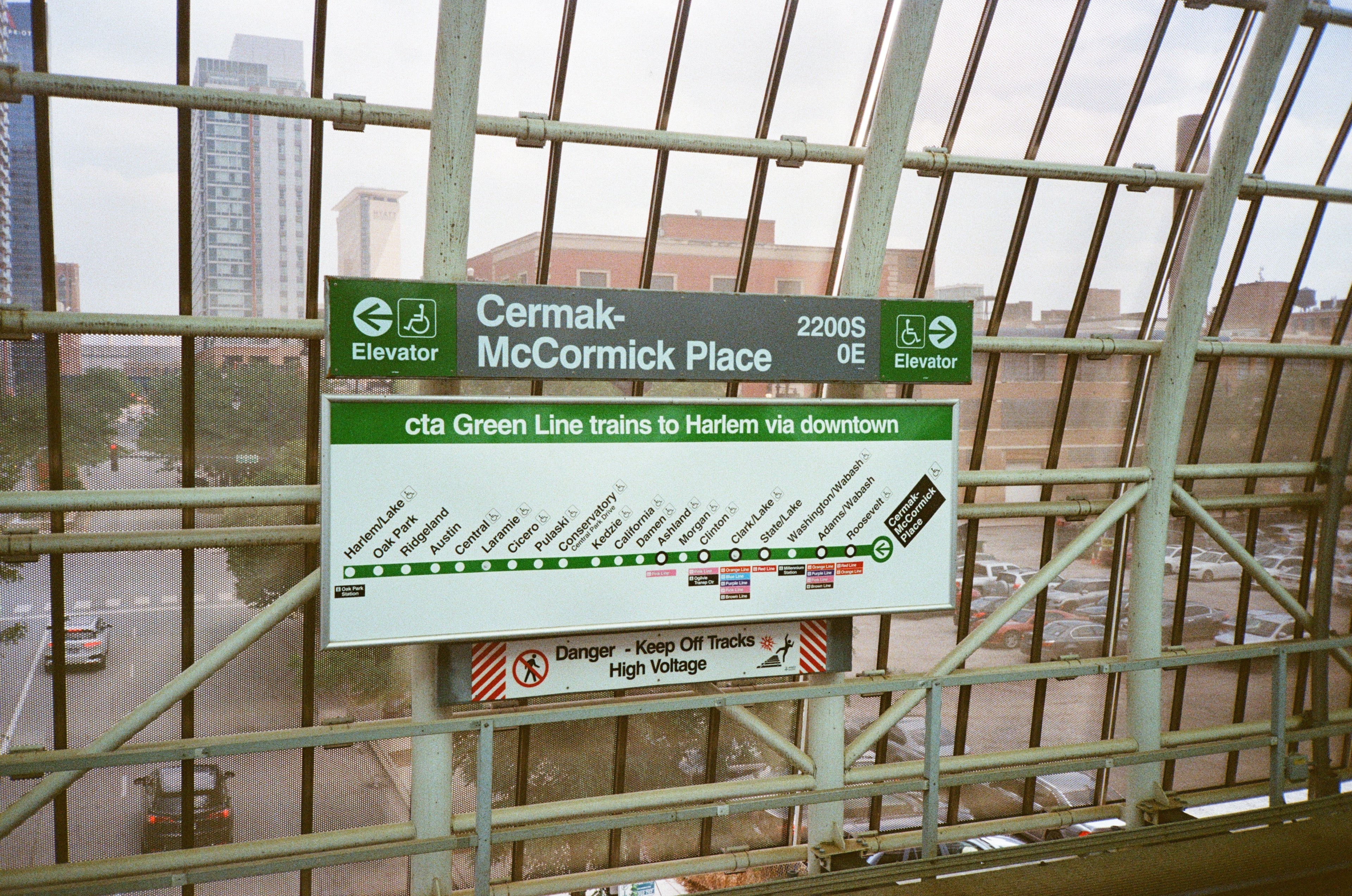
One of the main highlights of this Chicago trip was riding the train system. Whether you call it metro, subway, or rail, I have always been drawn to experiencing public transportation in different countries. It feels like a way to get closer to everyday local life.
#2
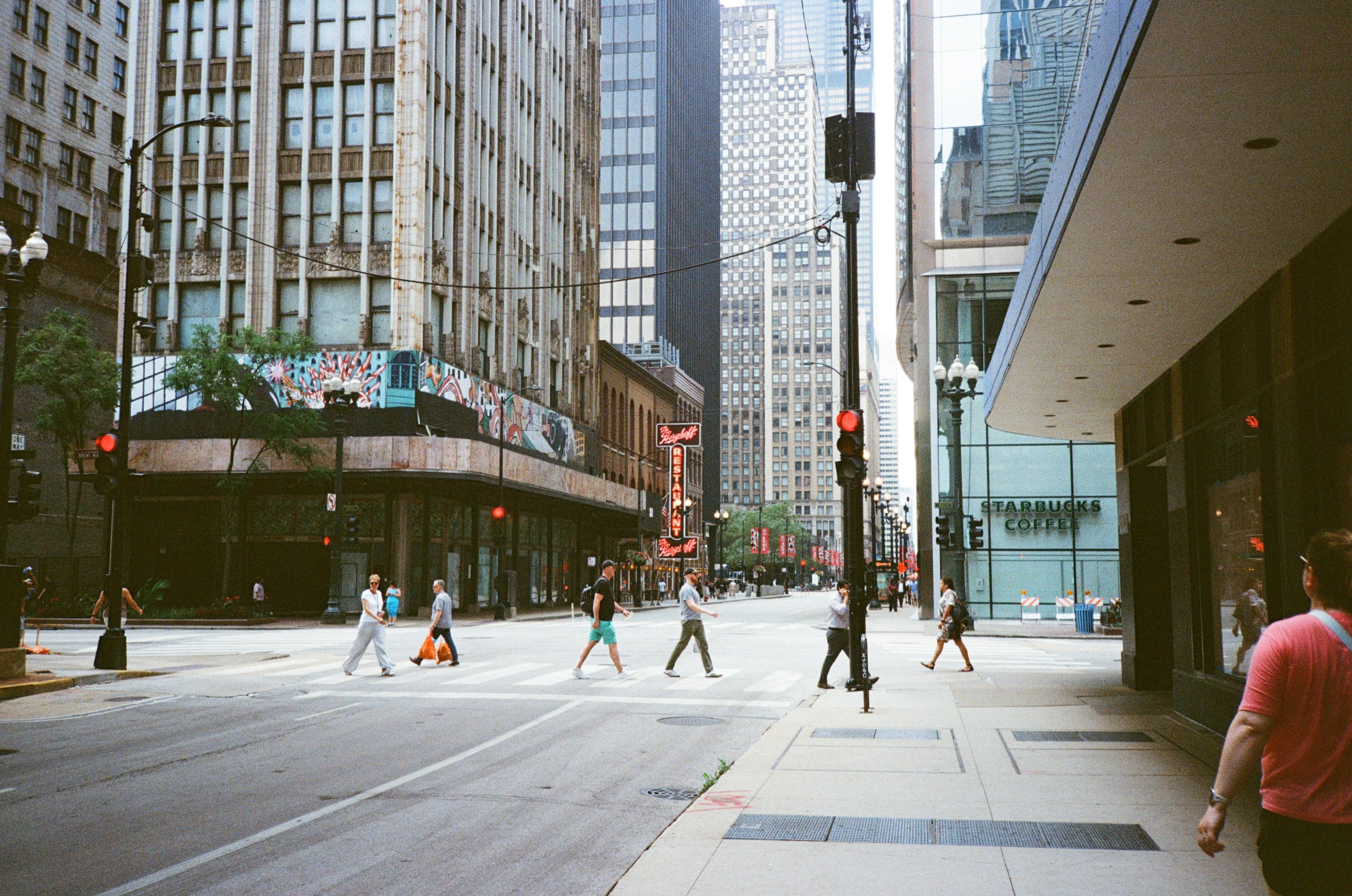
From where we stayed, we took two stops into downtown Chicago. Our destination was a local film camera shop. This was the street we saw right after exiting the station. Chicago completely changed my perception of what a city should feel like. It is not just modern. There is a strong presence of history. And those older elements do not feel worn out. Instead, they feel like they carry stories.
#3
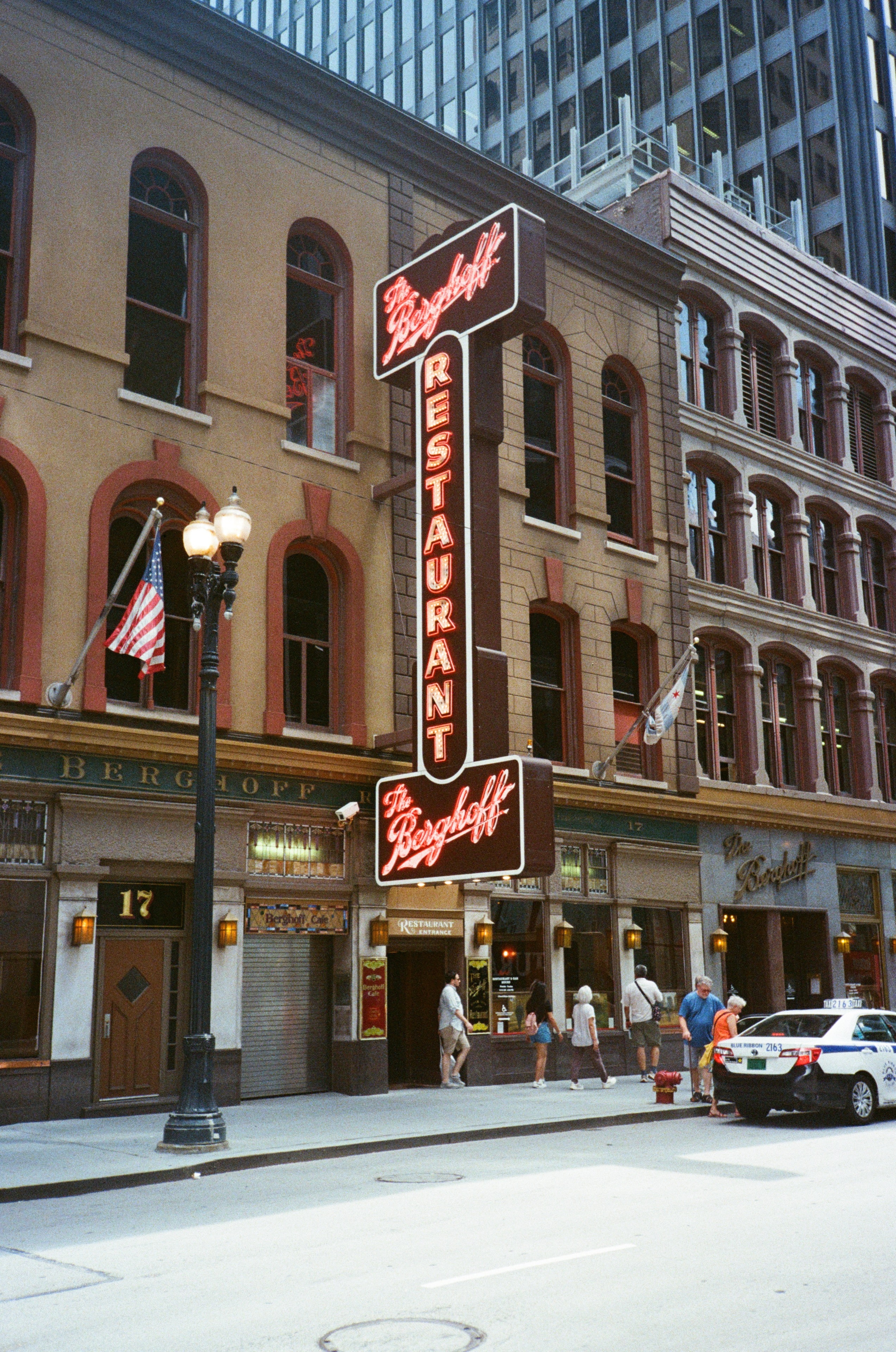
A restaurant that already felt special just from its sign. While writing this, I looked it up and realized it is The Berghoff, established in 1898. Even The Dark Knight was filmed here. Surprisingly, the menu is not particularly expensive.
#4
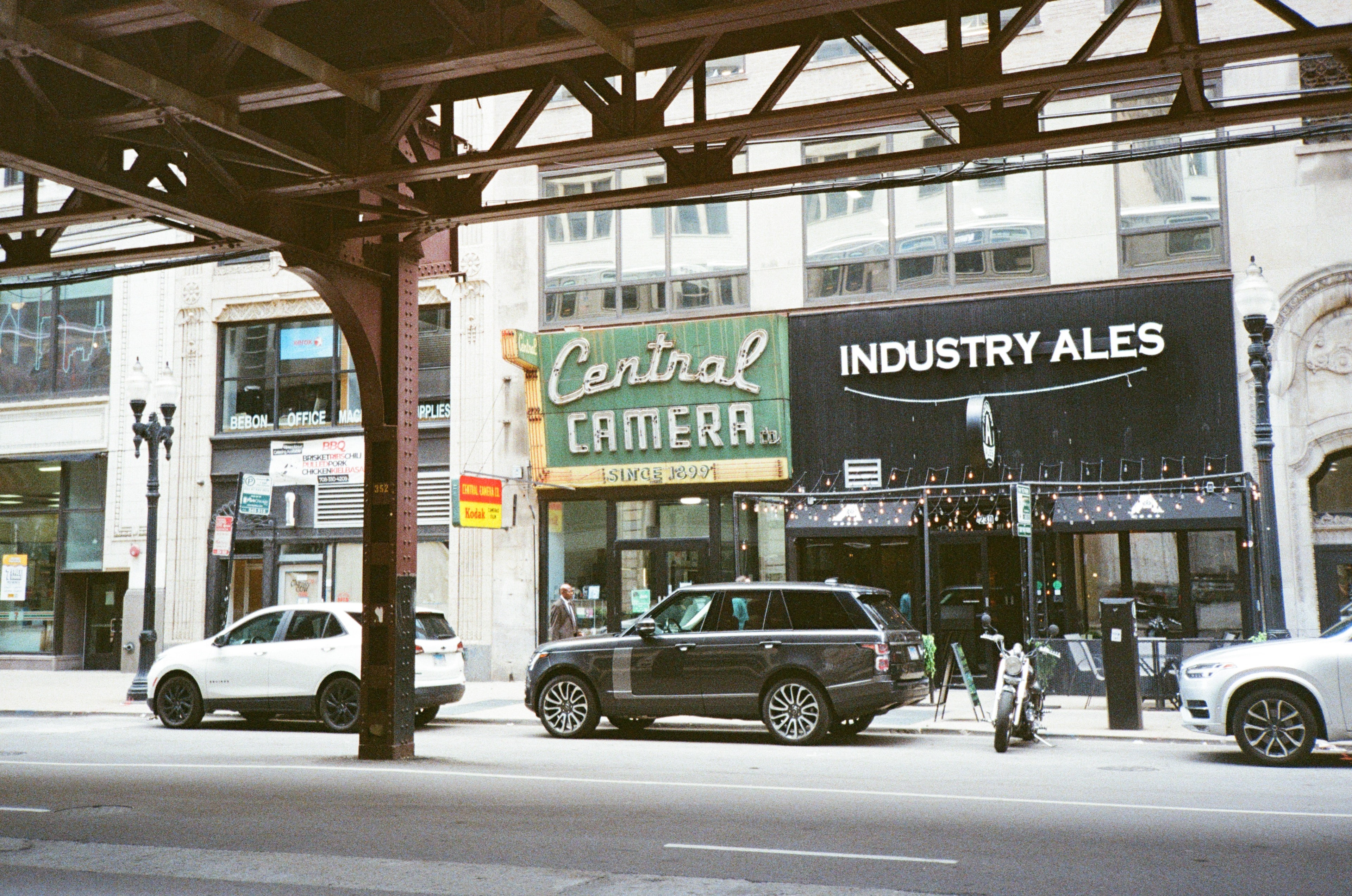
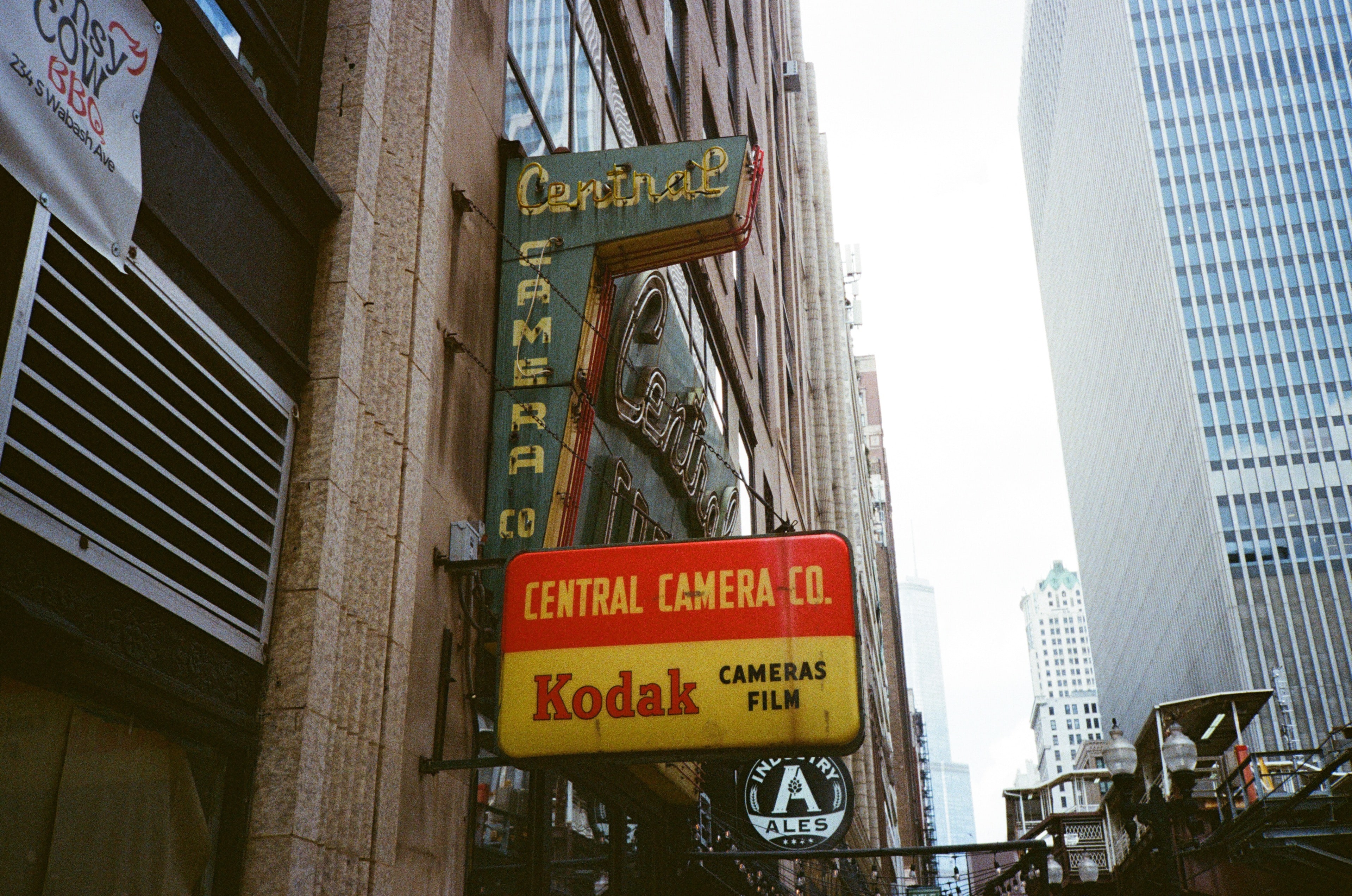
The main stop of the day, Central Camera, established in 1899. I learned about this store first, and only later found out that Vivian Maier also developed her work here.
#5
After browsing inside, I left without buying anything. Not because I did not want anything, but because I did not see anything I specifically needed.
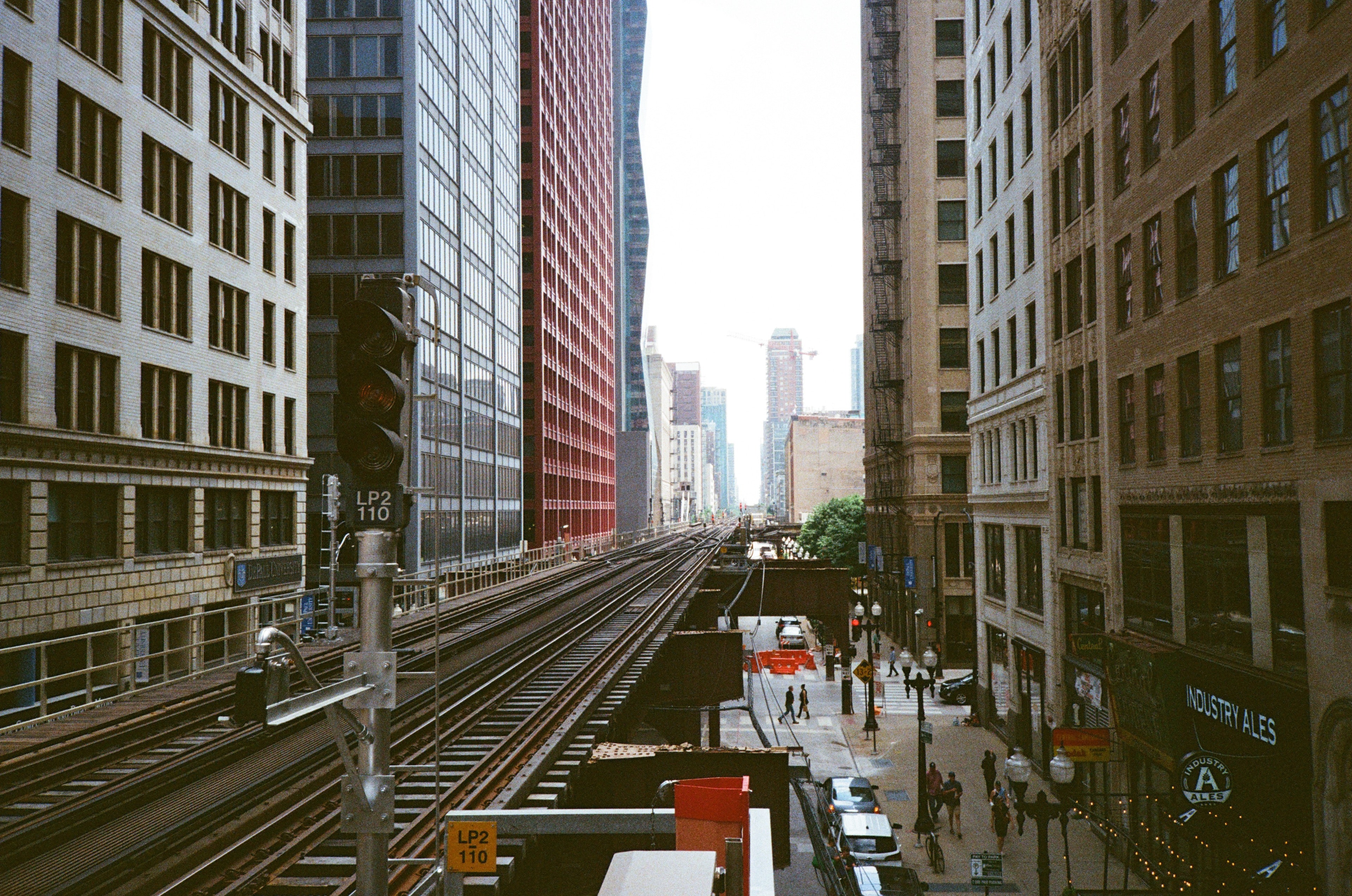
#6
Chicago's elevated rail system dates back to 1892. That was surprising. At that time, Taiwan was still in a completely different stage of development.
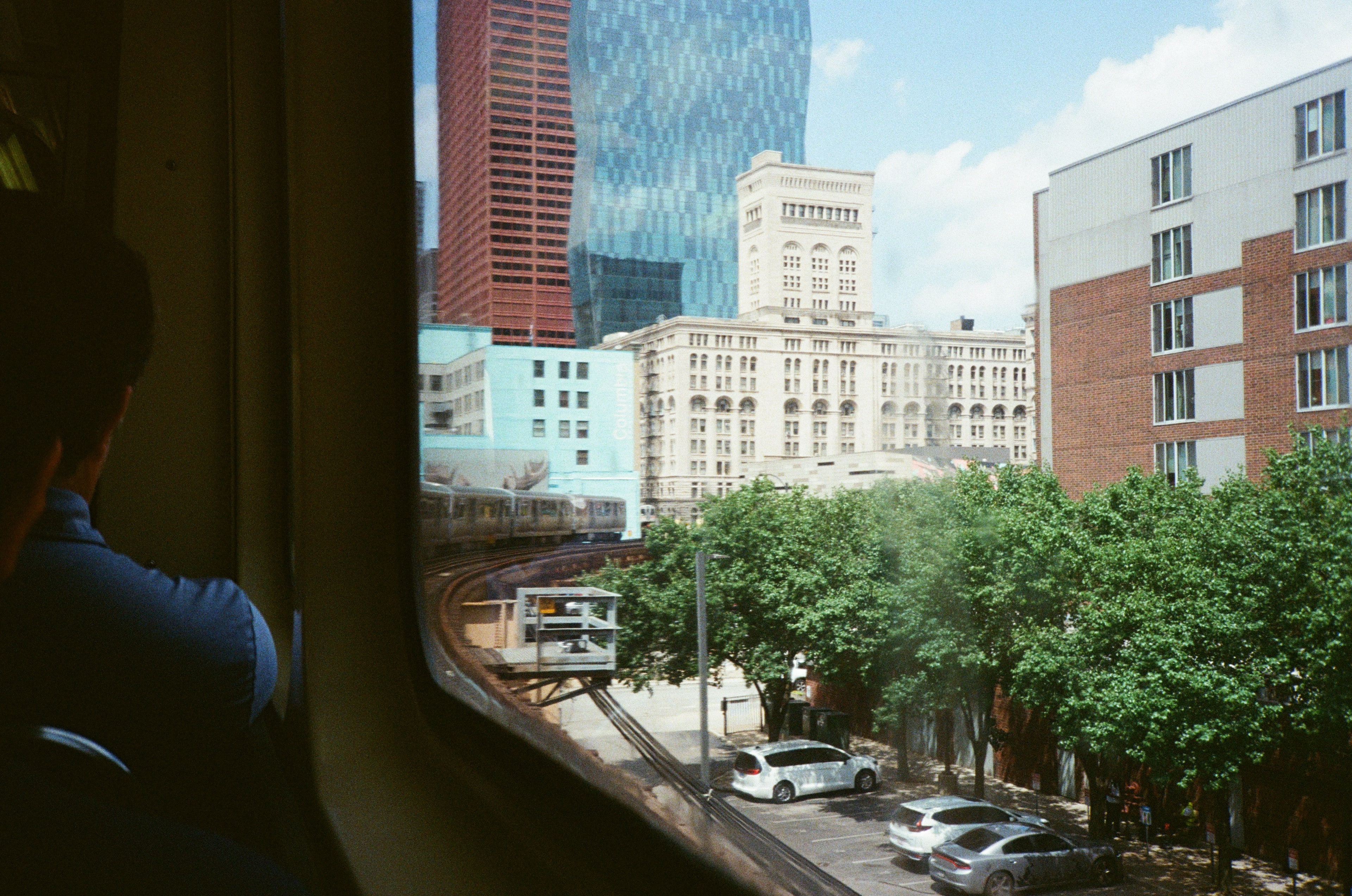
#7
Just like in Taiwan, the train slows down when turning. The seating arrangement felt quite compact.
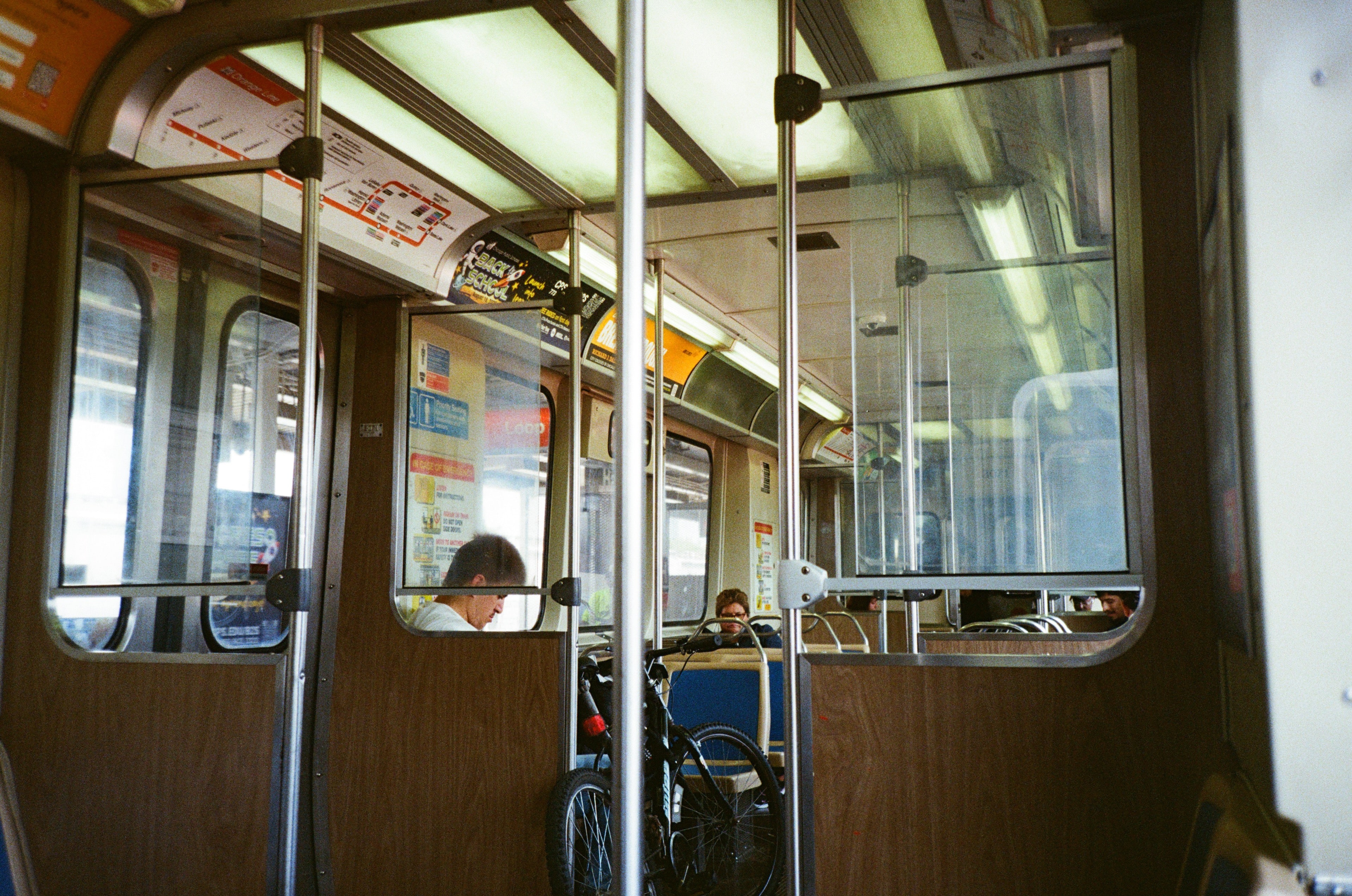
#8
During non-peak hours, it was common to see people bringing bicycles onto the train.
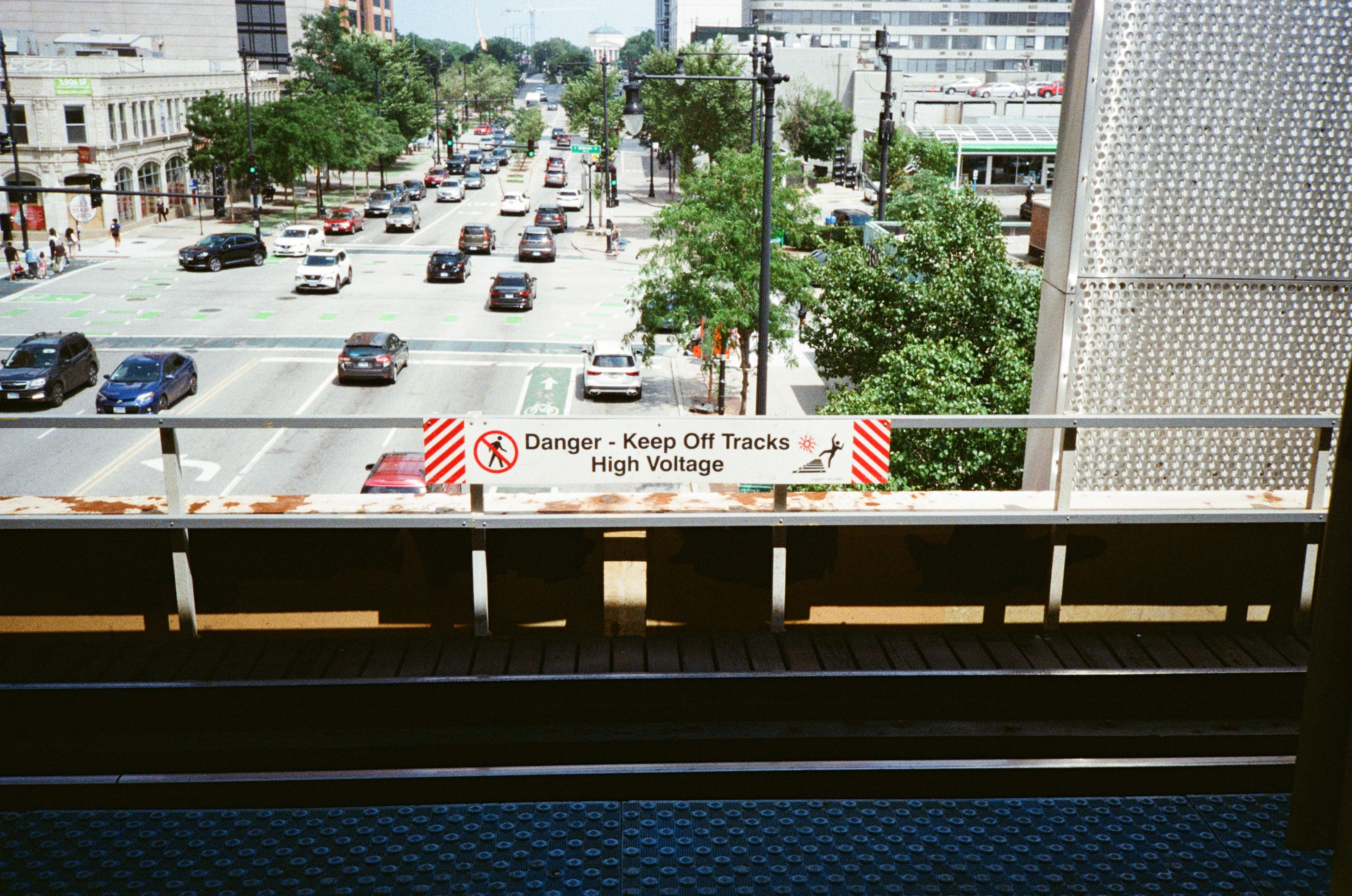
#9
I once attended a safety course on electrical work. The instructor emphasized that high voltage electricity can be dangerous even without direct contact. This is known as "arc discharge."
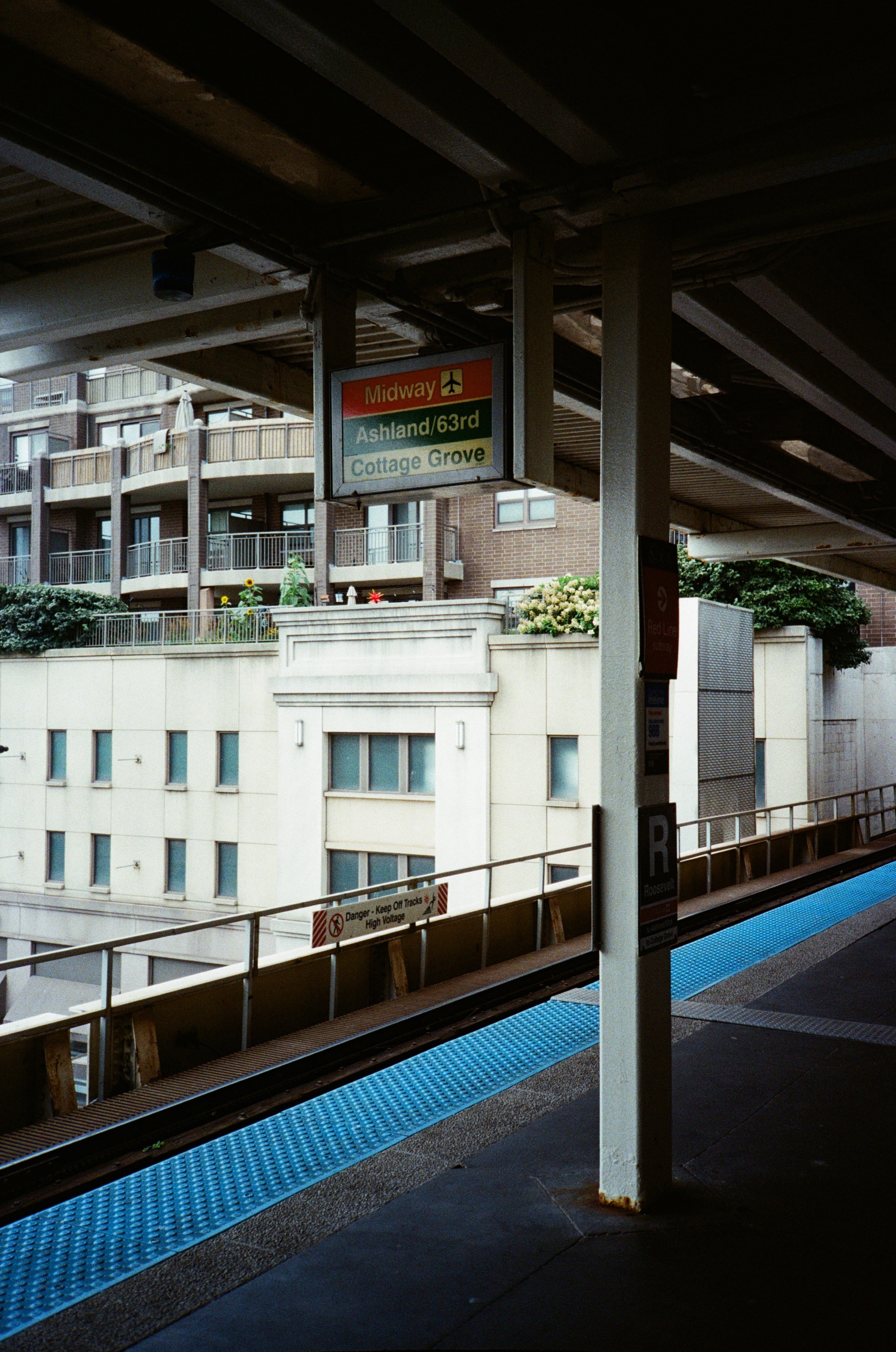
#10
We took the wrong train on the way back. Fortunately, the system is not too complicated, so we just waited for the correct one.
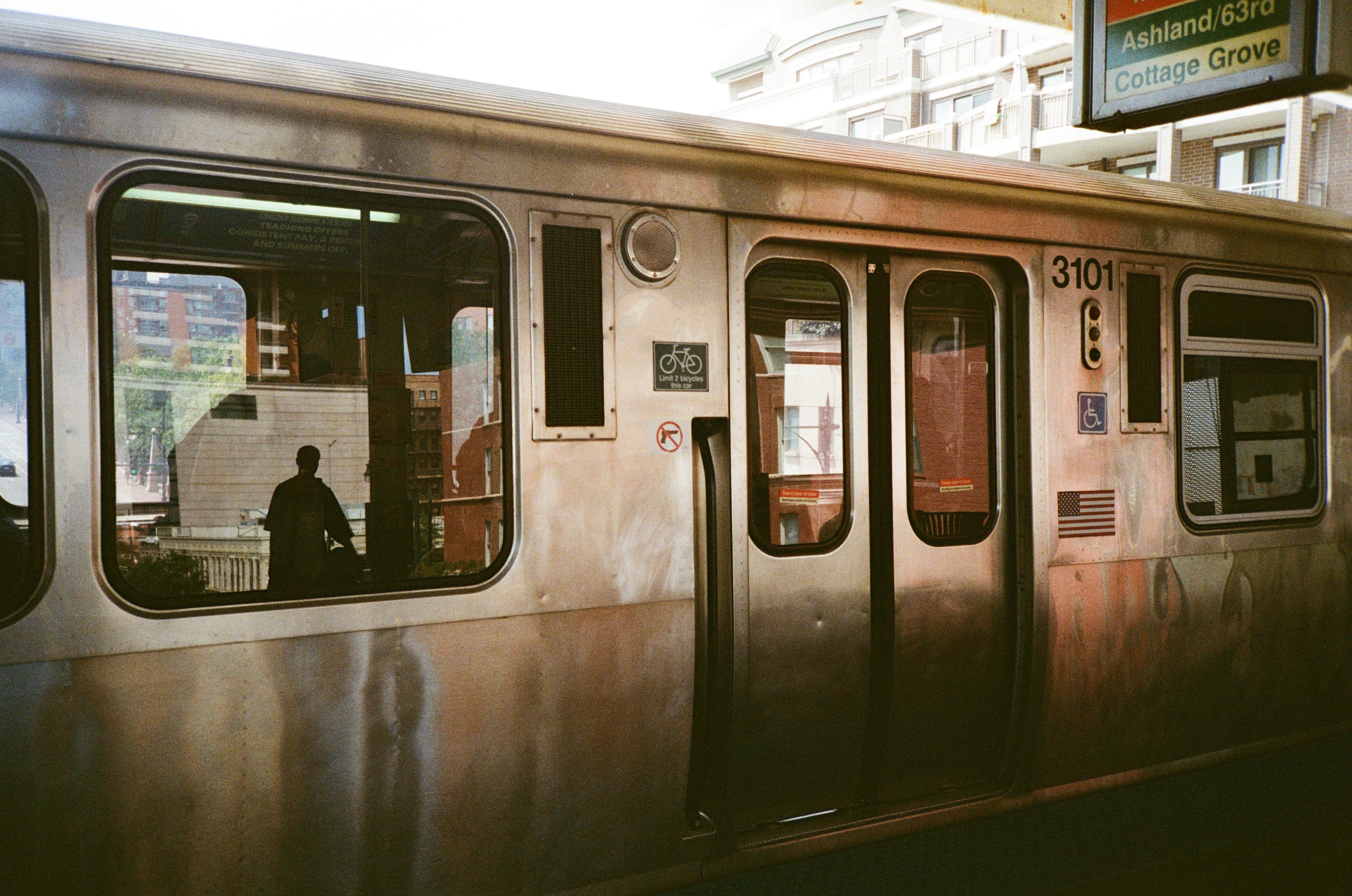
#11
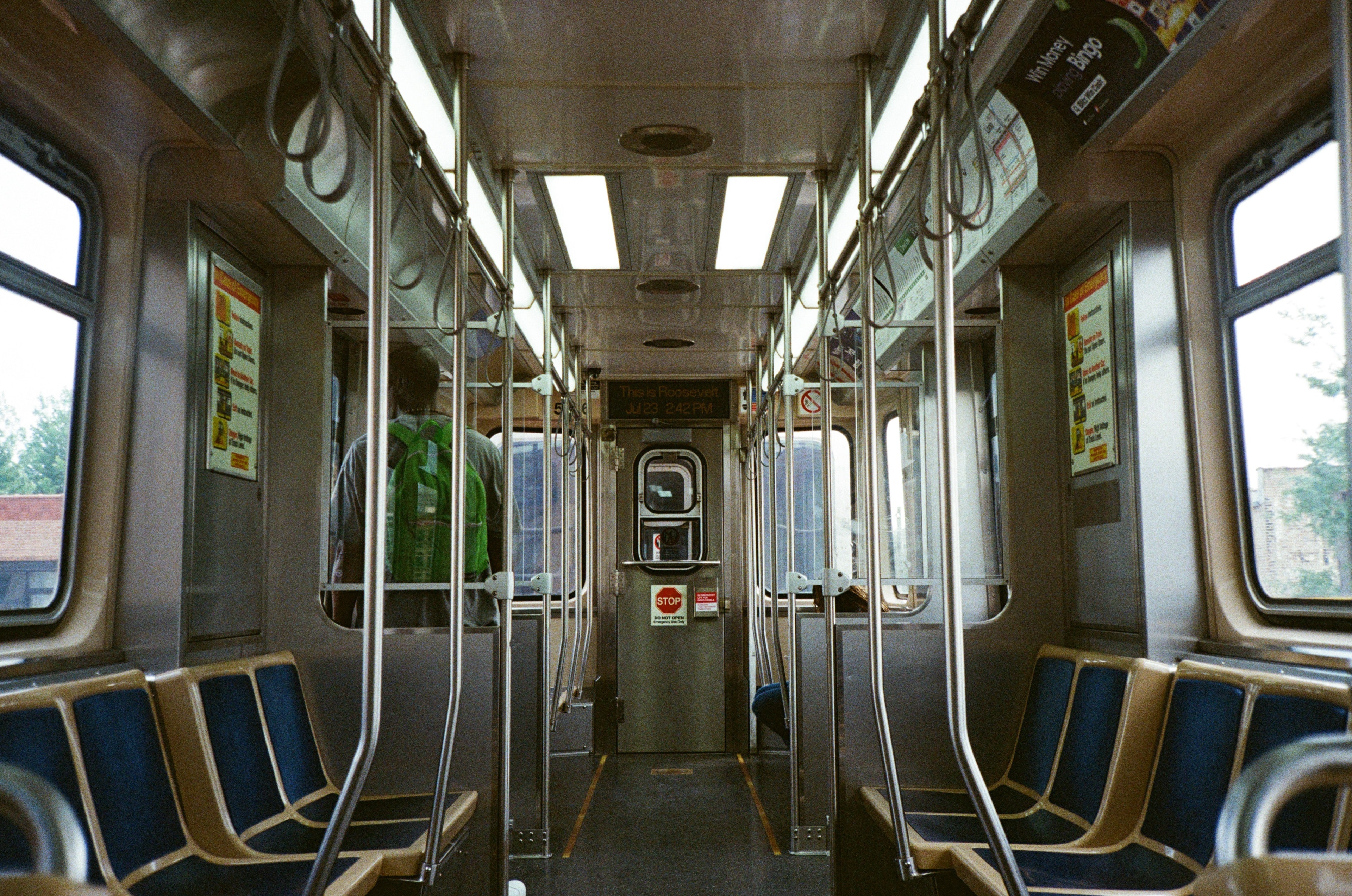
A beautifully designed train car. I was actually trying to capture the small "no firearms" sign.
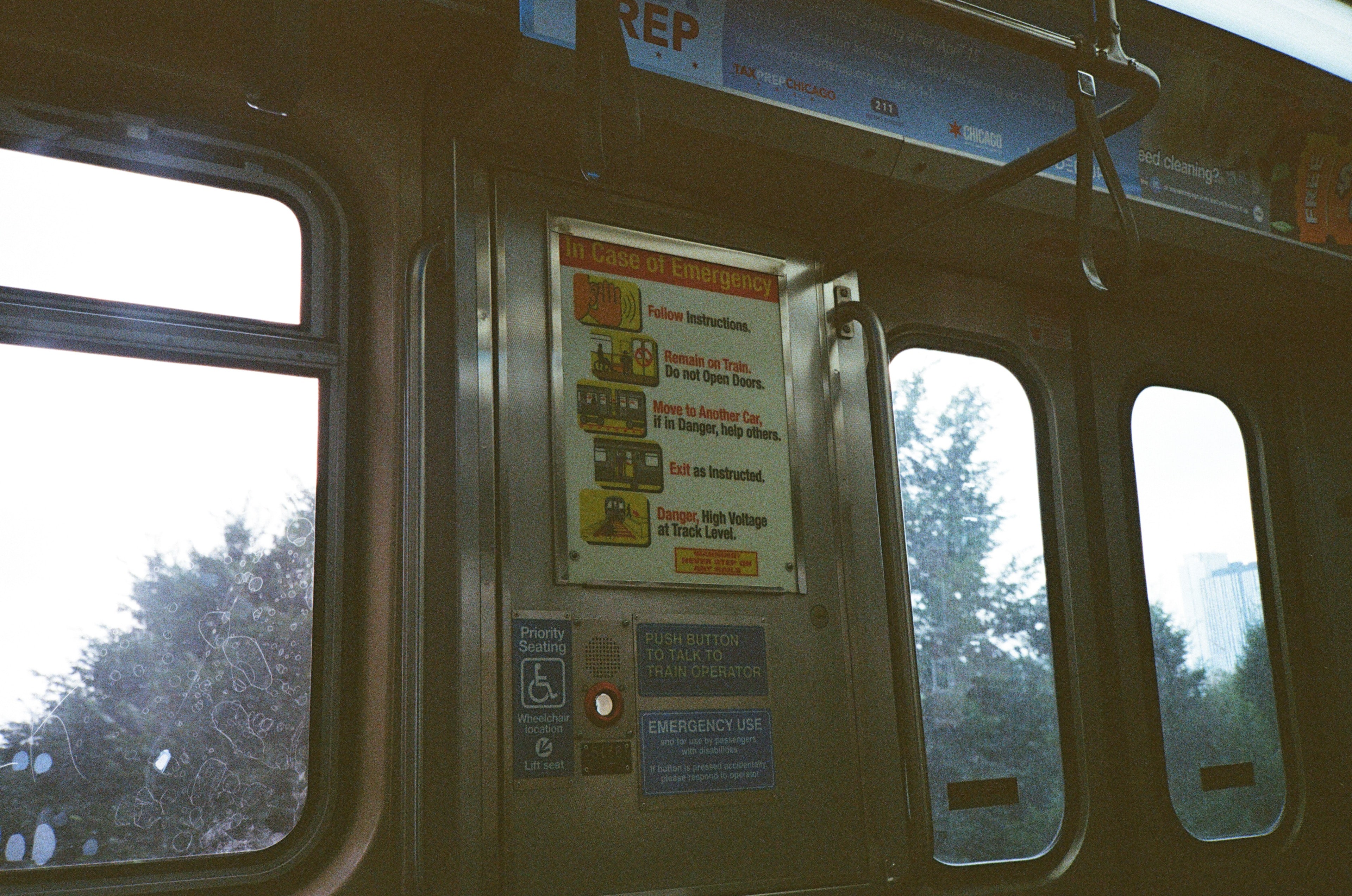
#12
Emergency instruction signs are commonly seen inside the train.
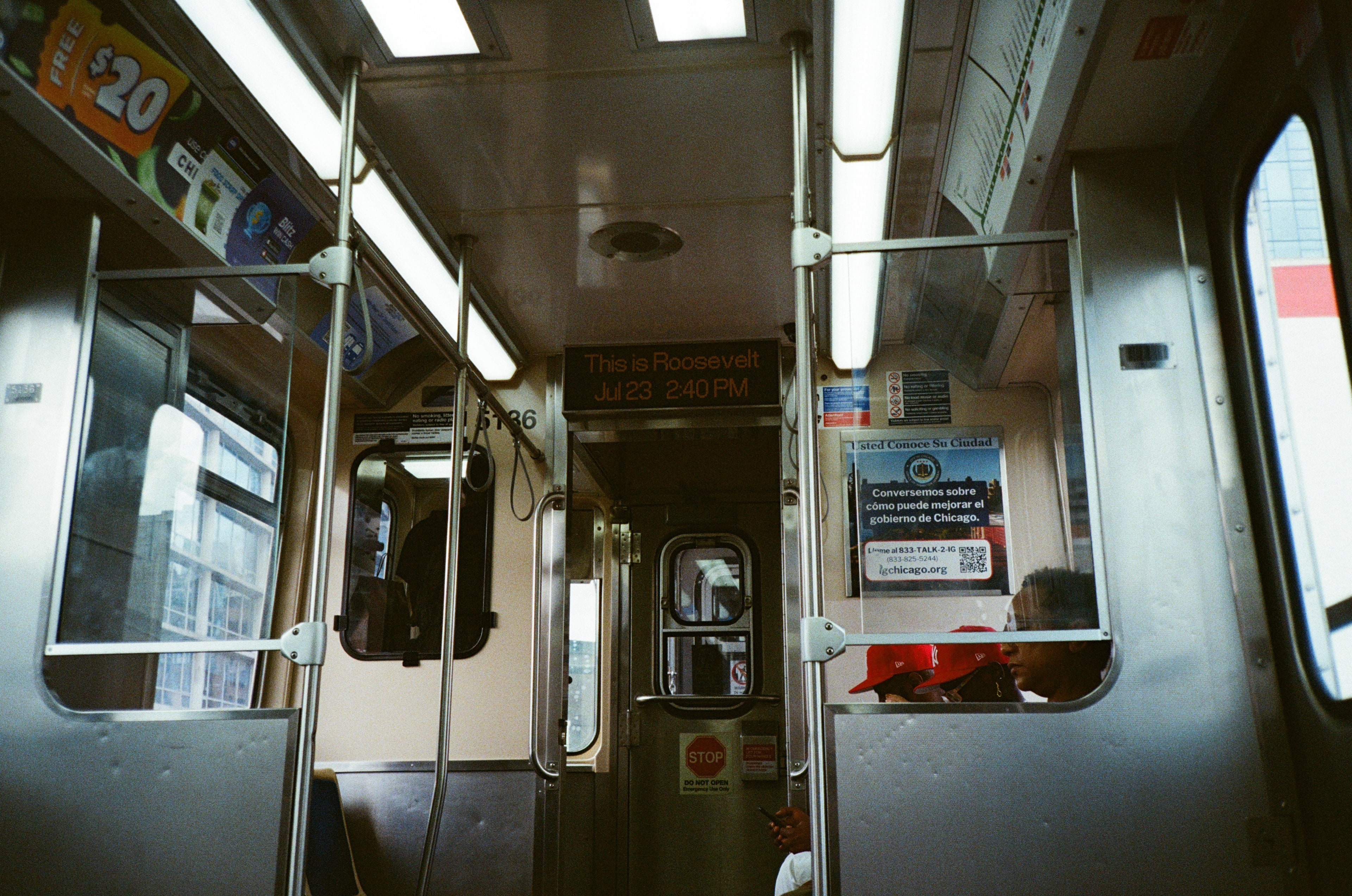
#13
The door connecting train cars.
#14
The train car is quite narrow. It reminds me of action movie scenes.
#15
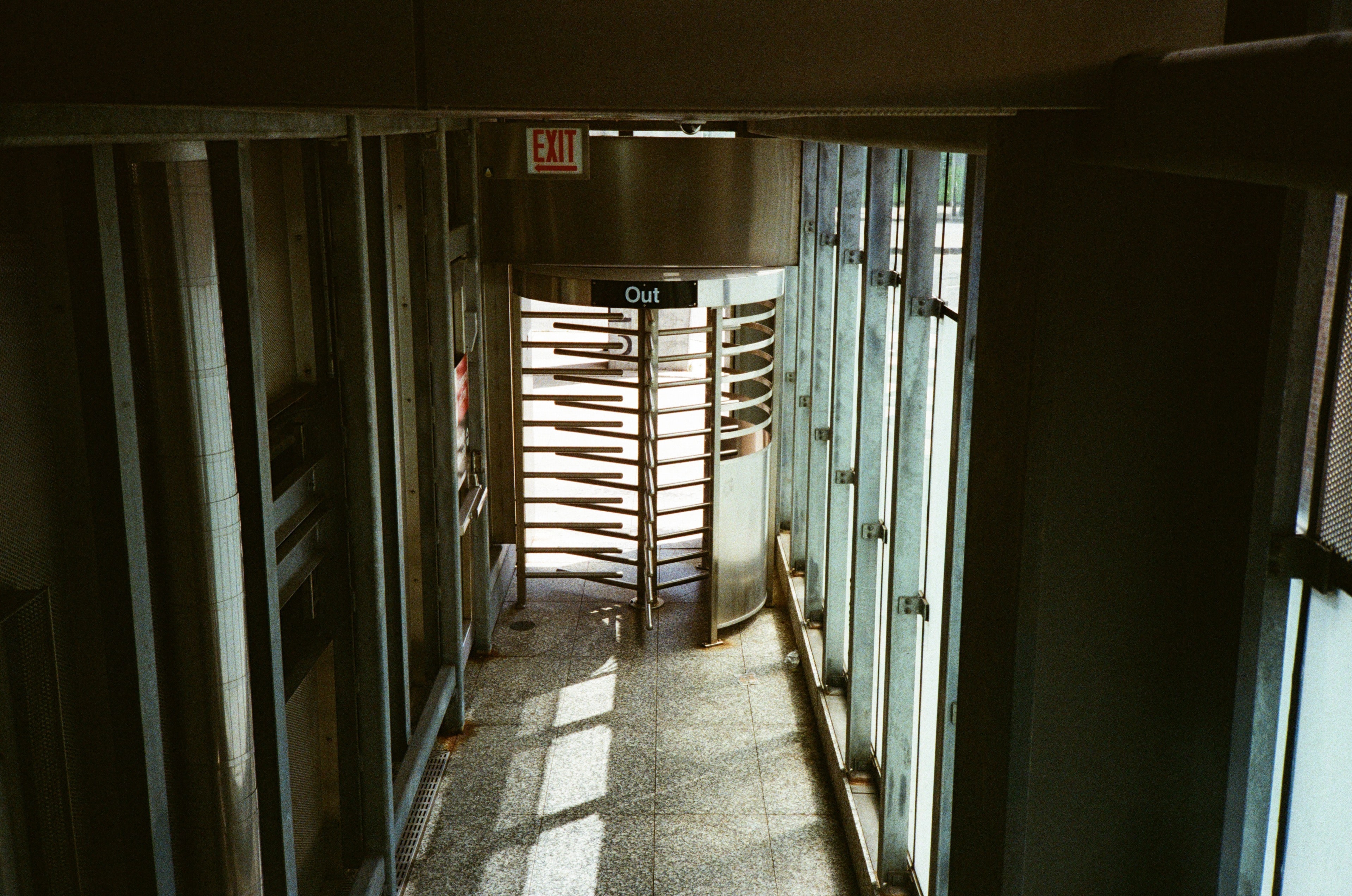
Exiting the station, I noticed they use "Out" instead of "Exit." The distinction is subtle but interesting.
#16
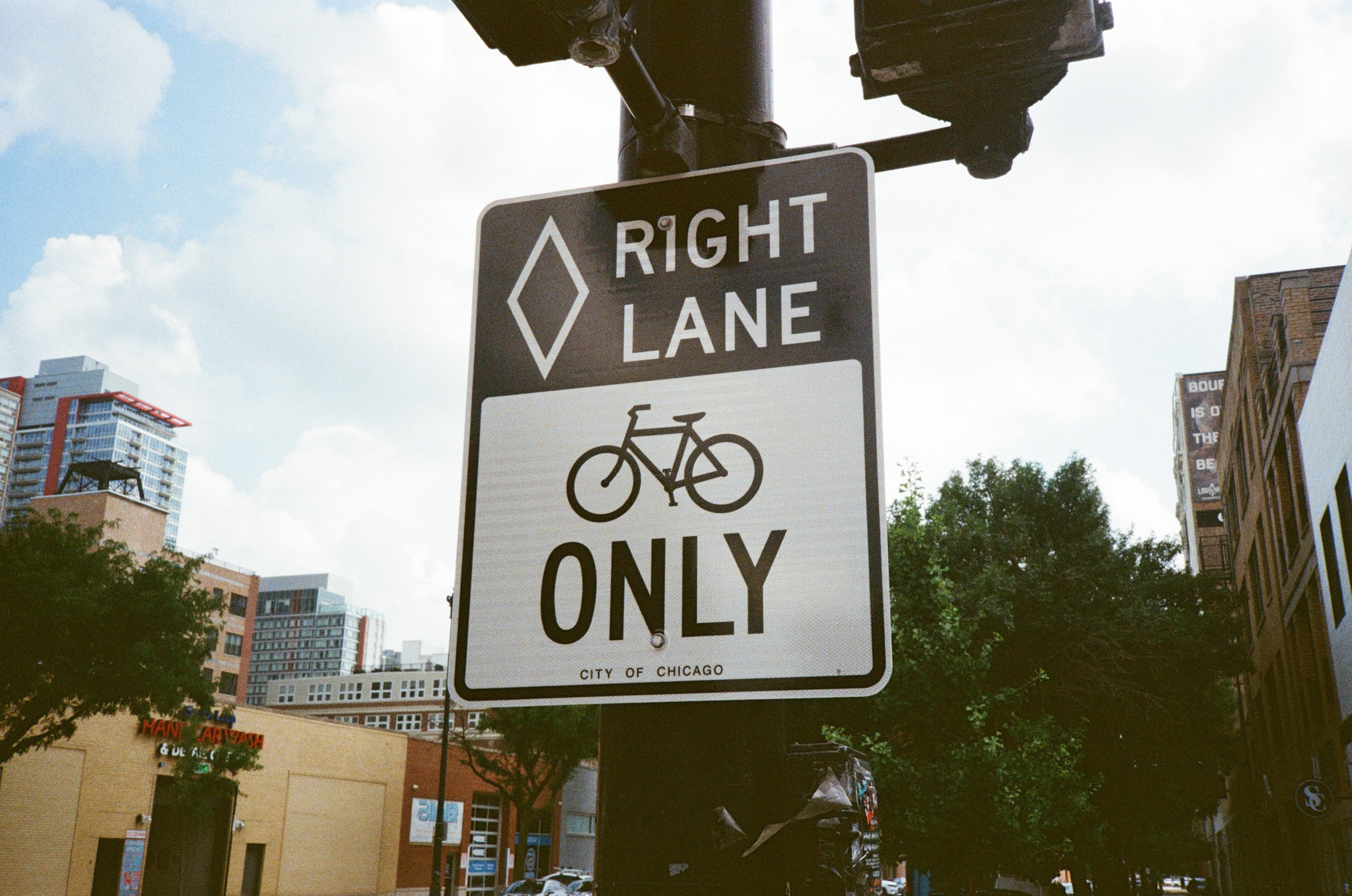
Traffic signs with the word "Only" are very common here.
#17
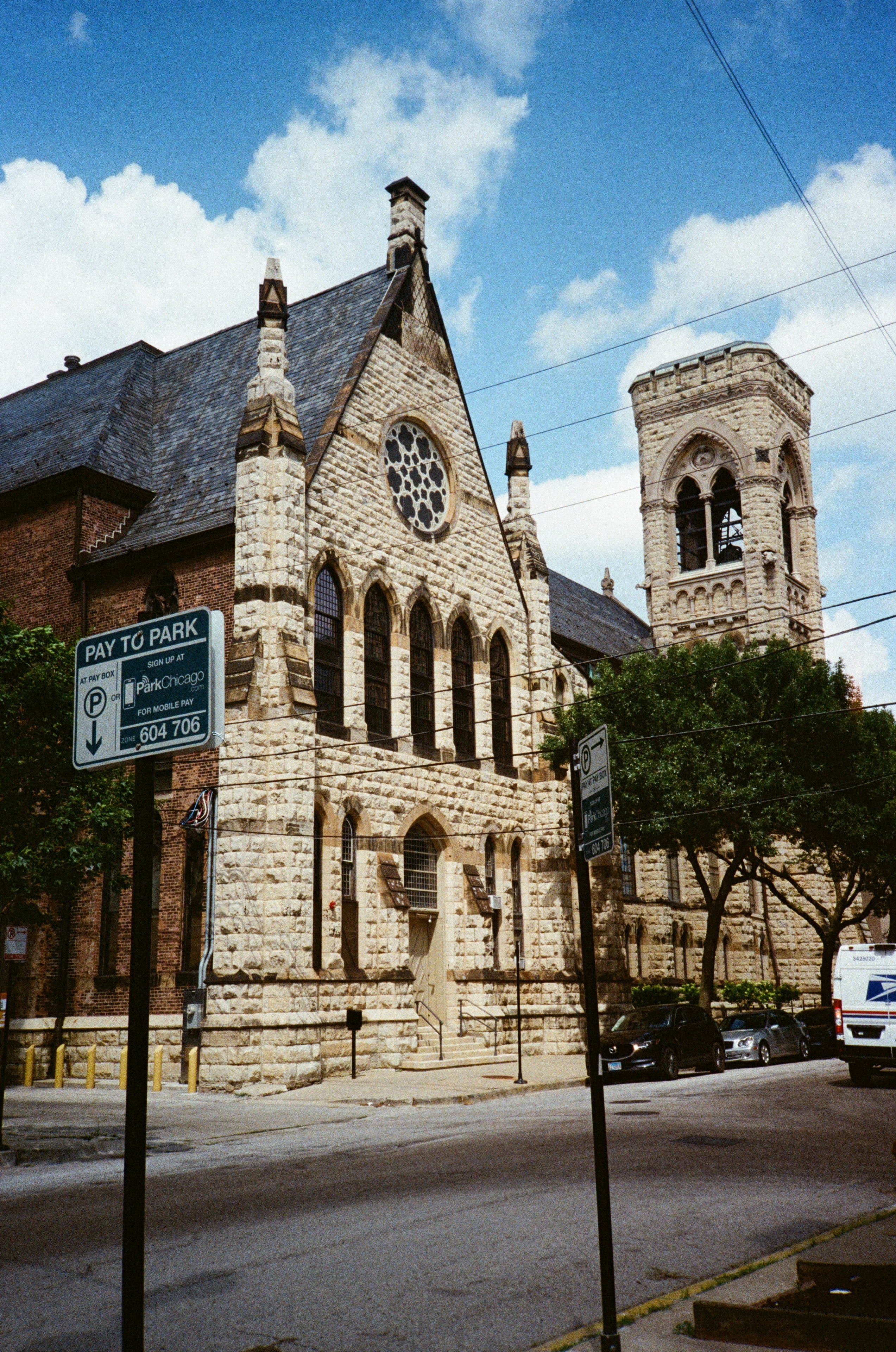
A historic-looking church.
#18
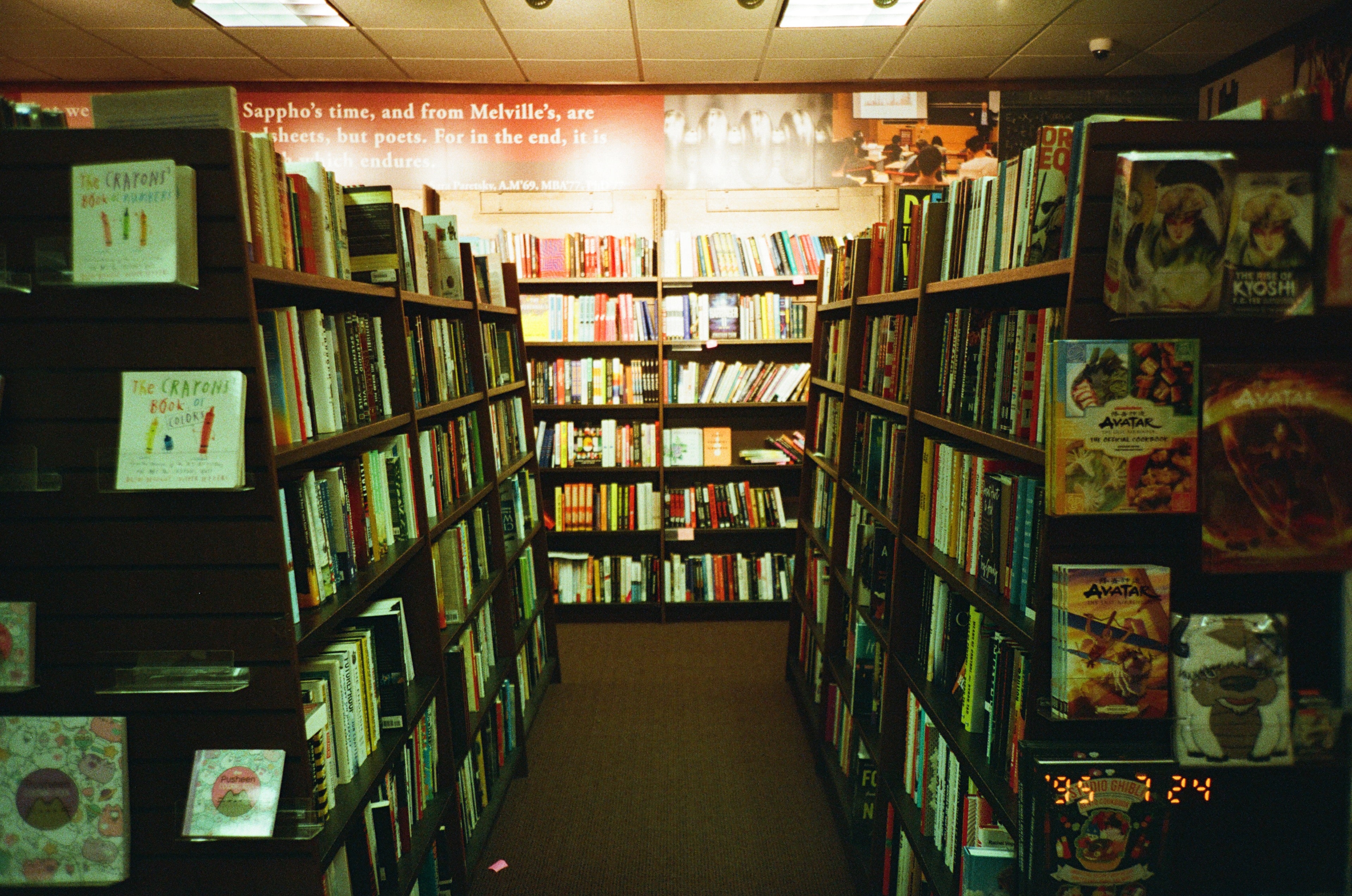
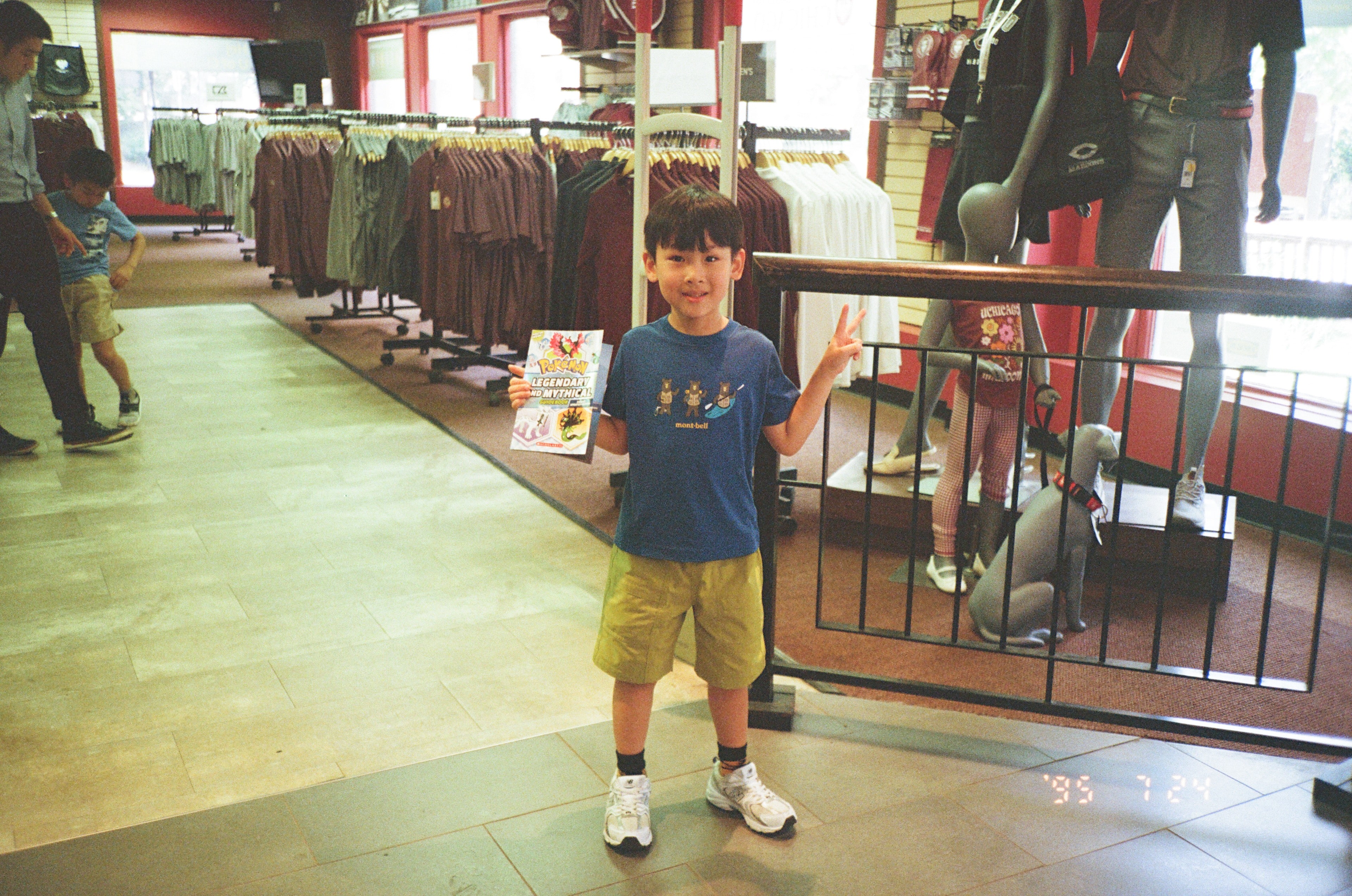
We visited a campus store at the University of Chicago.
#19
My son wanted to buy a Pokemon book. I gave him money and let him check out by himself.
#20
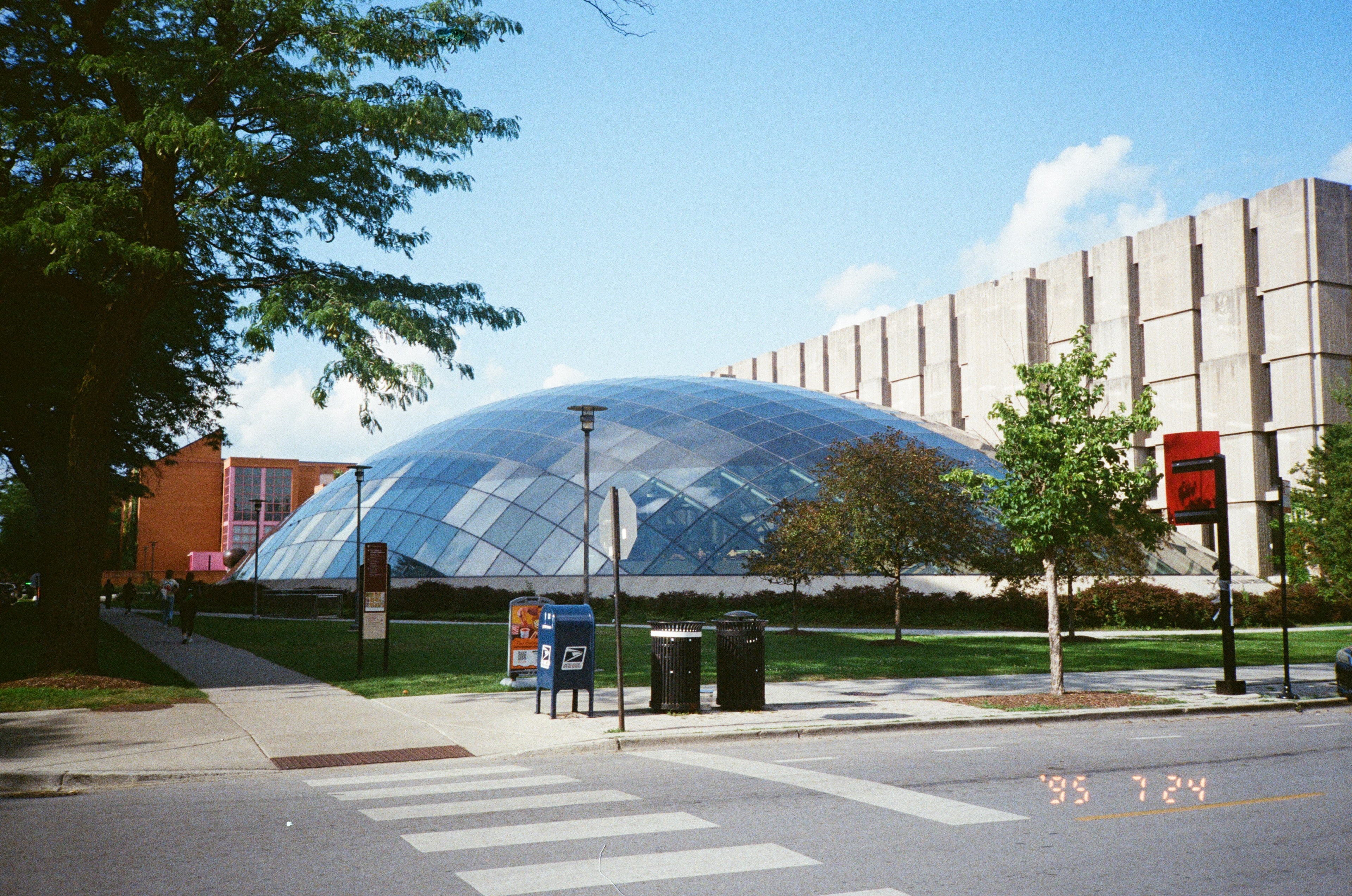
The library at the University of Chicago. It looks almost unreal.
-
This is the full set from this roll, shot with the Konica Big mini HG BM-300 35mm f3.5 and Fujifilm 400 (US version). Thank you for viewing, and thanks to DEP Lab for development and scanning.