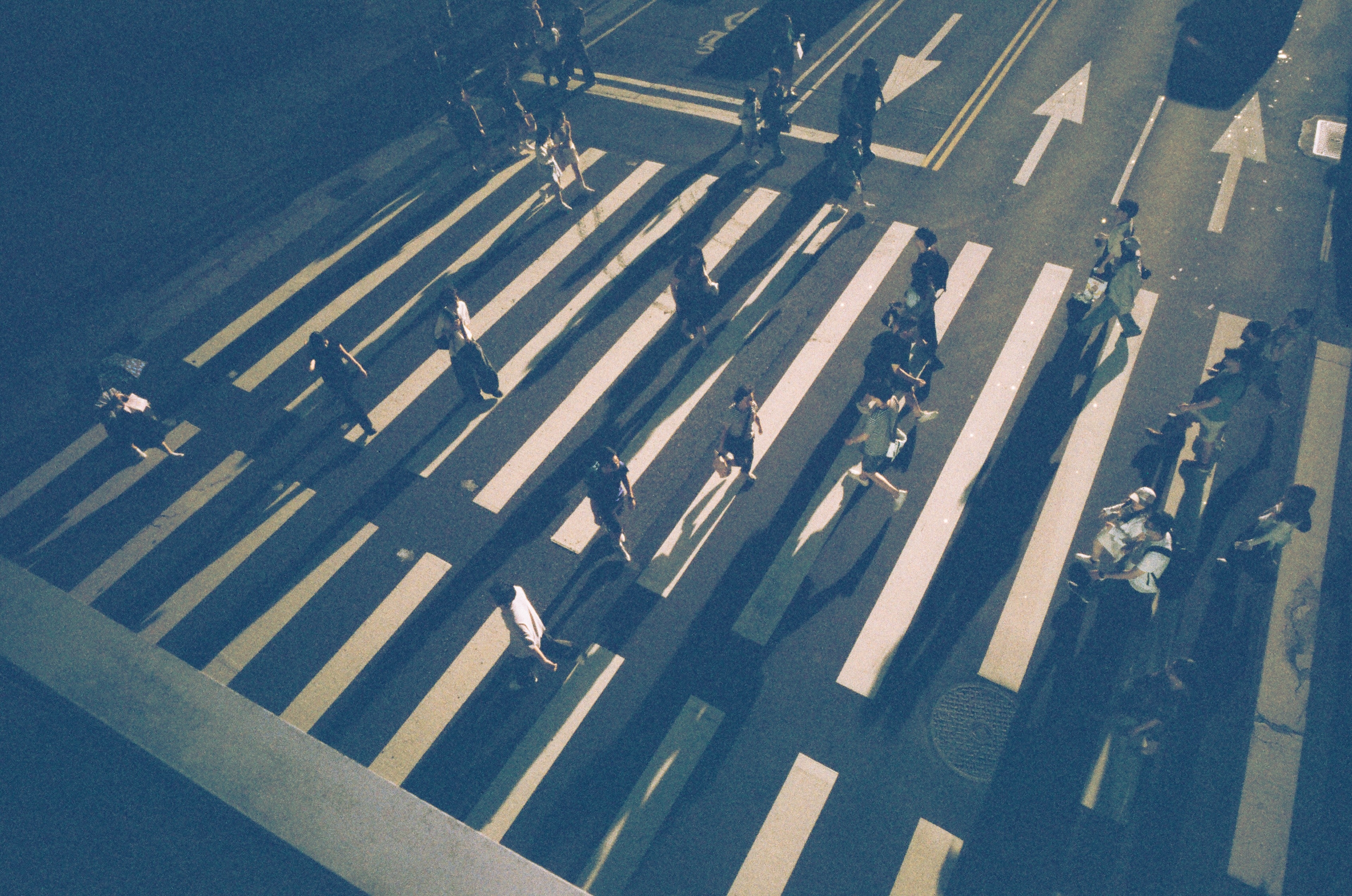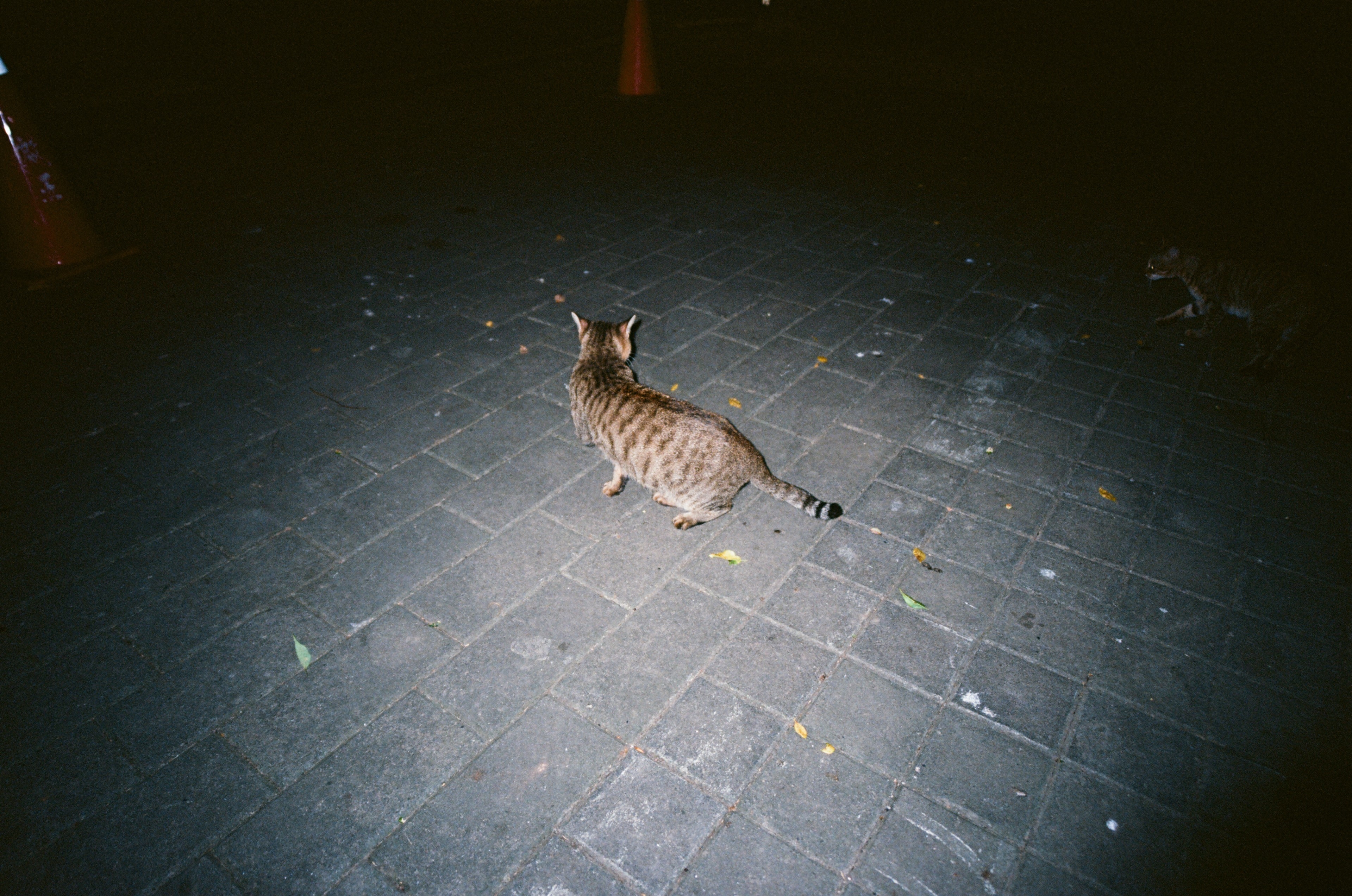
Roll #252
Film: Kodak Eastman Double-X 5222
Developed & scanned: Li-lai Photo, 2025/4/15
Camera: Olympus Mju I 35mm f3.5
-
In 1991, two significant film cameras were born. One was the Contax T2 38mm f2.8, made by Kyocera for professional photographers. The other was the Olympus µ[mju:] 35mm f3.5 — the Mju I — made by Olympus for everyone else.
Bottom line up front: I prefer the Mju I over the Contax T2, and the reason is simple. Compared to the Mju I, the Contax T2 is practically farsighted. The Mju I focuses down to 35cm. The T2 manages only 70cm — exactly double. That gap matters.
Online, you'll find no shortage of breathless praise for the Contax T2, as if shooting with one guarantees great photos. I'd argue most of that enthusiasm is the result of sellers and resellers talking up the price, combined with the fact that a few Korean celebrities happened to use one — a genuine disaster for anyone who actually loves photography, because it means paying a massive premium for a camera that doesn't justify it. In 2025, if a Mju I sells for 3,000 NTD, a fair price for the T2 would be around 9,000 — 3,000 extra for the build quality and tactile pleasure of holding it, and another 3,000 for the manual control options. That's about it.
I bought a Contax T2, shot three rolls, and sold it. Why three rolls? Because the first one didn't impress me, so I kept going — hoping to find what made this expensive camera worth its price. I never did.
With most cameras, the first roll tells me what I need to know. If a camera delivers a genuinely impressive first roll, there's no need to rush the second — it's earned its place. So far, only three cameras have given me that feeling right out of the gate:
- 1981 | Olympus C-AF 38mm f2.8 (manual advance, autofocus)
- 1981 | Cosina CX-2 35mm f2.8 (zone focus)
- 1994 | Konica Big mini HG BM-300 35mm f3.5 (point-and-shoot)
The Olympus Mju I joins that list. At distance, I can't tell the difference in resolving power between the Mju I and the Contax T2. Up close, the Mju I actually outresolves the Konica Big mini HG BM-300.
Mr. Yoshihisa Maitani, this is nothing short of remarkable.
-
Note: Yoshihisa Maitani (1933–2009) was the designer of the Olympus Mju series, as well as the Olympus OM system, Pen F system, and XA series.
-
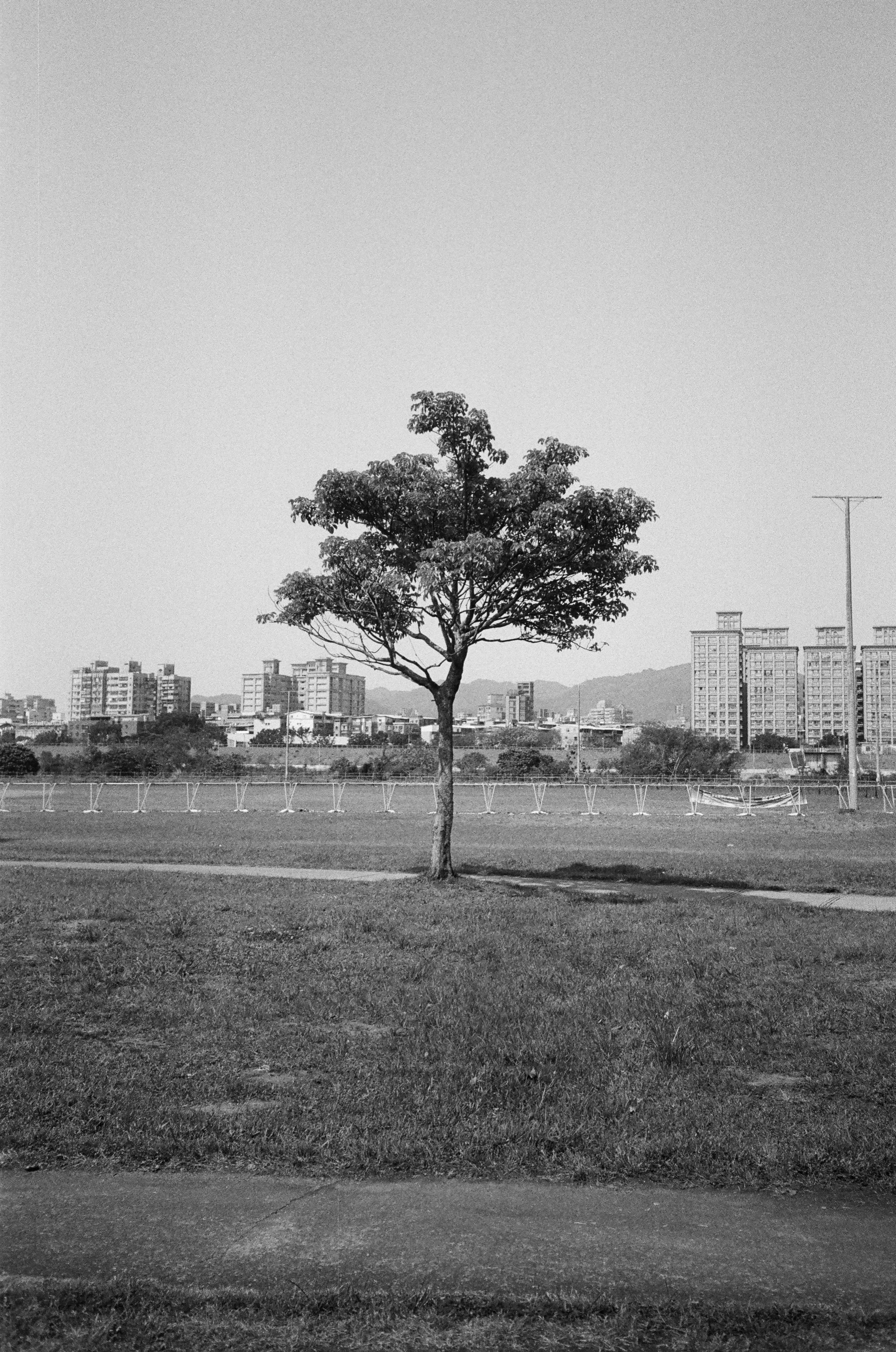
#1
Opening with the tree — my tree. If you want to see the Contax T2 version, it's frame #14 in EP224.
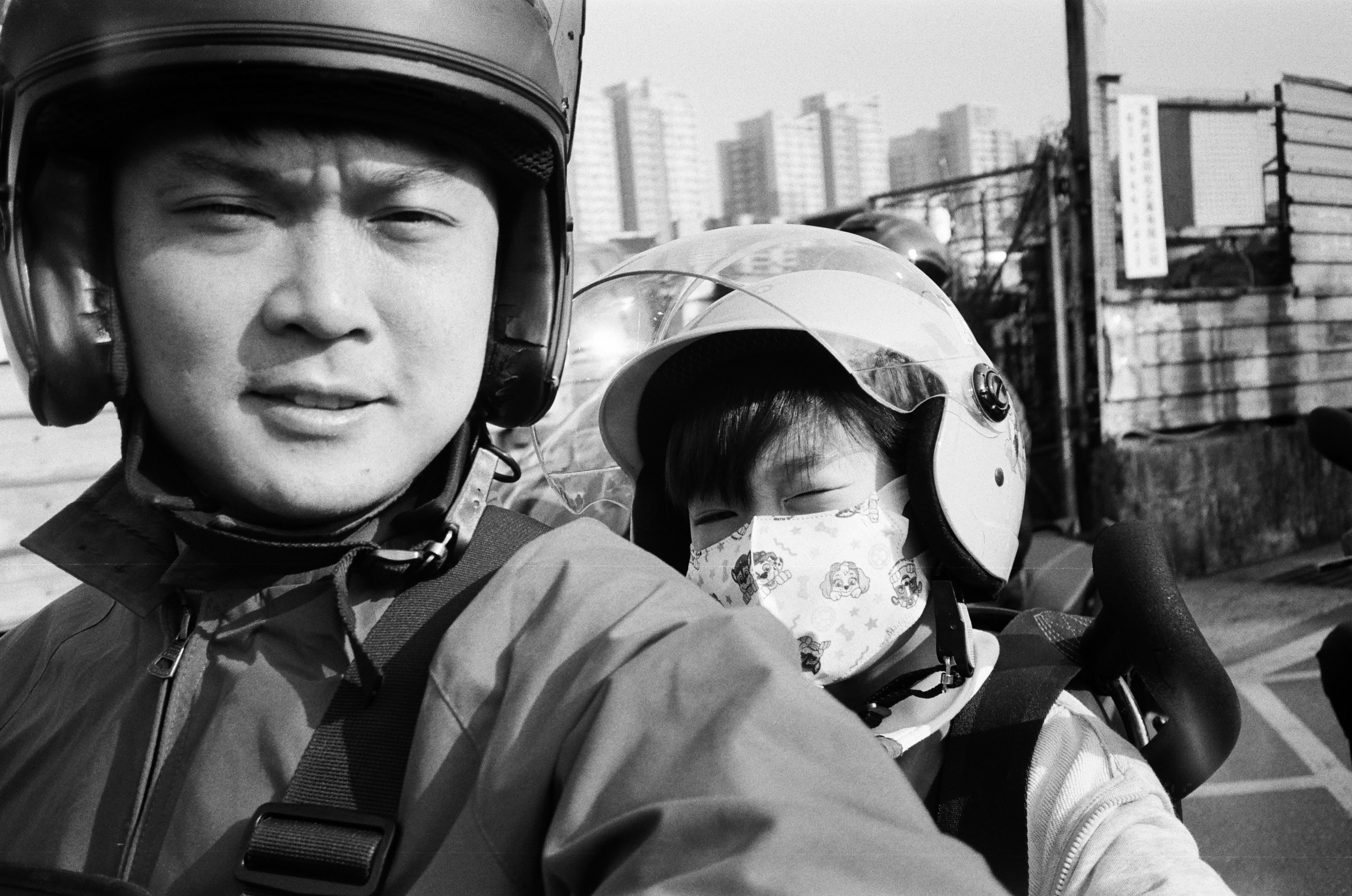
#2
I've been thinking a lot lately about how there aren't many more school drop-offs left — he's starting elementary school soon. So I photograph it.
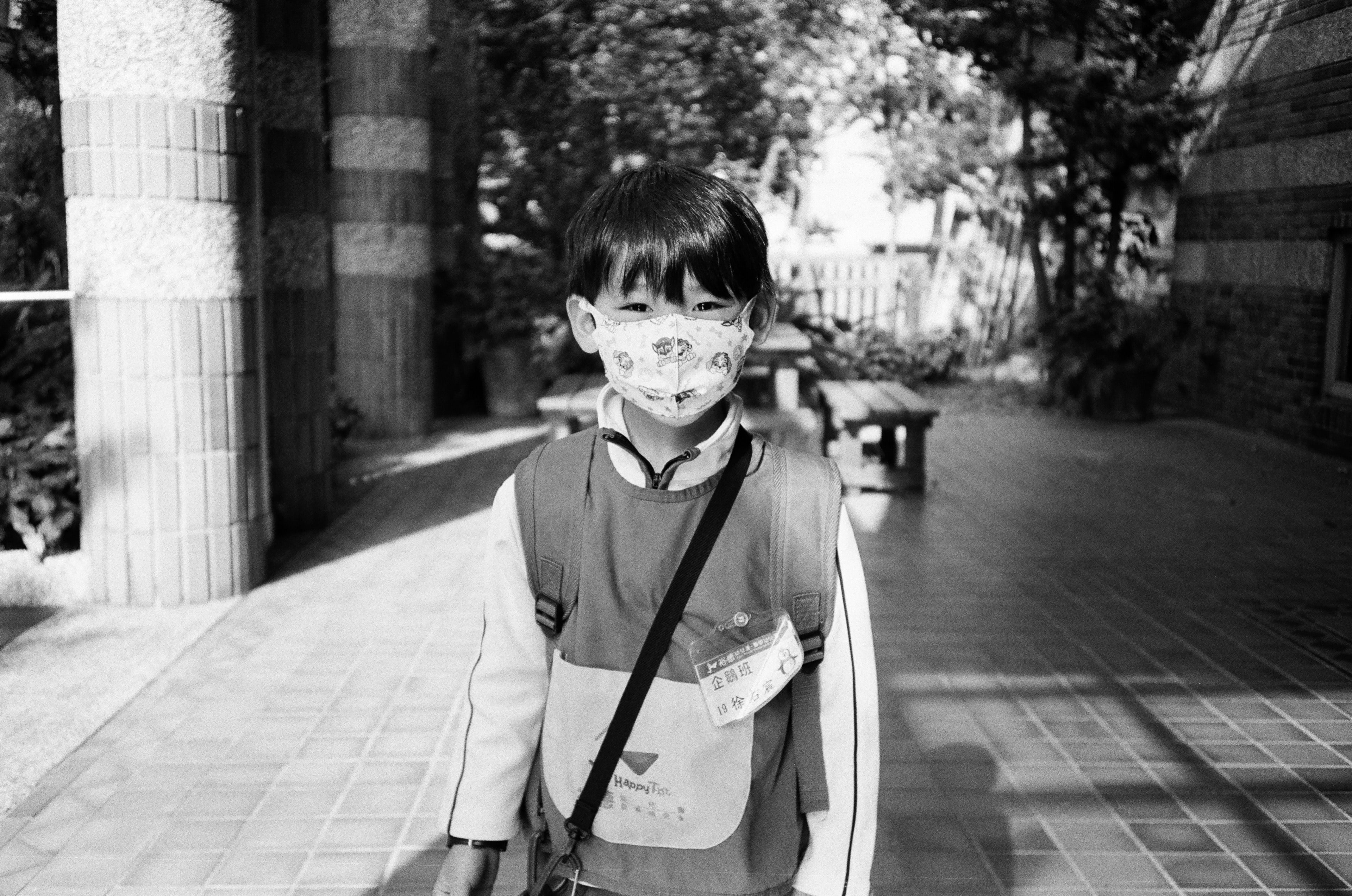
#3
A clear day, my son heading into school with full energy. Before I started shooting a lot with f3.5 point-and-shoots, I always worried the bokeh would be disappointing. What I've found is that with point-and-shoots, bokeh depends far less on aperture than on focal length, shooting distance, and whether the camera actually prioritizes wide-open exposure over flash. The Mju I clearly prefers to shoot wide open — and the results show it.
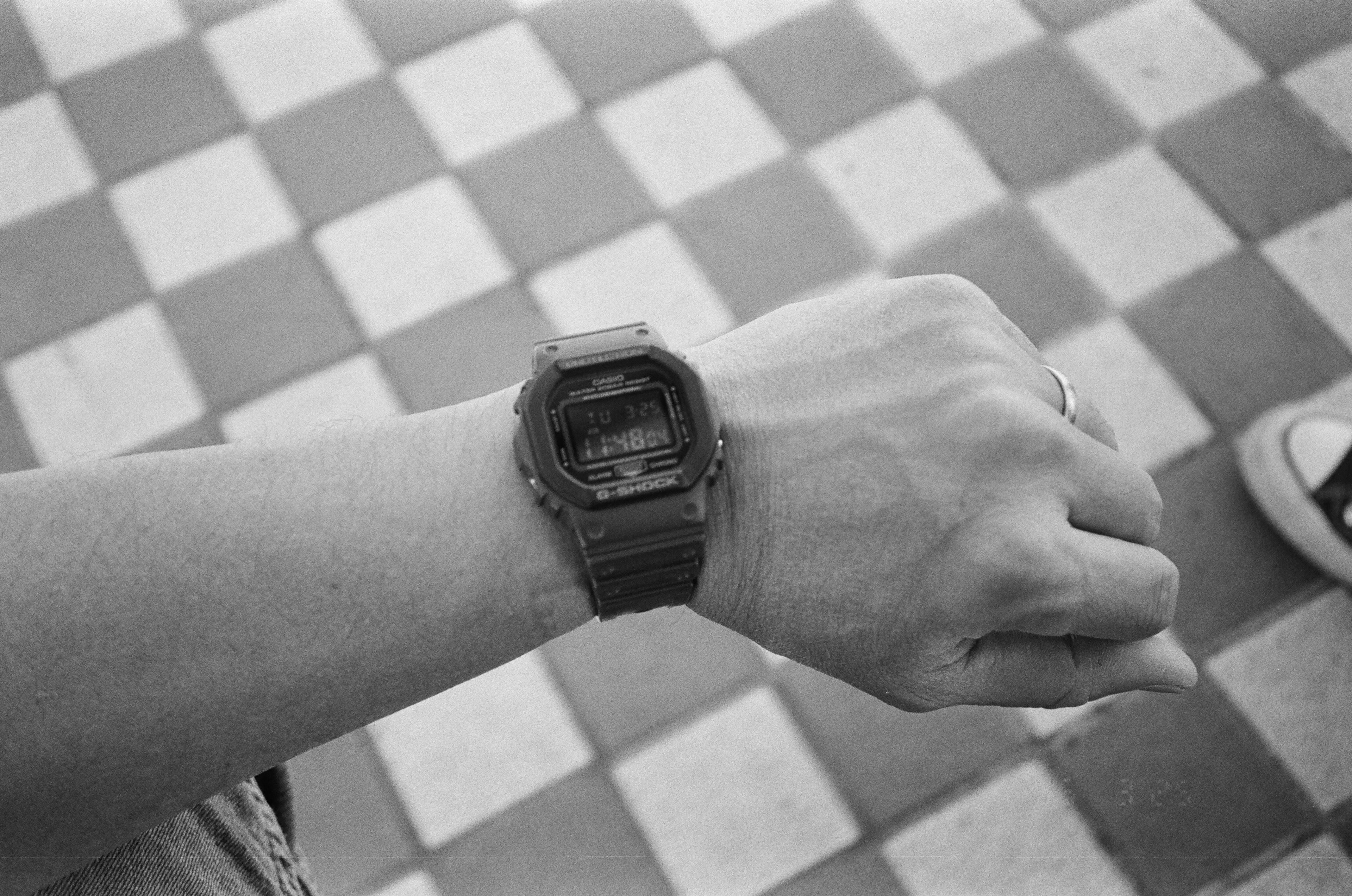
#4
Close-focus reliability is critical in a point-and-shoot. My experience with the Konica Big mini F 35mm f2.8 was frustrating — not that it couldn't focus, but that it would confirm focus and still produce a blurry frame. Maddening. I thought it was a defective unit, bought a second one, same problem. Sold both. The best close-focus reliability I've experienced is still the Konica Big mini HG BM-300 35mm f3.5. The Mju I can miss on small subjects held in the hand — worth being aware of.
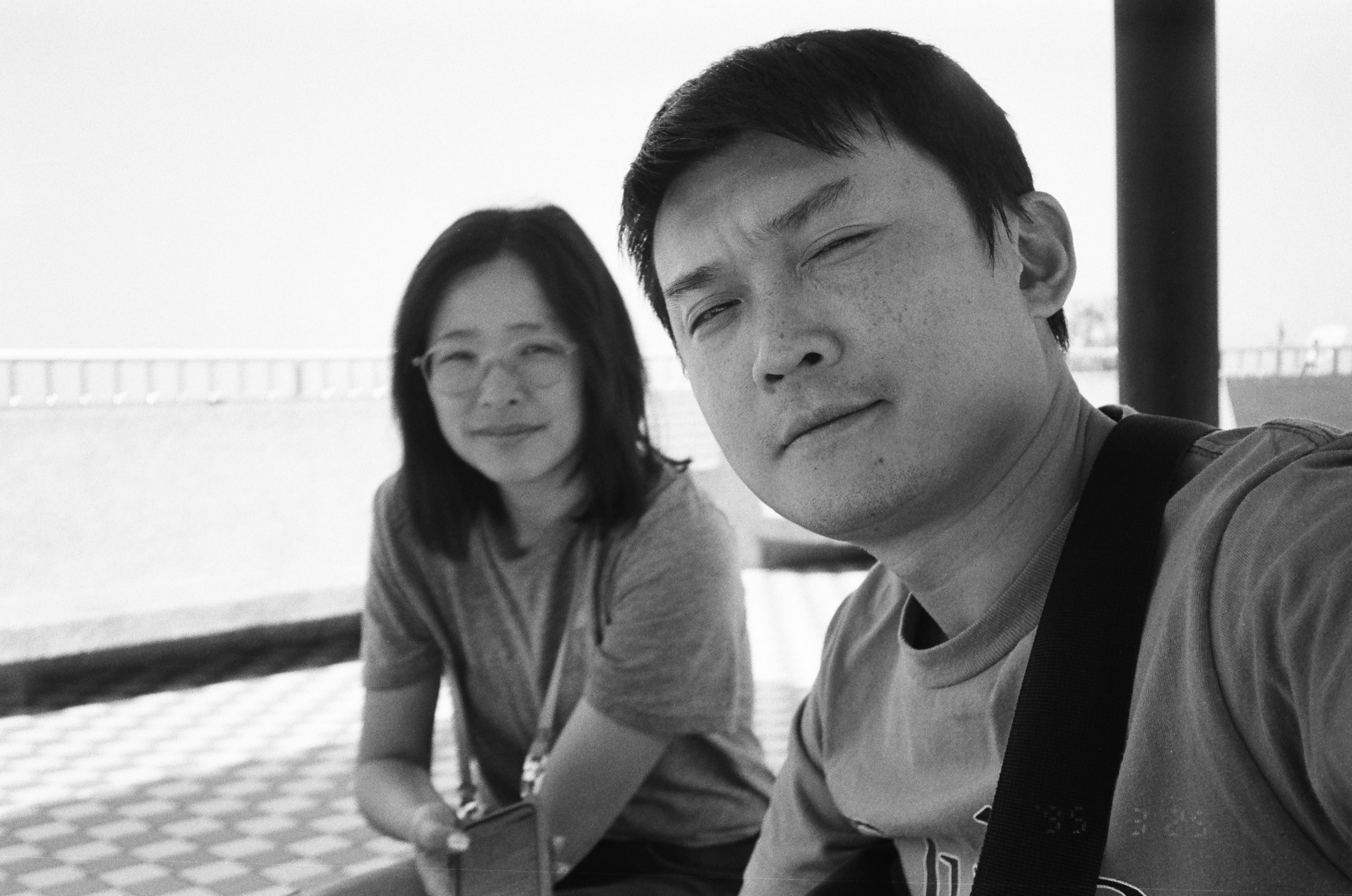
#5
My wife and I went up to Hongludi to pray and get a temple charm for my mom. This was shot from a pavilion near the top on a bright, sunny day. You can see the Mju I prioritizing shutter speed over aperture here — which is why my wife in the background went soft. The full-frame equivalent shallow depth of field doing its thing.
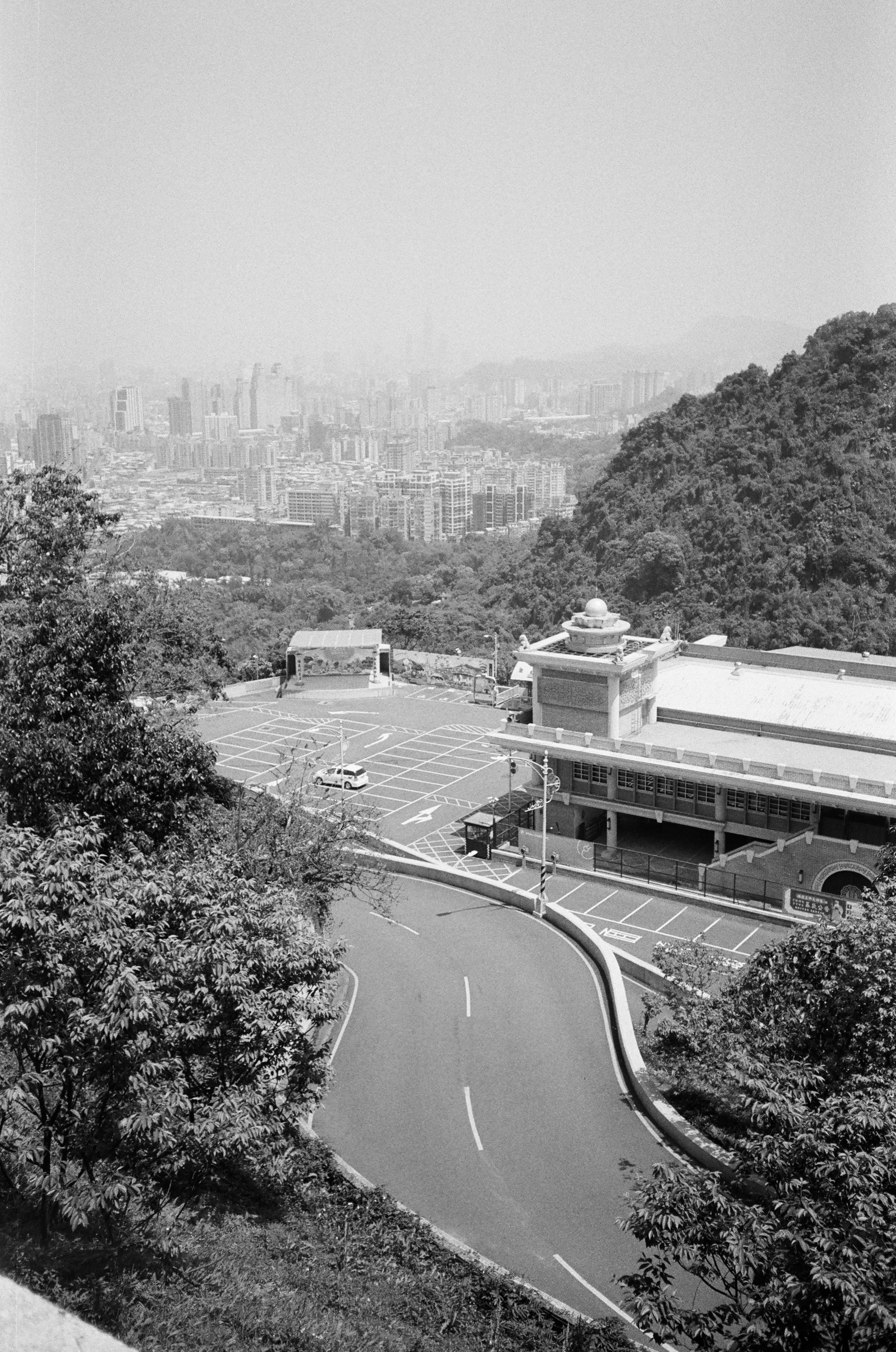
#6
When I'm at Hongludi, I always shoot this vertical framing. I like how the foreground, midground, and background layers pull the eye through the frame.
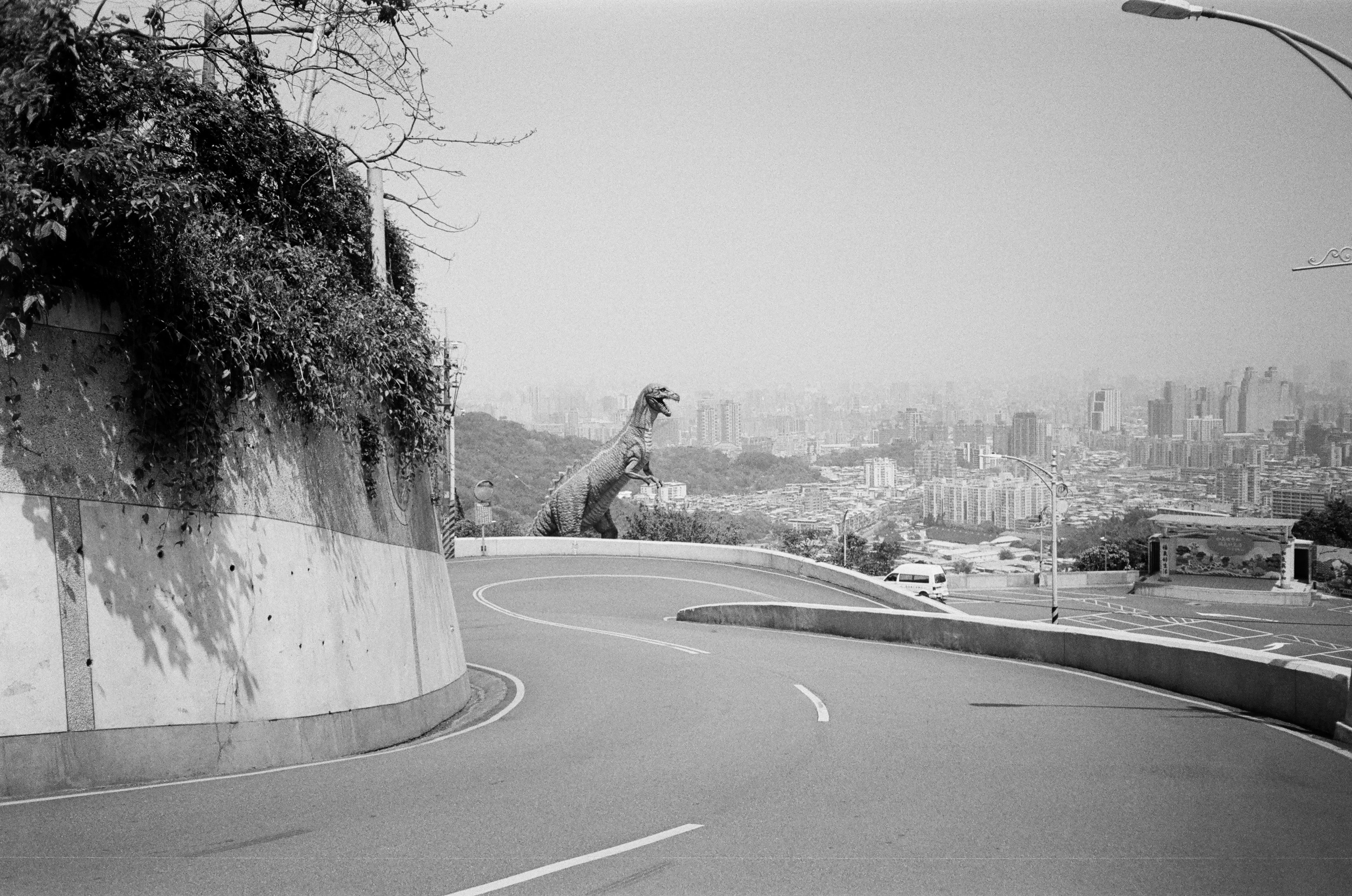
#7
But this is my definitive Hongludi composition. For comparison: the Fujifilm Klasse S, Olympus OM-10, and Asahi Pentax 6x7 versions.
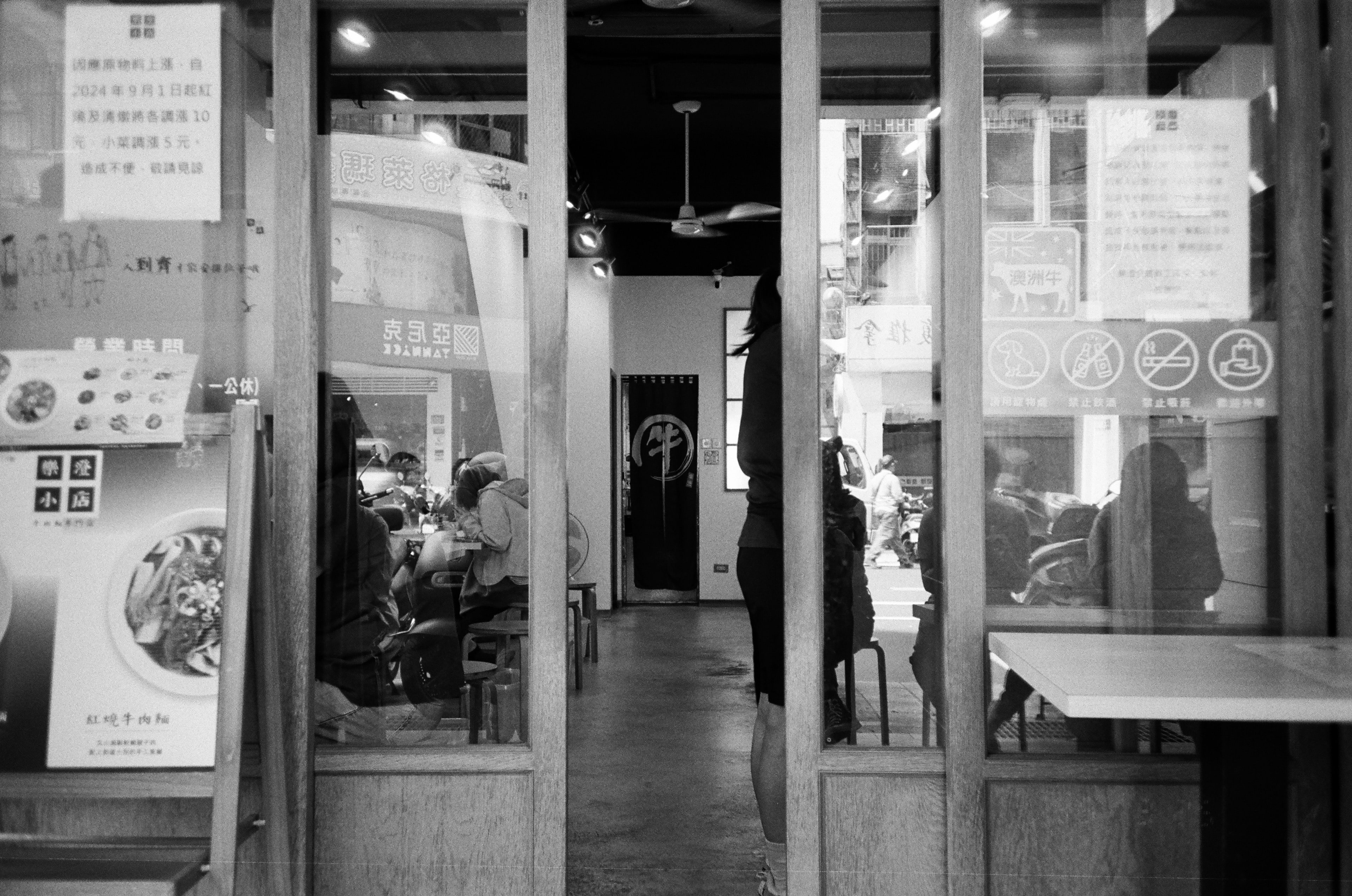
#8
A beef noodle shop too good to recommend publicly.
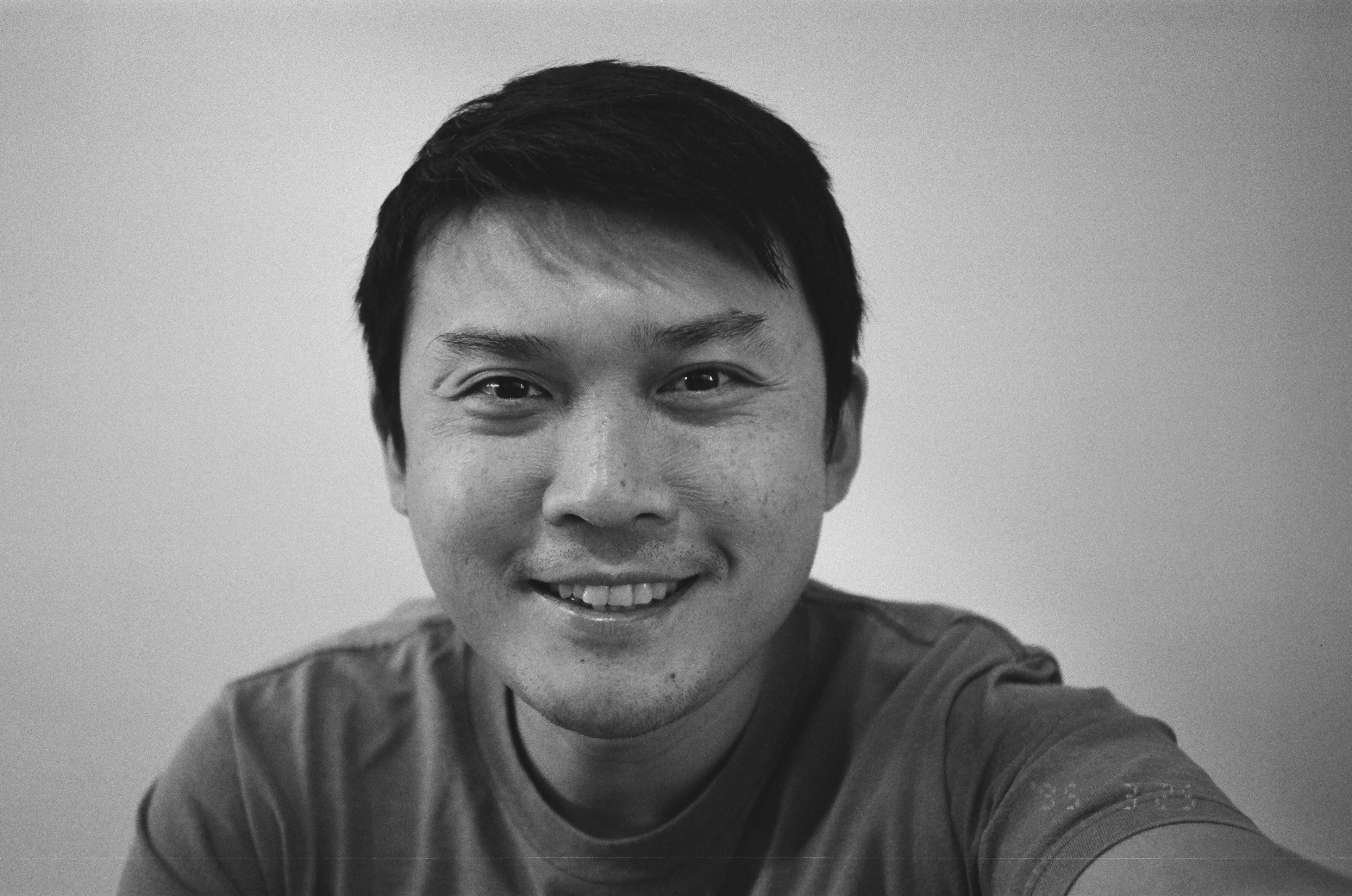
#9
Indoor low-light close-focus test. First camera I've used that renders the lines on my face this clearly. For comparison: the Konica Big mini BM-300 HG and Fujifilm Klasse S versions.
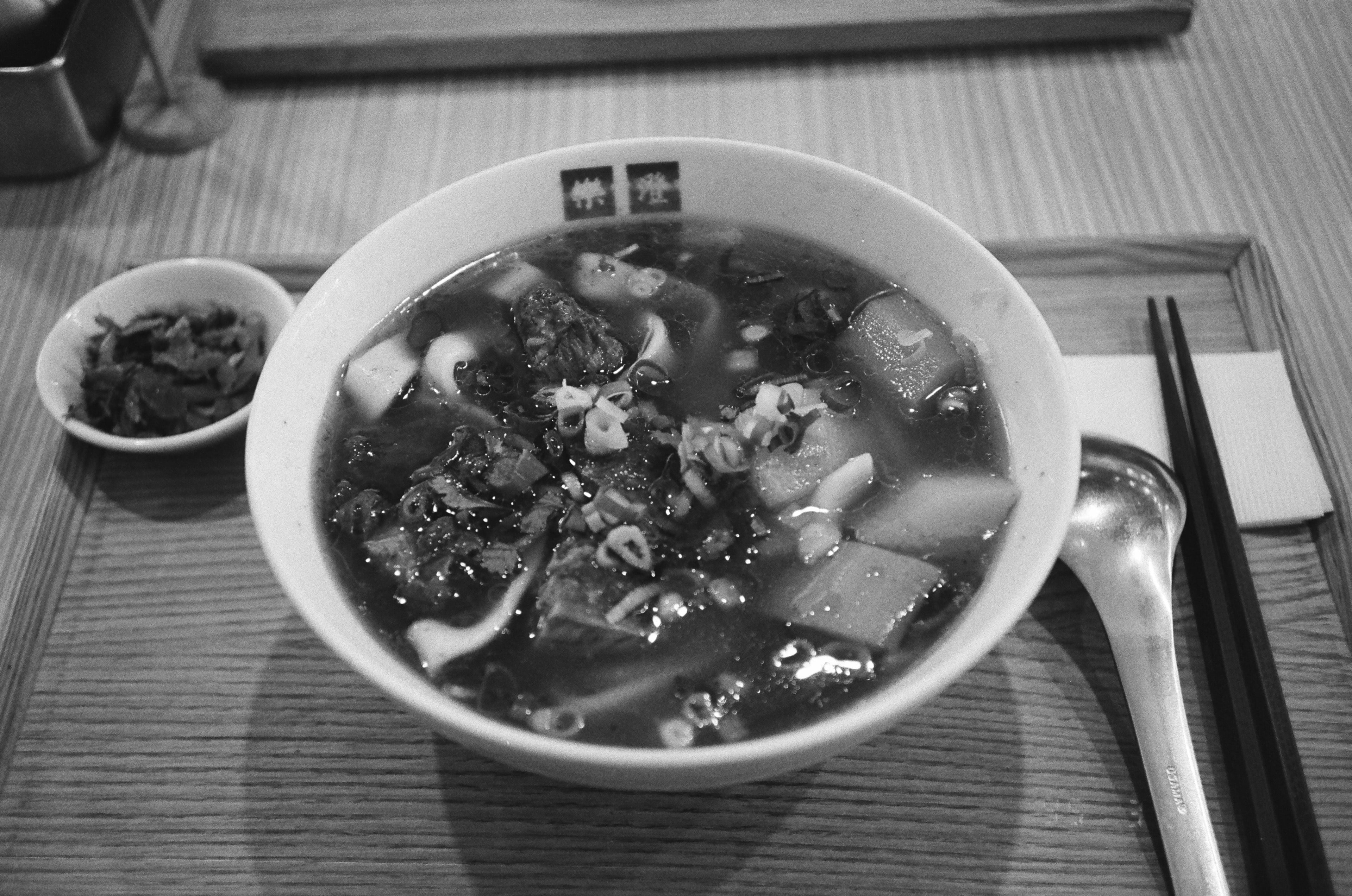
#10
The beef noodle shop I said I wouldn't recommend publicly.
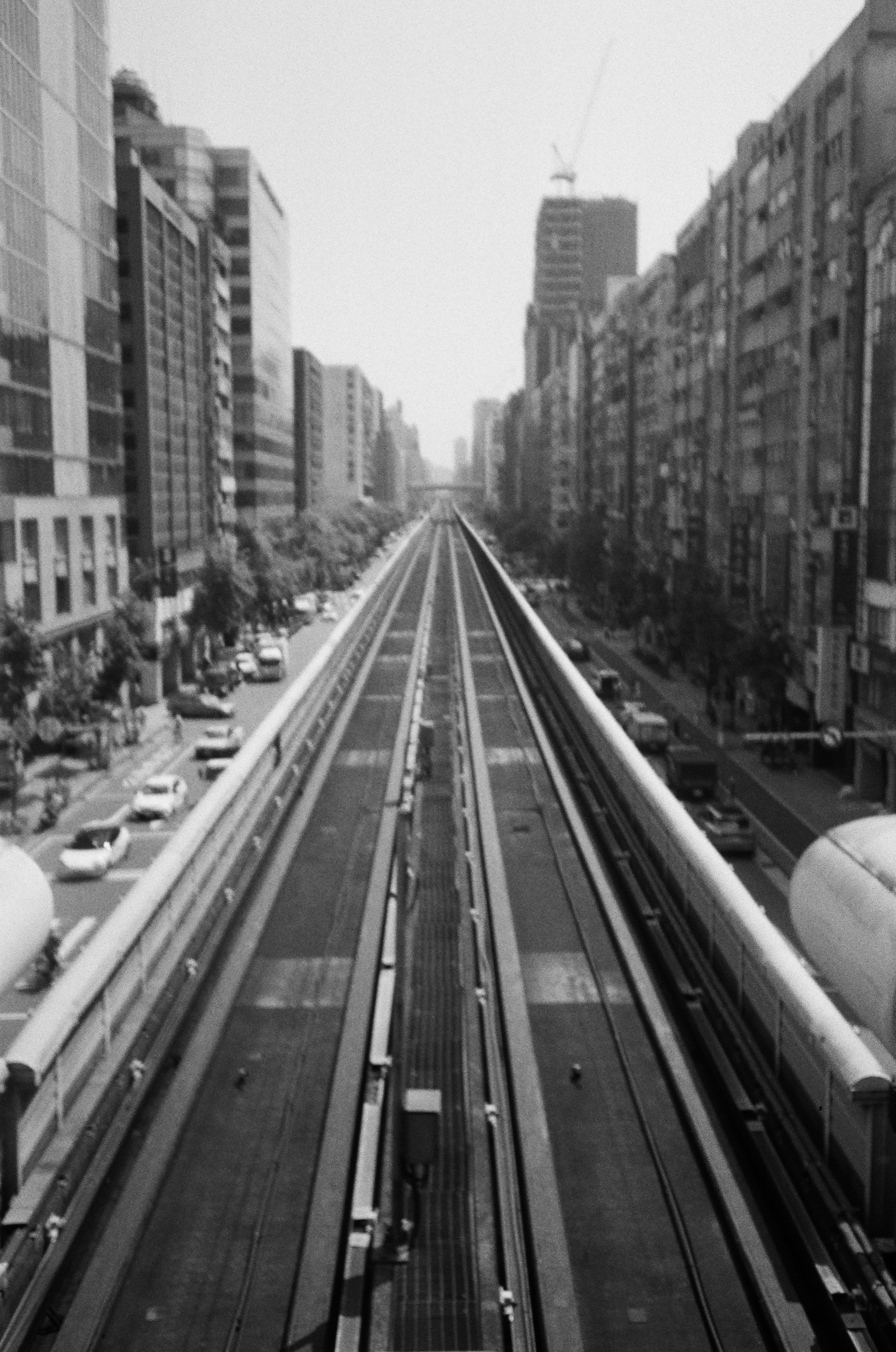
#11
Few point-and-shoots can beat a window. The Mju I is sharp, but without an infinity lock mode, shooting through glass in an enclosed space is a gamble.
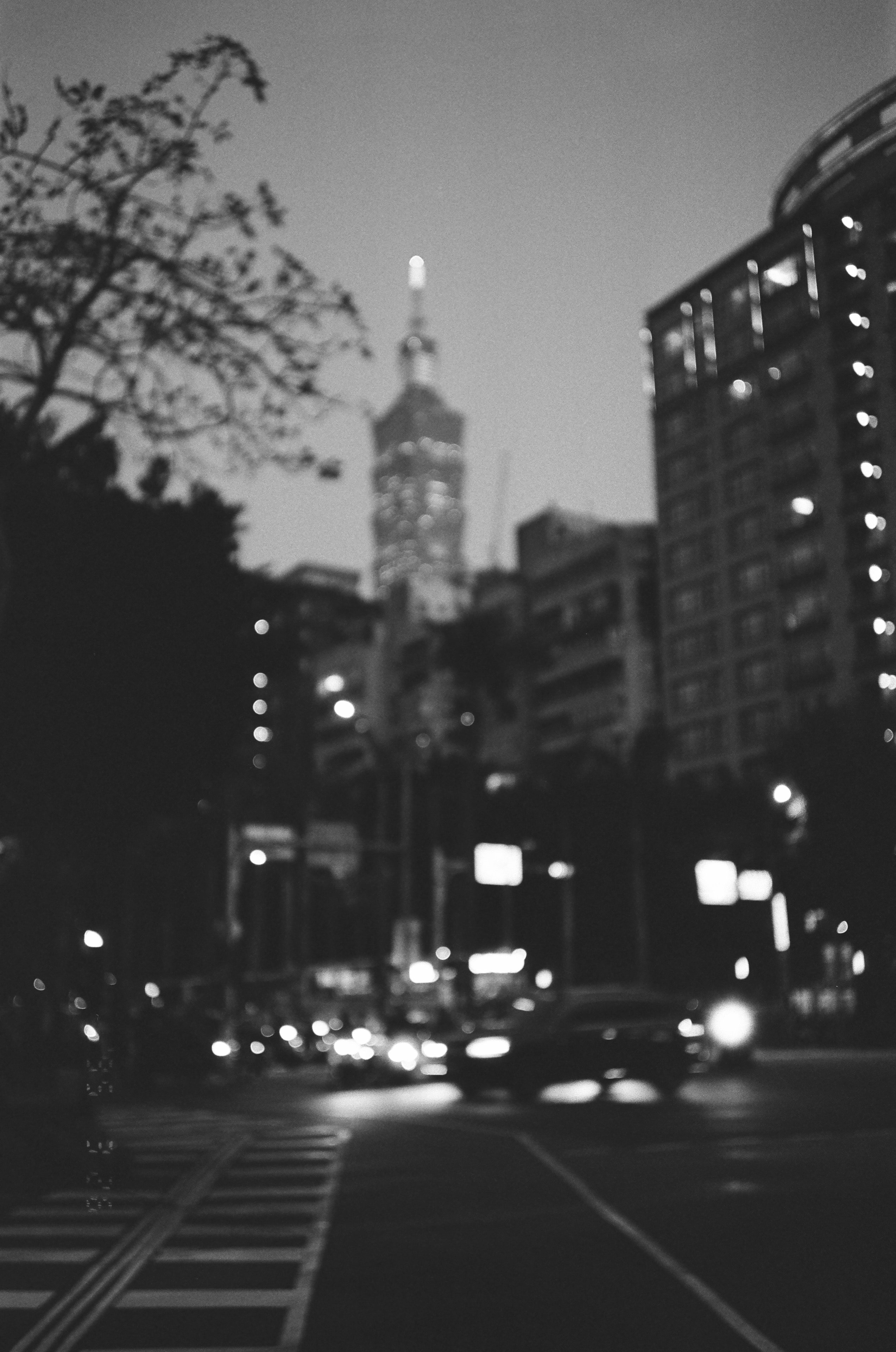
#12
The great enemy of any point-and-shoot: missed focus. This day I went cold-calling at a trade show at Taipei World Trade Center — trying to drum up web design clients. Shot this leaving the venue, well after dark.
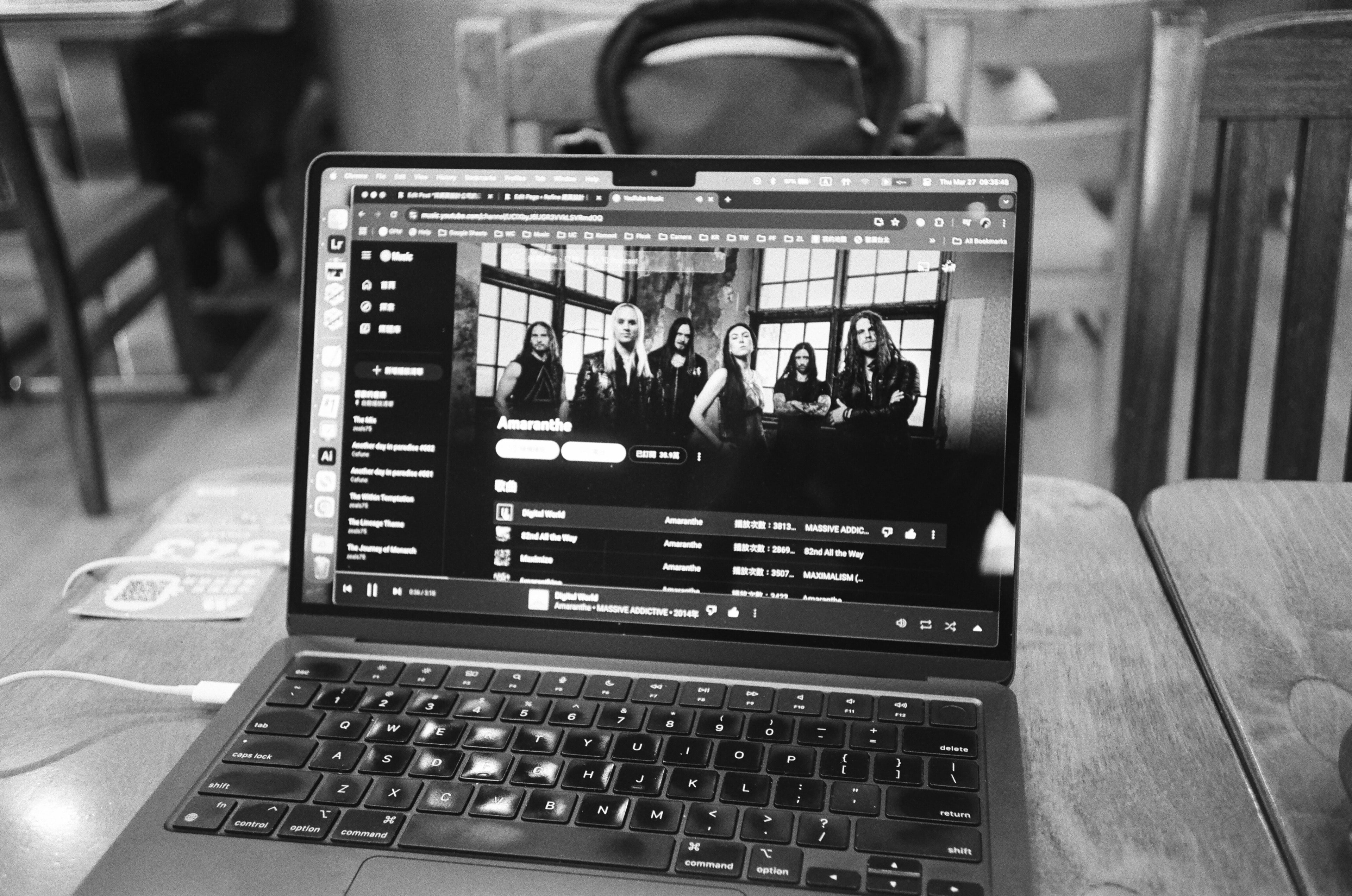
#13
Working at MOS Burger. Current soundtrack: Amaranthe. Highly recommend.
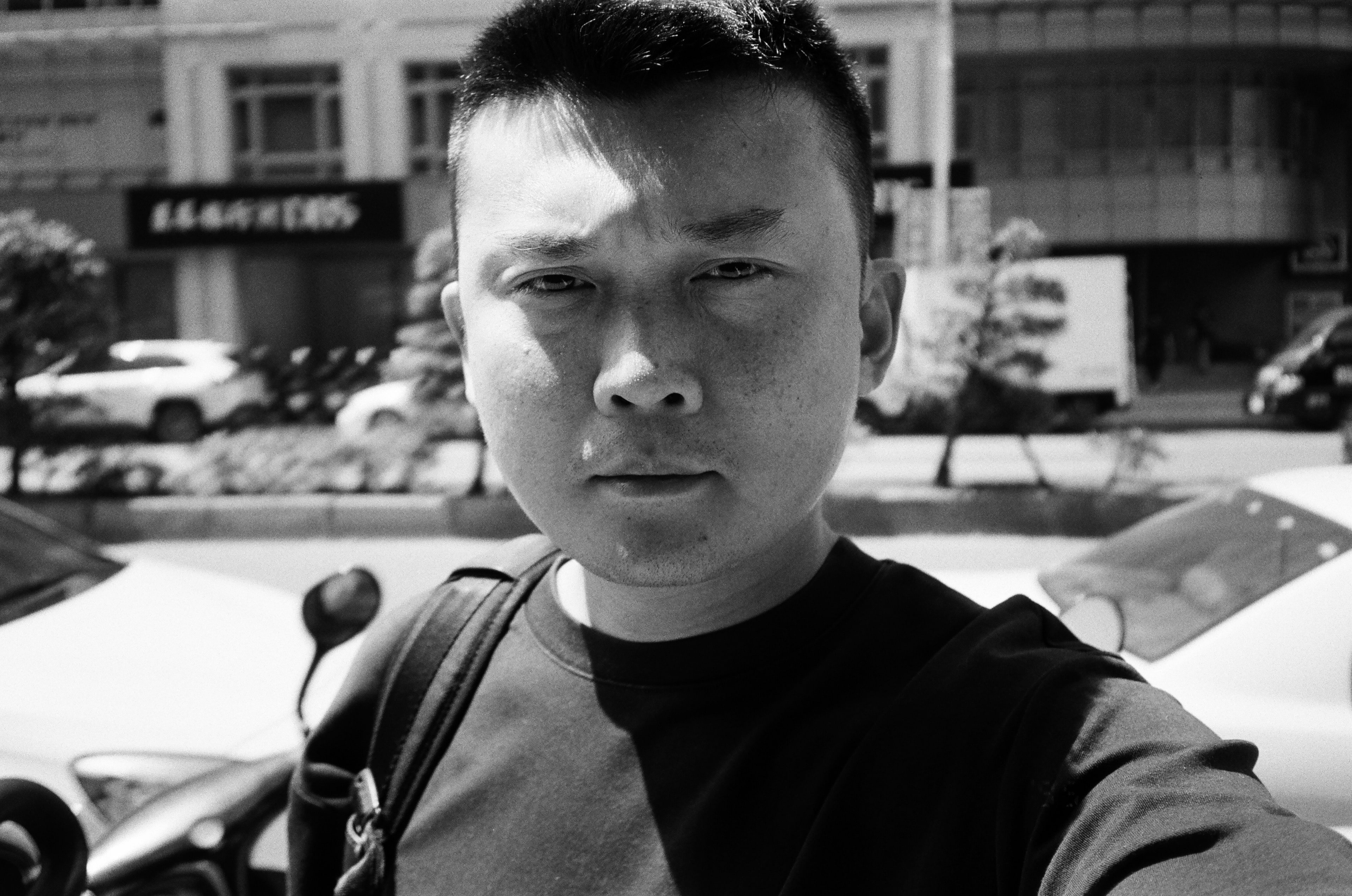
#14
Fresh haircut selfie.
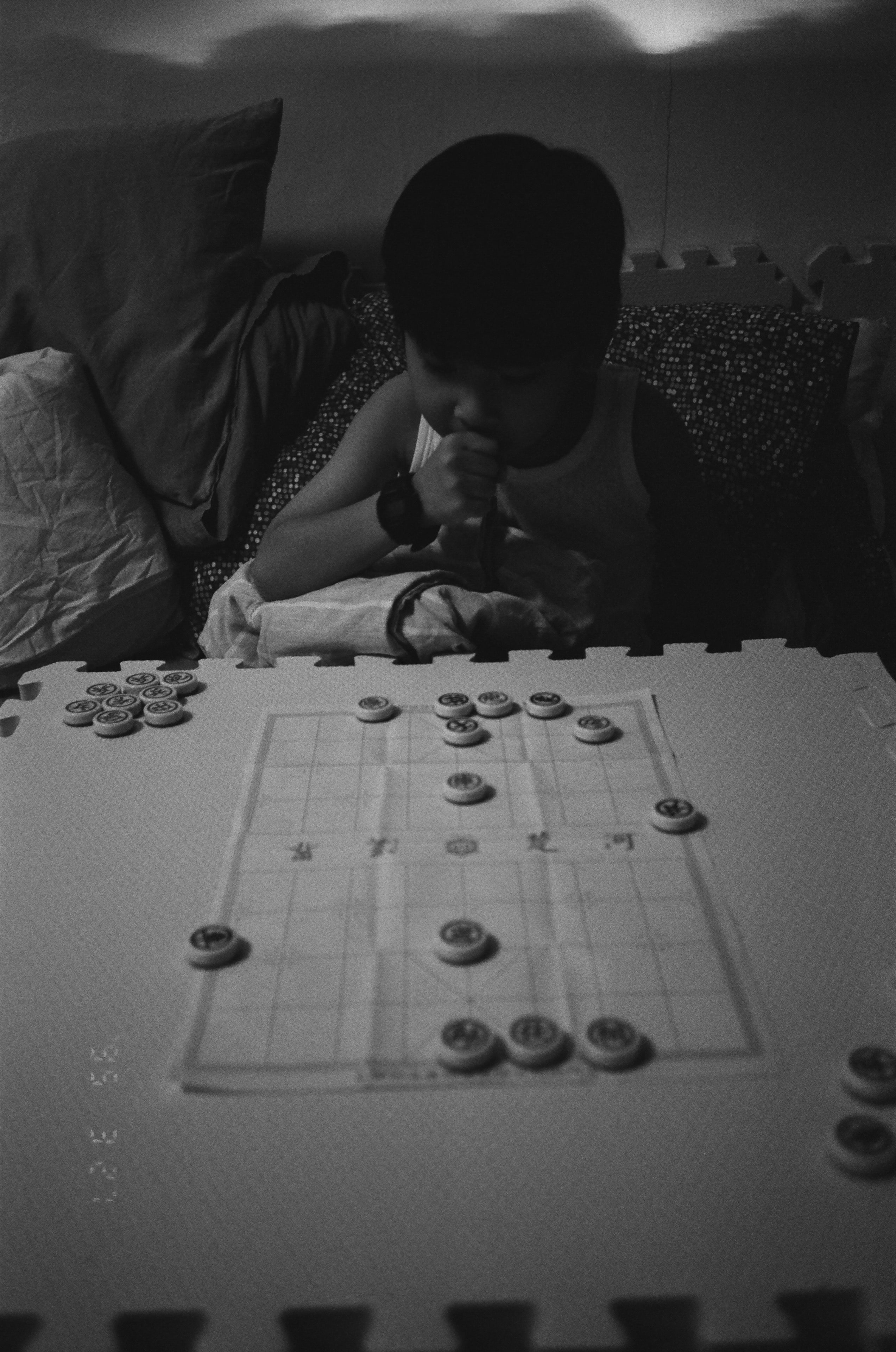
#15
My son learned to play Chinese chess. A milestone worth celebrating. This is the first-person view from across the board.
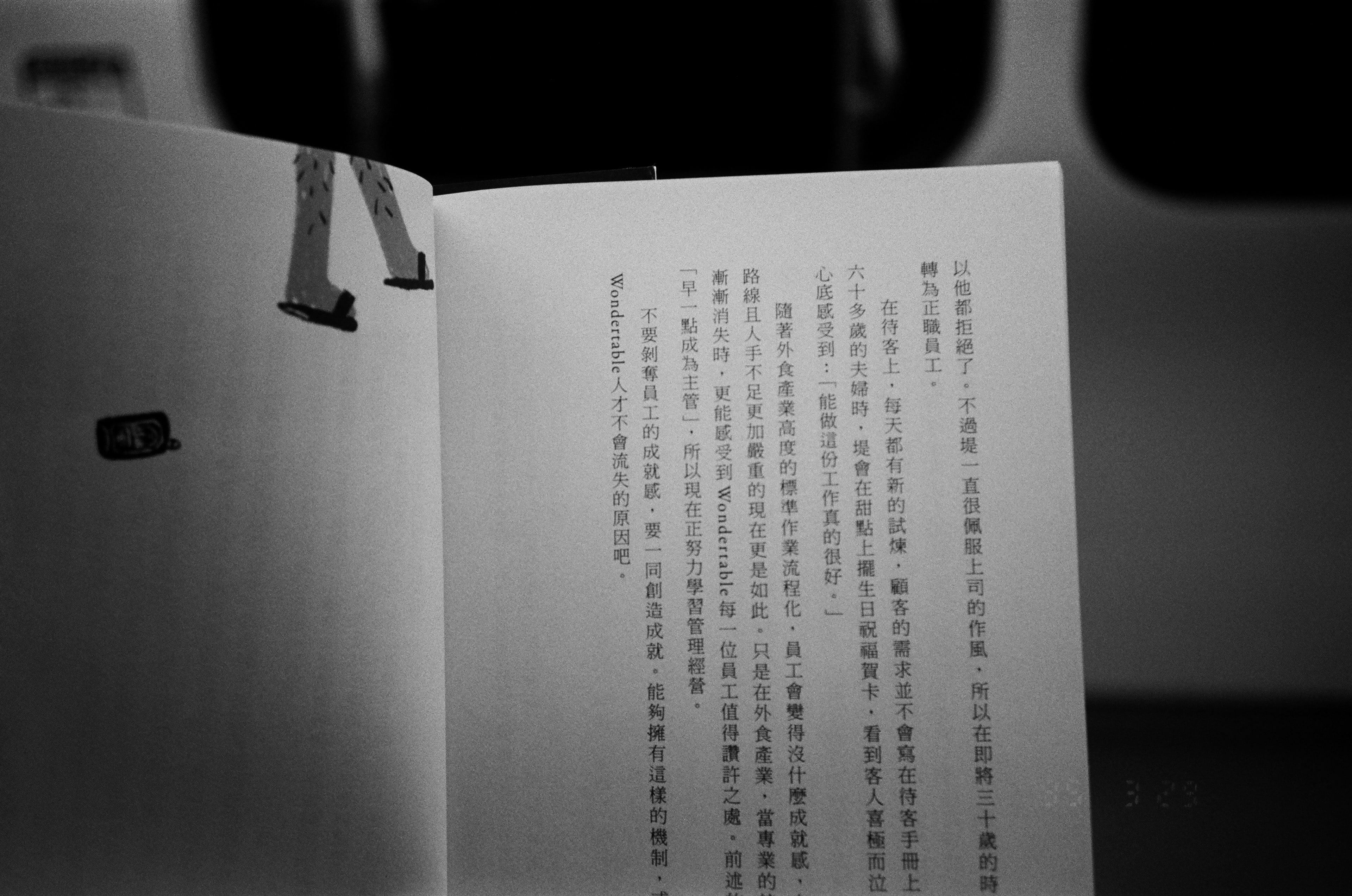
#16
Reading on the commute — takes a certain commitment when the book is heavy.
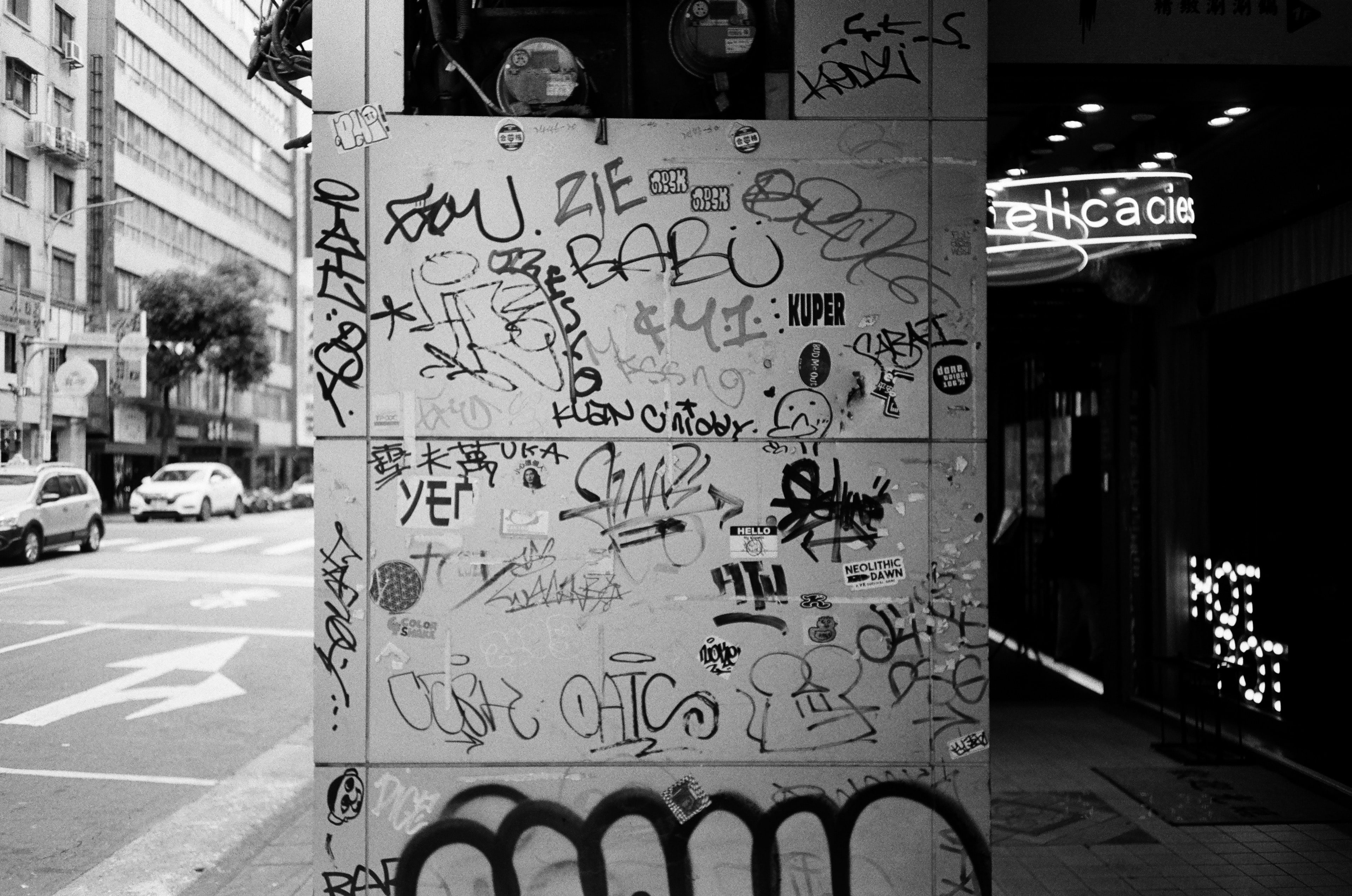
#17
On the way to book club, passed a pillar completely covered in graffiti. Rough day for whoever owns that storefront.
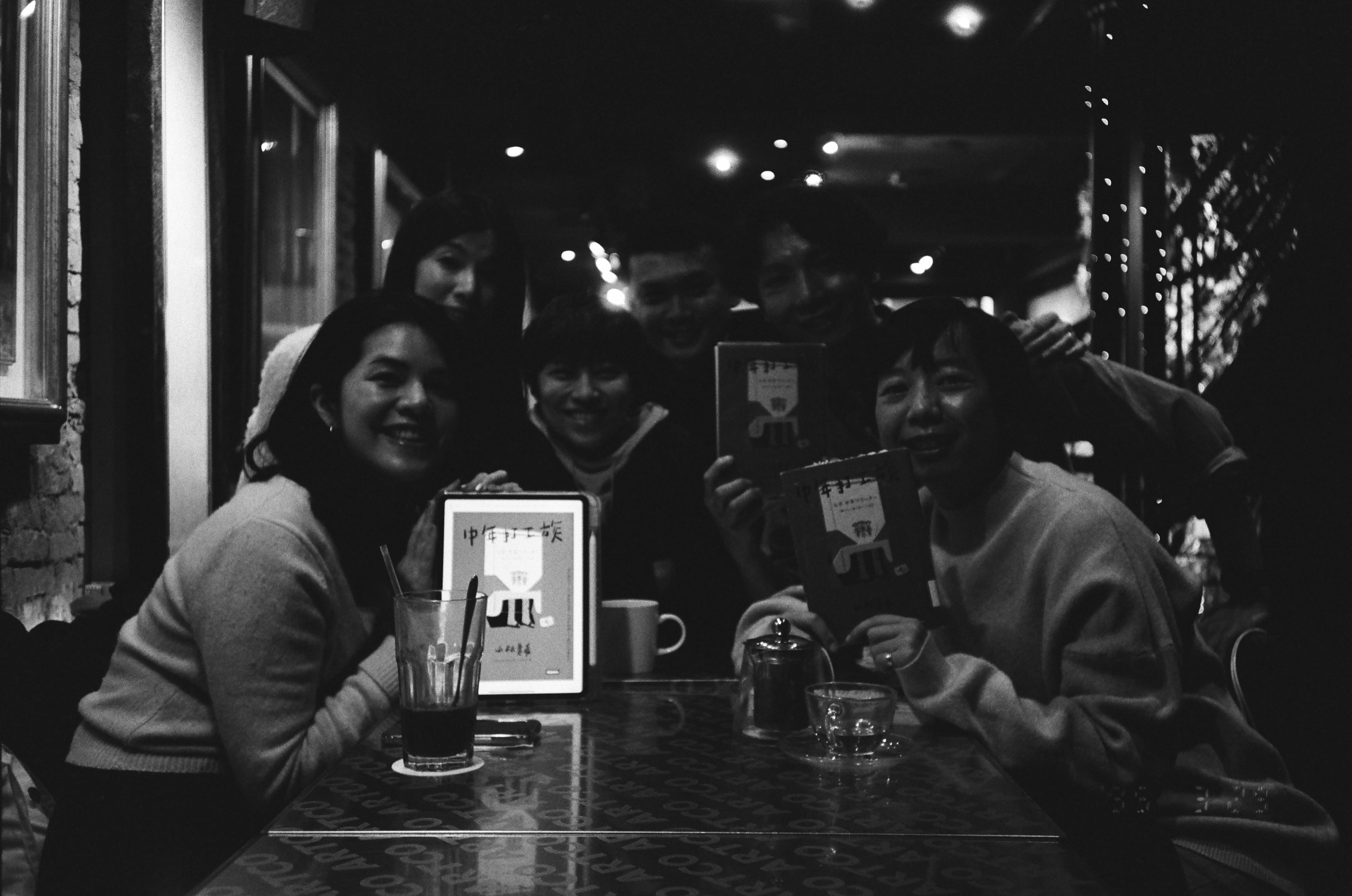
#18
This month's book club pick was Middle-Aged Part-Timers. Not recommended. Reads like a bloated group report with no clear thesis. I was the one who picked it. My apologies.
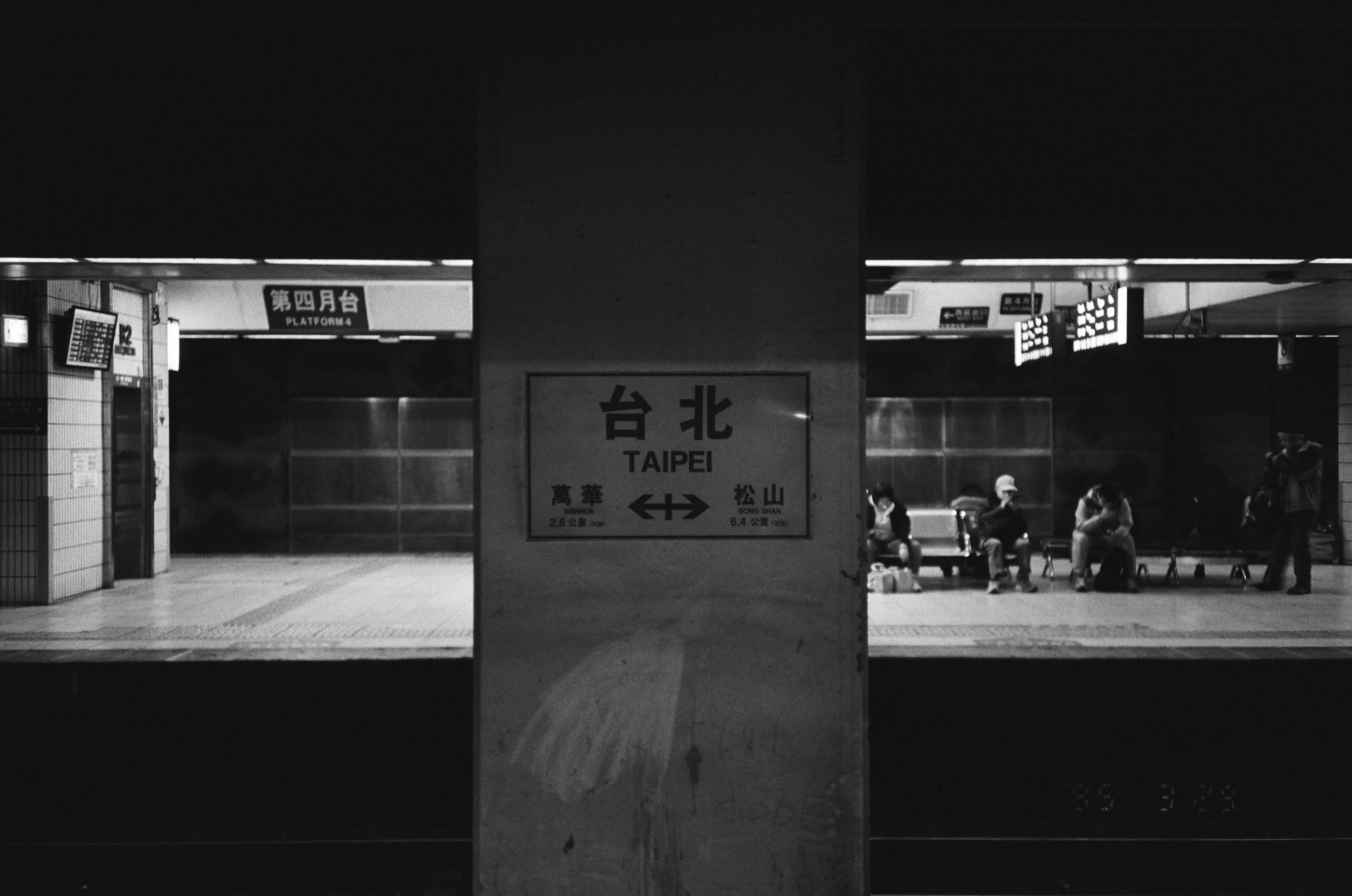
#19
Shot this framing three times — this is the steadiest of the three. I remember bracing against something to stabilize.
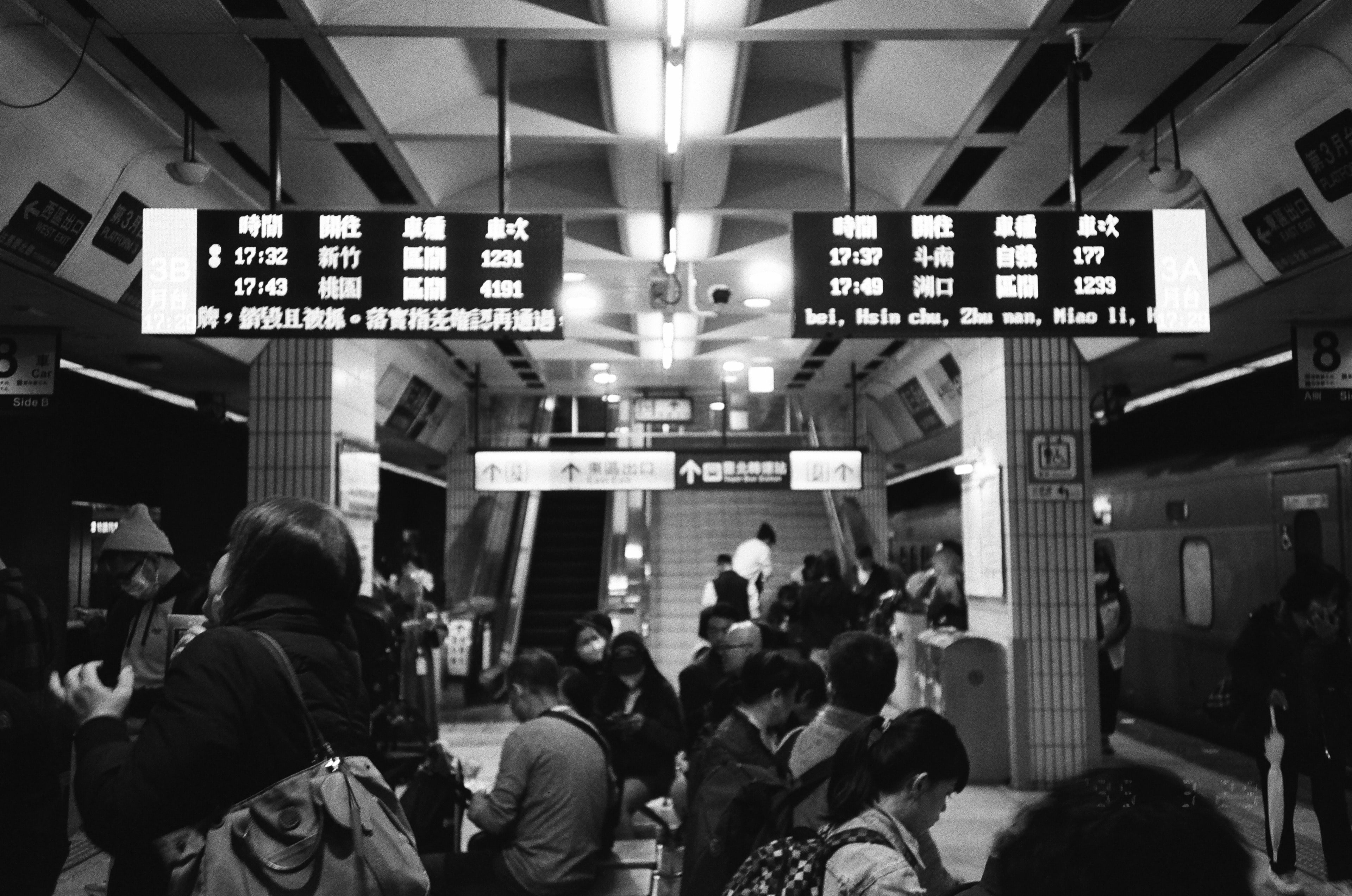
#20
Taipei Main Station's underground level has been around for over 35 years — completed in 1989. That probably explains why everything down there looks like it does.
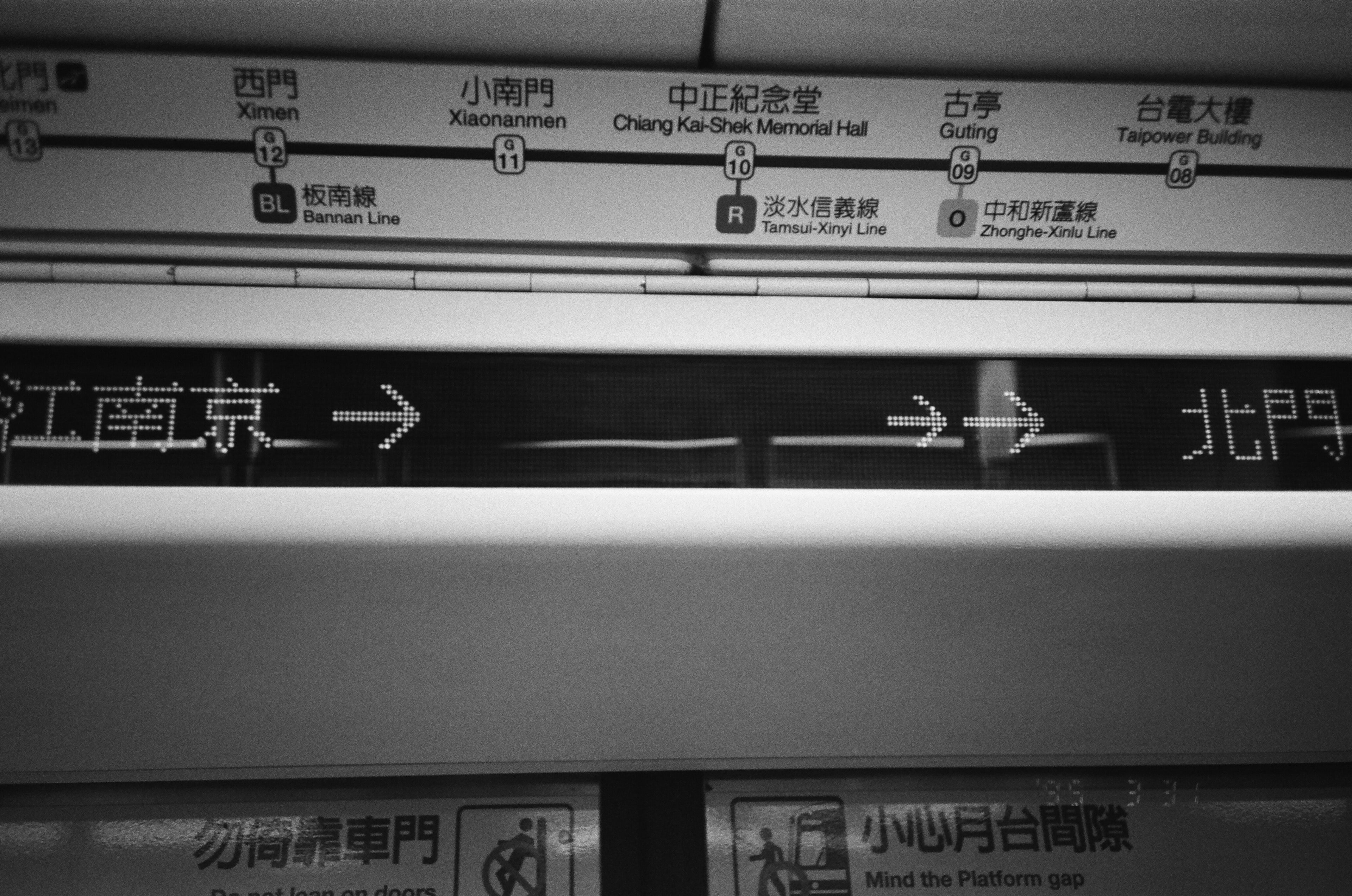
#21
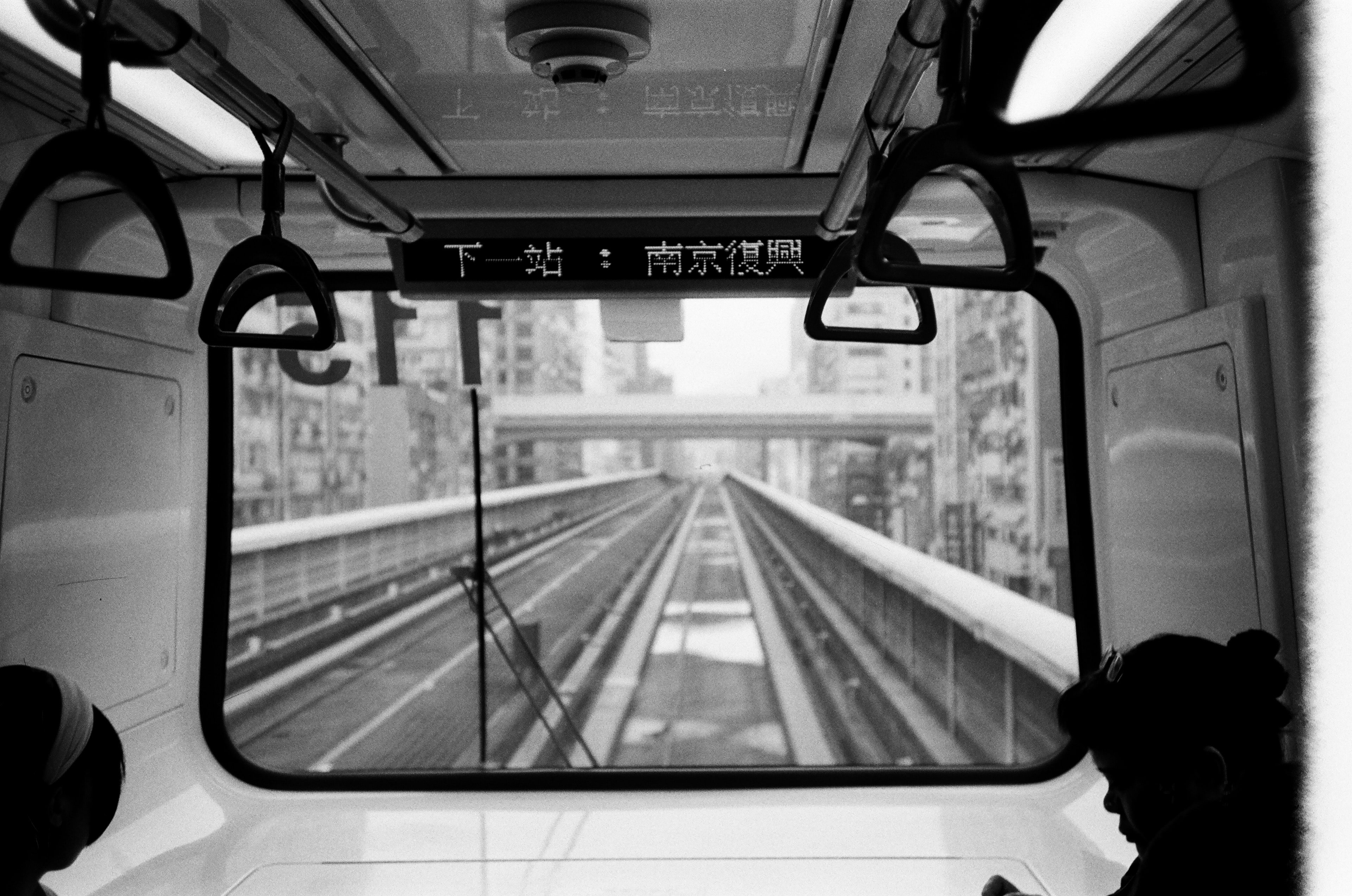
Heading to a client meeting via MRT, destination Zhongshan Station. If I had to keep just one point-and-shoot, I'd still pick the Konica Big mini HG BM-300 — its shutter lag is noticeably shorter than the Mju I's. This frame was supposed to capture the scrolling station name display inside the car. I timed the shot, but the Mju I's shutter delay meant I caught it mid-blank instead.
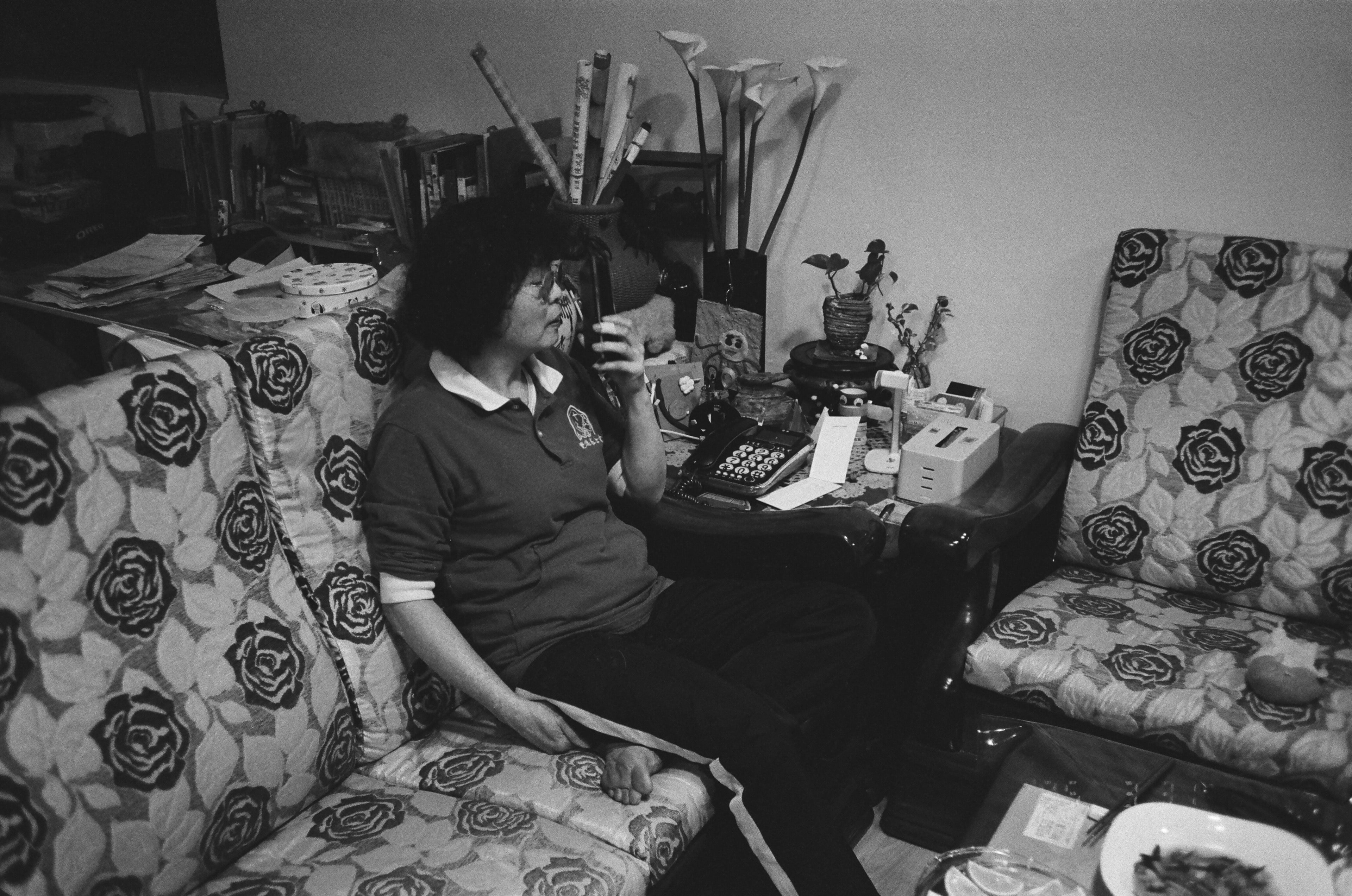
#22
My mom, doing her thing.
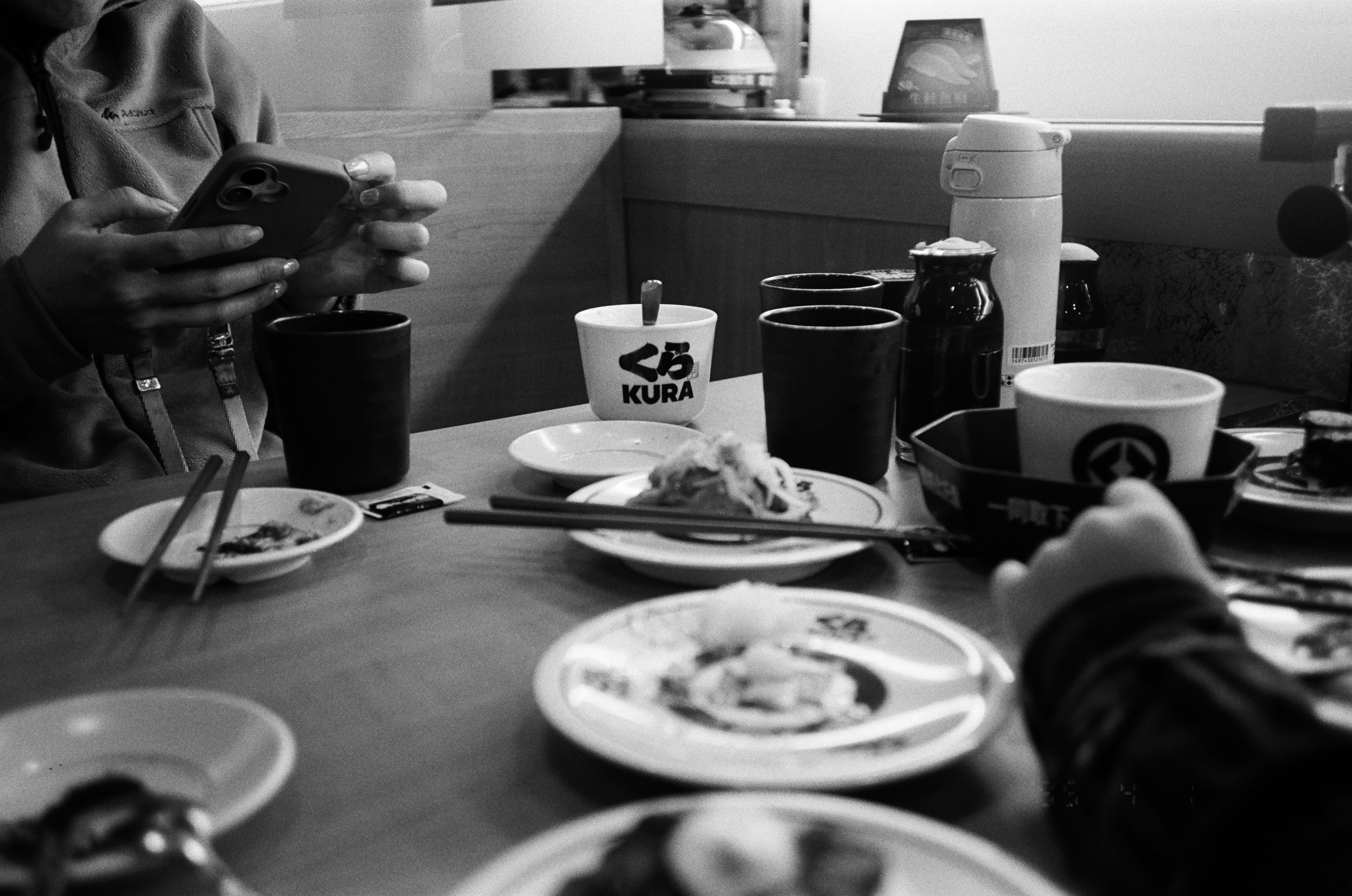
#23
A Tuesday. No particular reason. Conveyor belt sushi.
#24
First time taking the MRT out to Kao Sheng in Neihu to pick up a repaired camera. Immediately regretted it — the Wenhu Line is painfully slow.
That's the full roll — Olympus Mju I 35mm f3.5 with Kodak Eastman Double-X 5222. Thanks to Li-lai Photo for their hand-developed black and white service.